Minimalist Wall Decor Neutral Living Room: 5 Concepts
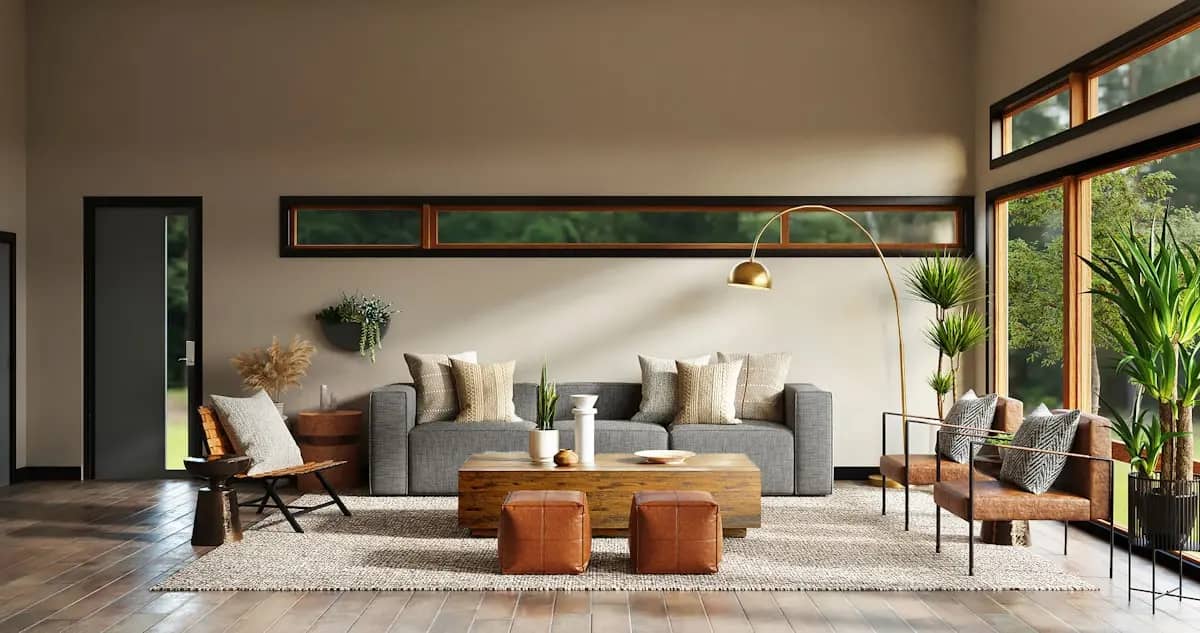
Designing minimalist wall decor for neutral living rooms relies on tactile monochromatic materials like textured plaster reliefs, raw Belgian linen, and slim oak floater frames. Scale statement pieces to two-thirds of underlying furniture width, and preserve at least forty percent blank perimeter wall area.
Decorating a neutral living room involves a delicate balance. Stripping away too much visual texture leaves seating spaces cold and uninviting. Crowding wall surfaces with dense gallery walls or bright prints quickly destroys the calm atmosphere of organic minimalism.
True minimalism focuses on intentional curation where every object earns its place through tactile materiality and proportion. In a palette of ivory, taupe, stone, and oak, wall decor succeeds by trading loud colors for dimensional shadow, natural grain, and negative space. Before buying art, use our interactive Art Over Furniture Sizing Calculator to calculate proportional widths and mounting heights above your sofa or console.
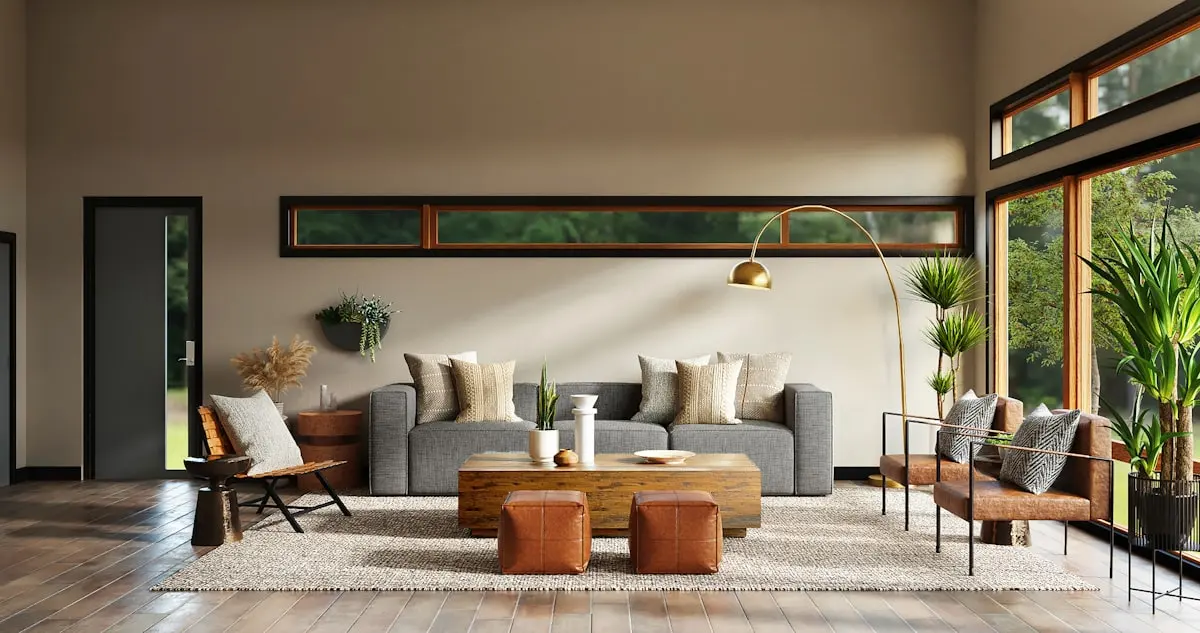
Minimalist Wall Decor Neutral Living Room Design: The Negative Space Rule
Negative space acts as an active architectural element in minimalist design. It creates visual pauses that allow the eye to rest, highlights room proportions, and gives statement art room to breathe without crowding the room.
Conventional decorating often treats empty drywall as a flaw requiring immediate covering. In minimalist design, open wall space is an asset. Negative space functions like the margin on a fine art page: it frames central pieces, directs focus, and prevents sensory overload in living rooms meant for relaxation.
To implement intentional negative space in your neutral living room, follow these spatial distribution guidelines:
- The Forty Percent Margin Rule: Keep at least forty to fifty percent of each prominent wall unoccupied. This open area provides breathing room around statement art pieces and keeps spaces feeling expansive.
- Single Dominant Focal Plane: Restrict heavy statement art to one primary wall per room zone, such as directly behind the main sofa. Keep adjacent walls clean and understated.
- Breathing Perimeter Clearances: Maintain twelve to eighteen inches of open drywall between frame edges and room corners, window casings, or door frames to avoid visual cramping.
- Low Visual Horizon Anchoring: Mount artwork low enough to visually connect with your furniture cluster. Avoid mounting frames high toward the ceiling, which detaches art from seating groups.
Minimalist Wall Decor Elements: Materials, Dimensions, and Spatial Impact
The core elements of minimalist neutral wall decor include dimensional plaster reliefs, raw linen stretched canvases, and light wood geometric carvings. Pair these with hand-thrown ceramic discs and slim architectural metal sconces that emphasize tactile texture over bright chromatic contrast.
Without bold color contrasts, neutral wall decor must communicate through textural depth and cast shadows. Smooth prints in dark frames can appear harsh against off-white drywall, whereas hand-troweled plaster catches daylight across its ridges throughout the day. Review this design matrix to select tactile materials for neutral spaces:
| Decor Element | Ideal Sizing Range | Surface Texture | Light & Shadow Effect | Best Living Room Location |
|---|---|---|---|---|
| Textured Plaster Canvas | 36″ x 48″ to 48″ x 60″ | Heavy troweled lime or gypsum | Dynamic raking daylight shadows | Main wall directly above sofa |
| Raw Belgian Linen Frame | 30″ x 40″ or 40″ x 50″ | Woven unbleached flax textile | Soft, warm matte light absorption | Flanking low credenzas or fireplaces |
| Sculptural White Oak Relief | 24″ x 36″ paired diptych | Fluted or ribbed natural timber | Warm wood grain with linear depth | Reading nook or adjacent accent wall |
| Matte Stoneware Wall Discs | 8″ to 16″ grouping of 3 | Unglazed sandy ceramic slip | Soft circular organic silhouettes | Vertical stack beside entryway passage |
| Minimalist Linear Picture Light | 18″ to 24″ horizontal bar | Brushed unlacquered brass or bronze | Downward warm 2700K grazing glow | Mounted directly above statement art |
Notice how each of these elements introduces tactile variety without violating your neutral palette. By layering matte stone, unbleached textile fibers, and natural wood grain, you establish rich textural interest that feels organic, serene, and timeless.
The 2/3 Scale Rule: Sizing Statement Art Above Furniture
To achieve balanced proportion above furniture, select wall decor spanning sixty to seventy-five percent (ideally two-thirds) of sofa or console width. Mount the frame six to eight inches above the furniture backrest. Consult our detailed oversized wall art sizing guide for expanded room dimension benchmarks.
A common mistake in neutral rooms is hanging an undersized frame over large furniture. A small framed print floating over an eighty-four-inch sofa looks accidental and lost. Conversely, art that spans the entire sofa width crowds the furniture and eliminates calming perimeter margins.
Follow these specific mathematical rules to anchor minimalist art above your living room furniture:
- The Sofa Proportion Formula: For an eighty-four-inch sofa, multiply total width by 0.66 to find a target art width of roughly fifty-six inches. A large single canvas or paired diptych fits this proportion cleanly.
- The Vertical Clearance Rule: Hang the bottom frame edge six to eight inches above sofa cushions or tabletop surfaces, visually binding artwork and furniture together.
- Eye-Level Standard for Standalone Walls: When hanging minimalist decor on an open wall without furniture underneath, position the vertical center of the piece fifty-seven to sixty inches above finished flooring. This height matches standard human eye level.
- Diptych and Triptych Spacing: If dividing your two-thirds span across two or three matching frames, keep the gap between frames strictly between two and three inches. Wider gaps destroy the visual unity of the composition.
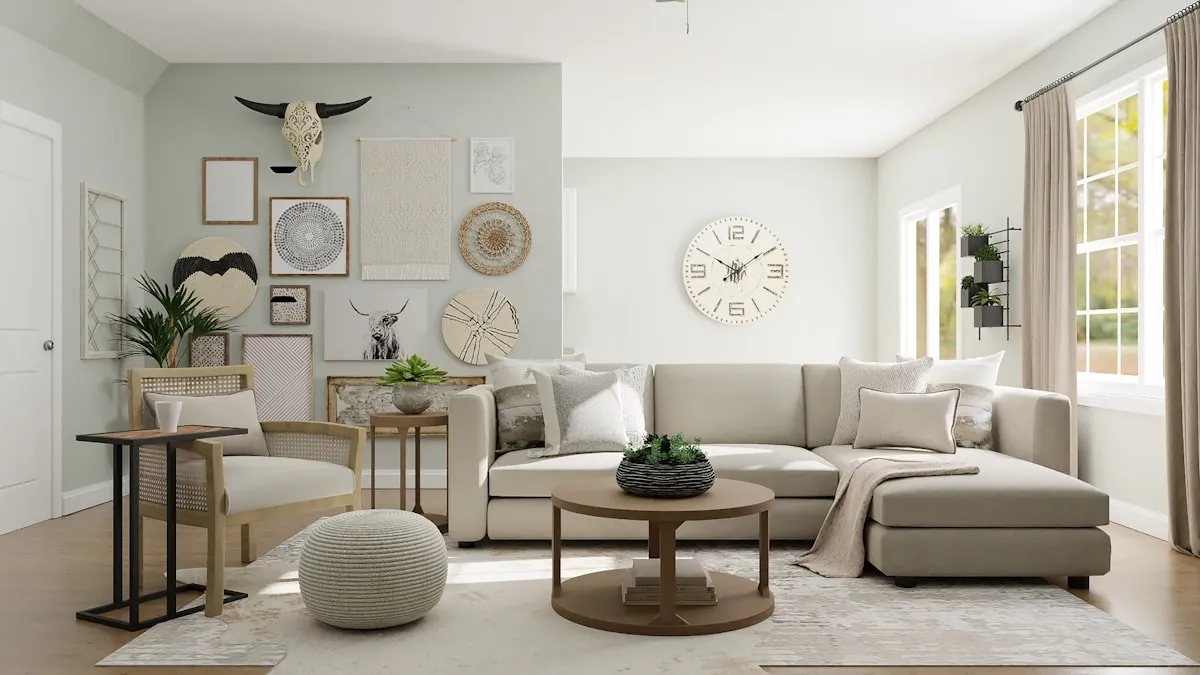
Textured Monochromatic Art: Plaster, Linen, and Sculptural Relief
Textured monochromatic art enlivens neutral living rooms with three-dimensional surface relief. Raised topography creates subtle highlights and shadow lines across single-hue surfaces like bleached plaster, unprimed linen, and cast porcelain.
Without color contrast, texture becomes your primary medium. Three-dimensional plaster reliefs capture shifting daylight angles throughout the day. Morning sun casts crisp shadows into recessed valleys, while warm evening lamps highlight raised ridges to produce an inviting glow.
Consider these three high-impact tactile mediums for neutral walls:
- Troweled Venetian Plaster Panels: Hand-applied joint compound or authentic lime plaster troweled onto rigid birch panels creates organic ridges, gentle relief curves, and raw stone textures that resemble carved limestone ruins. Because solid plaster reliefs can weigh twenty to forty pounds, check our guide on how to hang heavy art without studs using heavy-duty toggle anchors.
- Raw Flax Linen and Canvas Stitching: Unprimed oatmeal and flax linen stretched over deep stretcher bars provides rich textural warmth. Subtle tonal thread stitching or tone-on-tone fabric folding adds gentle geometric rhythm without introducing new colors.
- Cast Ceramic and Stoneware Tiles: Unglazed bisque ceramic tiles mounted in grid formations or staggered lines offer earthy matte textures that complement wool rugs, travertine tables, and linen upholstery.
To maximize dimensional impact, position accent lighting obliquely. Angled illumination catches the raised edges of plaster and weave textures. An adjustable spotlight or slim picture light creates grazing illumination that emphasizes hand-troweled ridges and woven fibers.
Asymmetrical and Off-Center Placement for Contemporary Balance
Asymmetrical art placement achieves modern visual balance by offsetting a statement frame to one side of a wall or console table. Counterbalance the opposite side with a floor lamp, tall ceramic vase, or sculptural branch.
Traditional decorating relies on rigid bilateral symmetry: centered frames flanked by matching lamps. While orderly, this can make neutral spaces feel stiff. Organic minimalism embraces dynamic balance. It uses visual weight to achieve harmony without rigid geometric symmetry.
Master off-center minimalist styling with these balancing techniques:
- The Credenza Shift: Position a textured artwork on the left third of a long credenza. On the opposite side, place a tall sculptural stoneware pitcher with dried olive branches to counterbalance the frame mass.
- The Floor Lamp Counterweight: Hang an oversized canvas slightly offset on your sofa wall. Balance the opposite open space with an arched brass floor lamp to establish a pleasant diagonal rhythm.
- Layered Leaning Formations: On mantels or low consoles, lean an oversized frame against the wall and overlap a smaller linen print in front. Check our picture ledge shelf styling guide for ledge depth and spacing formulas. Leaning creates a relaxed studio feel that softens rigid architecture.
Curate tactile materials, maintain generous negative space, adhere to proportional furniture scaling, and explore subtle asymmetry. These four steps turn your neutral living room into an oasis of understated elegance and quiet luxury. Explore our full Wall Decor & Art Hanging Collection for more architectural styling tips.
Minimalist Wall Decor Maintenance and Surface Protection
Textured minimalist wall pieces require specialized dust removal techniques to prevent mineral grime accumulation across porous plaster relief grooves and matte canvas textures. Because neutral minimalist interiors rely on uninterrupted monochromatic surfaces, any oily dust streak or finger smudge stands out under directional track lighting. Maintaining these tactile decor items requires gentle dry cleaning methods.
First, clean raw plaster relief artwork using an ultra-soft goat hair drafting brush or clean synthetic makeup brush. Never use microfiber rags. Microfiber filaments catch against rough gypsum textures and deposit synthetic lint threads that discolor pale oatmeal and chalk white finishes. Sweep the brush gently downward along relief ridges once each month to lift settled household dust into a vacuum hose held six inches away.
Second, protect unvarnished linen canvases from ambient humidity shifts. In rooms with fluctuating temperature, raw linen absorbs moisture from humid air and contracts during dry winter heating cycles. This cyclical expansion causes delicate neutral canvases to buckle along the outer stretcher bars. Maintain indoor relative humidity between forty and fifty percent to keep linen surfaces taut and flat.
Third, clean natural light oak floating ledges using pure cold-pressed jojoba or mineral oil. Avoid aerosol furniture wax, which leaves sticky silicone residue. Commercial aerosol sprays contain silicone additives that leave a shiny film on matte raw wood. A light drop of pure oil applied with cotton cloth preserves the pale Scandinavian grain without altering the subdued neutral decor balance of your living space.
Fourth, examine directional shadow lines across textured wall surfaces during different hours of natural daylight. Natural light shifting through side windows accentuates gypsum ridges and linen weaves far more dynamically than overhead downlights. Position subtle picture lights twenty-four inches above textured wall art to preserve soft shadow relief throughout evening hours without washing out subtle monochromatic color gradients.
Fifth, maintain balanced lighting levels during evening hours to prevent high-contrast glare across textured wall reliefs. Soft perimeter illumination preserves delicate surface contours and highlights tactile materials without casting distracting shadows across adjacent furniture.
Consult the Tate Modern exhibition framing specifications for verified technical documentation, safety codes, and official industry standards.
Frequently Asked Questions About Minimalist Neutral Wall Decor
What is the best type of wall art for a neutral living room?
The best wall art for a neutral living room consists of textured monochromatic plaster reliefs, raw unbleached linen canvases, and pale oak wood carvings that add dimensional tactile interest without introducing distracting color contrasts into the space.
How big should minimalist wall art be over a sofa?
Minimalist wall art should span between sixty and seventy-five percent of your sofa width, mounted six to eight inches above the back cushions. This two-thirds proportion provides strong visual grounding while maintaining essential open margins around the frame.
How do you decorate a large neutral wall without making it look cluttered?
Decorate a large neutral wall by choosing a single oversized textured statement piece. A single grand focal piece preserves visual calm across broad wall expanses. Preserving at least forty percent blank perimeter drywall creates an architectural center of interest without visual clutter.
What frame style works best for minimalist neutral decor?
Ultra-thin natural white oak, bleached ash, or matte black floater frames work best. Slim quarter-inch profiles with floating canvas reveals provide subtle structural definition without distracting from the artwork’s organic texture and quiet color palette.
Can you hang art off-center in a minimalist living room?
Yes, off-center art placement creates contemporary dynamic balance. Counterweight an off-center frame by placing a tall ceramic vessel, sculptural floor lamp, or natural branch arrangement on the opposite end of the furniture piece to maintain visual equilibrium.
How do you bring warmth to plain white walls without paint?
Bring warmth to white walls by hanging warm-toned tactile materials like unprimed Belgian linen, honey-toned oak reliefs, and woven textile hangings, illuminated by a warm twenty-seven-hundred-kelvin brass picture light that casts gentle golden shadows.