Small Entryway Furniture Ideas: Slim Consoles, Storage Benches & Foyers
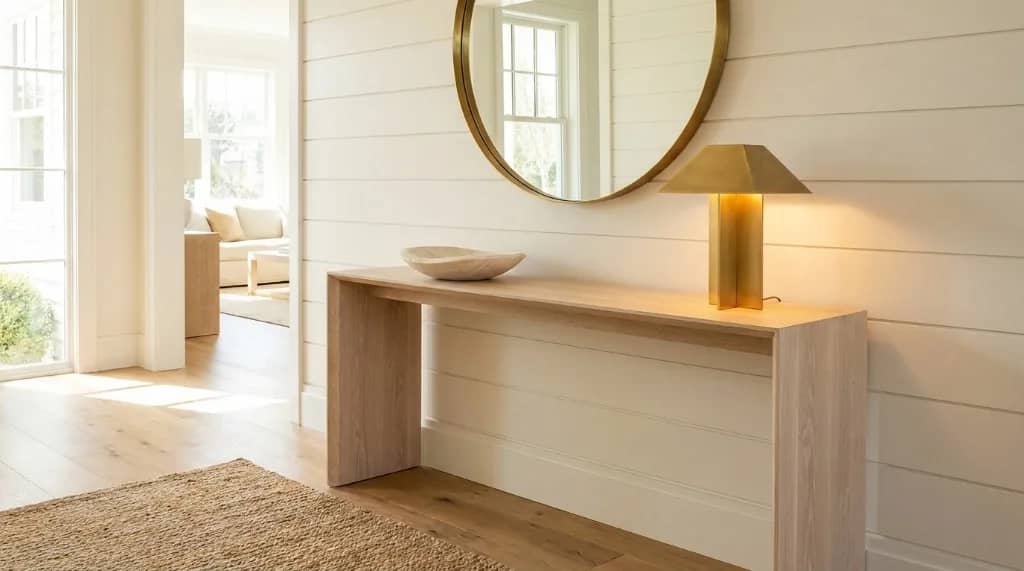
Small entryway furniture works best with a shallow depth between 8 and 10 inches. Keep a clear 36-inch walk path from the front door. Use floating consoles, tilt-out shoe bins, and storage benches. These pieces protect door swings, clear floor clutter, and hold keys and bags.
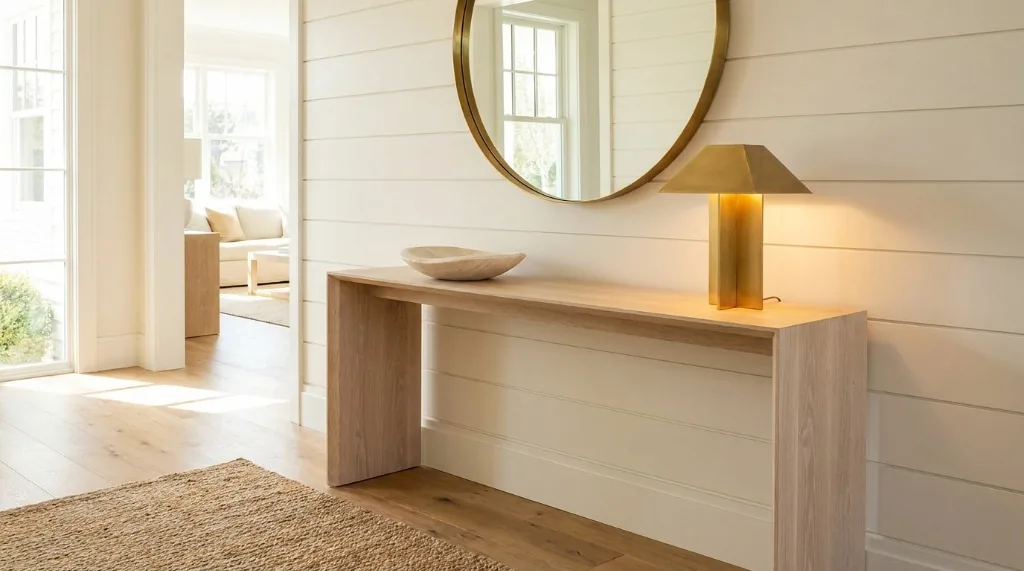
What Furniture Works Best in a Small Entryway?
The best furniture for a small entryway includes slim console tables, floating wall shelves, lift-top benches, and shallow shoe cabinets. These designs maintain an open 36-inch walk path from the door. They store daily items in lean frames without crowding the floor.
A cramped front entry creates friction every single day. You step inside with groceries, work bags, and mail. You need a fast spot to set down keys. You also need a place to drop shoes and hang dog leashes. Standard console tables measure 14 to 18 inches deep. In a narrow hallway, that depth eats up half your walking space. People bump into sharp corners and scuff the paint.
Always measure your hallway width before buying any piece. The International Residential Code sets a clear walk path of 36 inches in home halls. Measure the distance from your baseboard to the opposite wall. Subtract 36 inches from that total number. The remaining figure is your hard depth limit. If your hall is 46 inches wide, your console depth cannot exceed 10 inches.
Choosing compact foyer pieces connects directly to wider home layout rules. When your front entry opens right into an open living room, use multifunctional furniture for compact spaces to match wood tones and finishes across both areas.
Narrow Entryway Furniture Ideas for Tight Hallways
Narrow entryway furniture requires a strict depth between 8 and 10 inches to protect hall traffic. Floating wall ledges, waterfall tables, and open metal frames keep floor lines visible. Showing more bare floor makes a tight foyer feel larger while giving you an everyday drop zone.
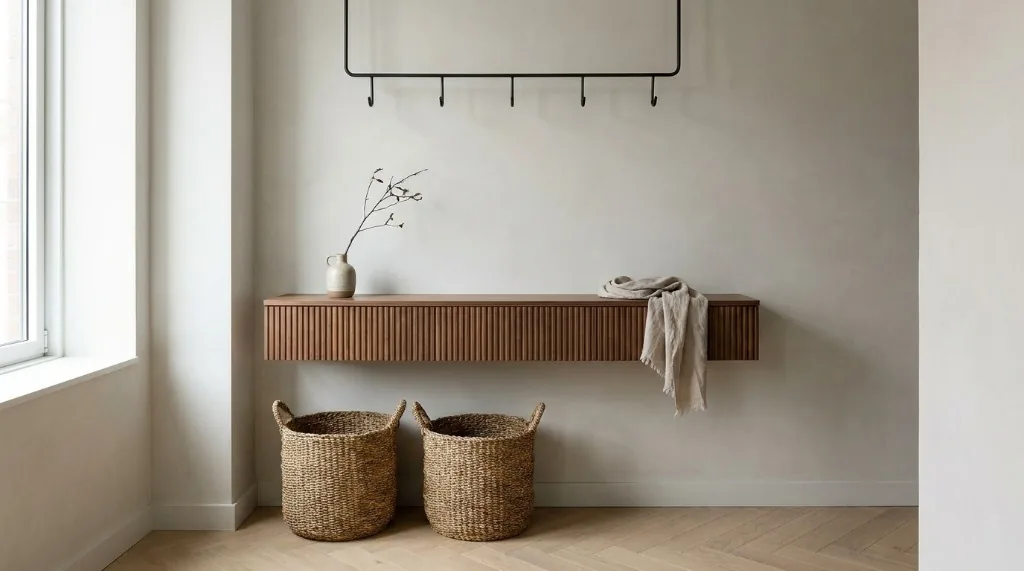
Solid boxy furniture makes narrow halls feel dark and tight. Bulky wooden cabinets block sightlines and cast deep shadows along baseboards. An open console with slim metal legs lets light flow straight across the floorboards. This keeps the whole entry airy and bright.
Waterfall tables made from white oak or concrete give you strong durability without visual weight. Look for rounded or mitered edges. Sharp corners snag knit coats and bruise hips in tight turns. For long, narrow floor layouts, follow our guidelines on narrow room traffic flow to build clean sightlines from the front door to the back rooms.
Pair narrow tables with shallow catch-all trays. A 6-inch stone tray catches car fobs, coins, and sunglasses. Mount a simple peg rail 12 inches above the tabletop. Space hooks 6 inches apart. This spacing lets heavy winter jackets hang flat against the wall instead of crowding the hall.
Small Entryway Bench Ideas with Hidden Storage
Small entryway benches with hidden storage provide an 18-inch seat height for shoes while concealing clutter inside enclosed compartments. Pick compact benches between 32 and 36 inches long. These units sit flush against short return walls without blocking the door swing.
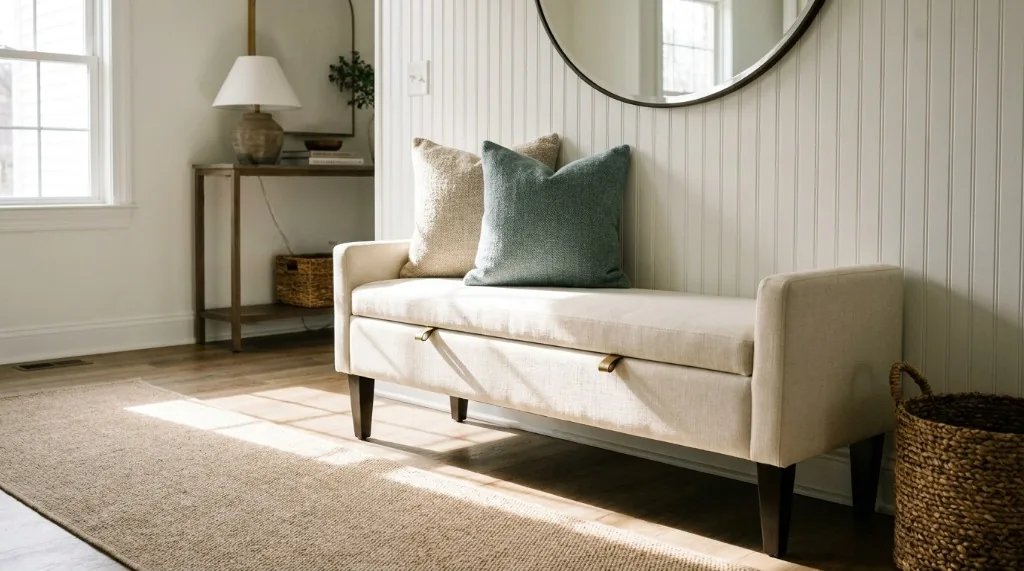
Putting on sneakers while standing on one foot is awkward. An entryway bench gives you a solid seat. Yet a standard wooden bench leaves shoes spread across the rug. A storage bench gives you both a seat and hidden storage in one spot.
Choose storage benches with slow-close safety hinges. Soft-close lids protect hands when children pull out dog gear or rain boots. Choose tough fabrics like performance linen or treated leather to resist wet coats. If you prefer natural solid wood, select white oak or ash with a matte clear coat. That seal protects the wood grain from rain water, street mud, and winter salt.
Open cubby benches work well for active families. Slide woven seagrass baskets into the cubby holes. Baskets hide workout shoes while letting fresh air circulate through the weave. Give each family member their own basket to keep morning routines quick and calm.
Slim Shoe Storage Cabinets to Eliminate Foyer Clutter
Slim shoe cabinets use vertical tilt-out drawers to store shoes upright against the wall at depths under 10 inches. Unlike flat shoe racks that collect dust, these closed units hide 8 to 16 pairs of footwear. They also serve as a useful display ledge.
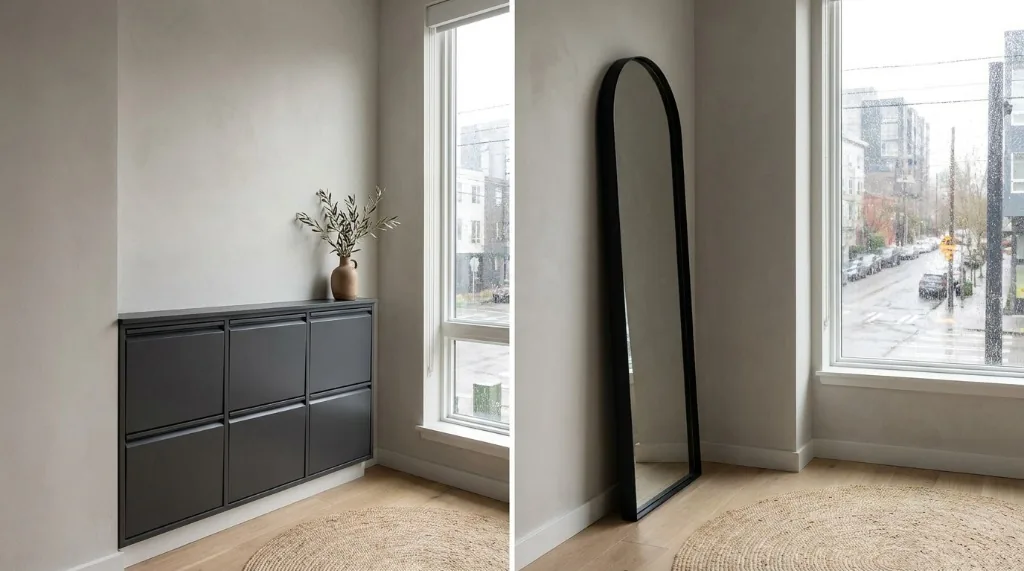
Piles of shoes near the front door ruin a home entrance. Flat wire racks need 14 inches of depth to fit adult shoe sizes. In small halls, extra pairs spill across the runner and create tripping points right at the front door.
Slim pull-down cabinets solve this issue with pivoting bins. Pull the front panel down, and shoes slide into upright pockets heel first. The entire cabinet hugs the drywall at a lean 9-inch depth. Always anchor tall shoe cabinets into wall studs with heavy-duty metal brackets for home safety.
The top surface of a 9-inch cabinet functions as a display shelf. Add a small stoneware vase with dried stems or a small bowl for keys. If your entry lacks windows, check our guide on brightening dark entryway corners to place a warm accent light above the cabinet.
Floating Entryway Consoles and Wall-Mounted Drop Zones
Floating entryway consoles attach directly to wall studs using French cleats, lifting furniture off the floor. This open clearance leaves baseboards visible. It makes vacuuming easy. It also frees up space below for woven baskets or everyday slip-on shoes.
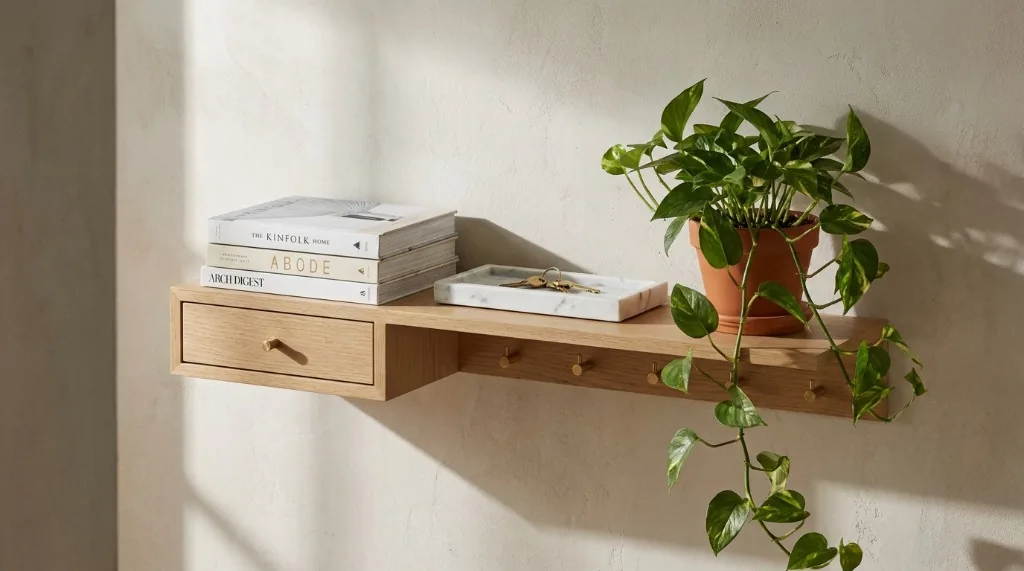
In compact city apartments where entry space spans under 20 square feet, floor tables crowd the room. Wall-hung ledges and floating drawers turn empty drywall into organized storage zones without touching the floor.
Hang floating consoles at waist height, about 30 to 32 inches from the floor. This height lets you set down bags and check mail without bending over. Models with a shallow 3-inch pull drawer keep stamps, pens, mail, and spare fobs out of view.
Add brass coat hooks along the underside of the floating shelf. This groups keys, mail, and jackets onto one compact wall station. Place two round baskets on the floor underneath the shelf. Use them to hold winter hats, pet gear, and tote bags.
Door Swing Clearances and Walkway Traffic Rules
Small entryway setups require a clear 36-inch radius for the door swing, plus 36 inches of open walking path. Place tables and benches outside the door arc. This step stops door handles from hitting furniture. It also keeps home transit smooth.
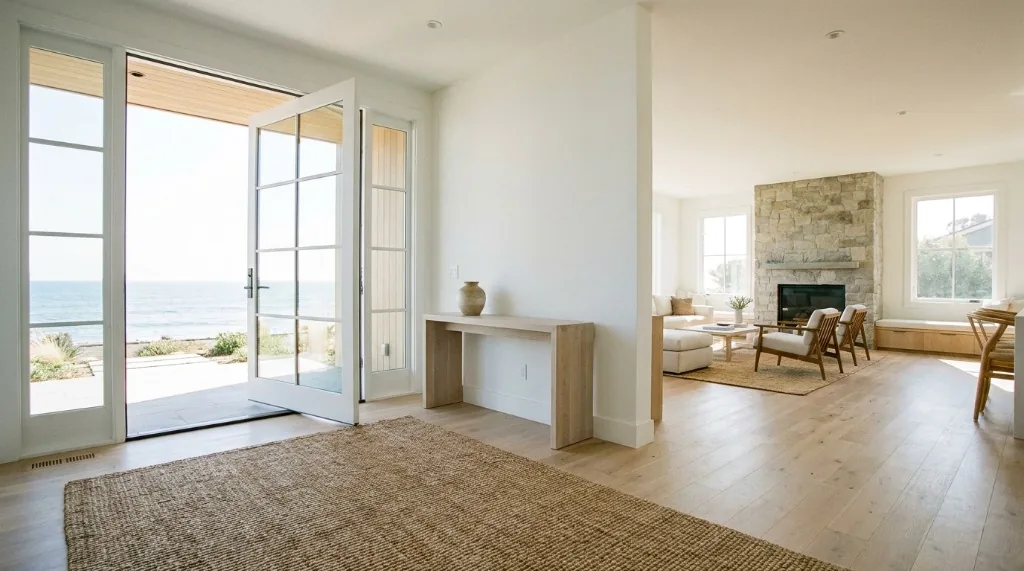
The most common layout error happens when people put furniture right behind the door. Standard exterior entry doors measure 36 inches wide. When swung open, that door needs 36 inches of clear floor space. An 11-inch table in that swing path causes repeated hits that chip paint and dent door trim.
Check your floor plan against standard architectural clearances. Read our guide on standard doorway clearances to map out safe furniture paths before buying heavy entry pieces.
If your door hinges on the right wall, set your table on the left wall. If both walls have doors or short gaps, pick a shallow corner ledge. You can also hang a tall mirror to define the foyer without blocking the hall.
Small Entryway Furniture Dimensions & Clearance Comparison Matrix
Picking the best entryway unit means matching furniture sizes to your hall floor space. Review verified depths, widths, heights, and clearance limits below before shopping for new pieces.
| Furniture Archetype | Ideal Depth Range | Typical Width | Standard Height | Minimum Walkway Required | Best Storage Function |
|---|---|---|---|---|---|
| Ultra-Slim Console | 8 to 10 inches | 36 to 48 inches | 30 to 32 inches | 32 inches | Keys, mail, accent lighting |
| Floating Wall Shelf | 6 to 9 inches | 24 to 36 inches | 4 to 8 inches | 30 inches | Drop zone, hooks, sunglasses |
| Tilt-Out Shoe Cabinet | 9 to 11 inches | 30 to 42 inches | 36 to 42 inches | 34 inches | 8 to 16 pairs of shoes |
| Storage Shoe Bench | 12 to 15 inches | 32 to 40 inches | 18 to 19 inches | 36 inches | Seating, boots, winter gear |
| Corner Hall Tree | 14 to 16 inches | 18 to 22 inches | 68 to 72 inches | 36 inches | Coats, hats, umbrella stand |
How to Style Small Entryway Furniture Without Crowding the Foyer
Style small entryway furniture with the two-thirds rule. Hang a mirror that covers two thirds of the table width. Lift accessories using tall, slender items like table lamps or dried branches. Leave 60 percent of the table top bare for daily drop-zone use.
Too much decor clutters a small entrance fast. Heavy stacks of books, framed photos, and large candle jars steal landing room. Keep tabletop items down to three pieces: one light source, one catch-all dish, and one natural accent.
Mirrors make tight entries feel much bigger. A round brass mirror above a slim console reflects light from next-door rooms. The mirror glass makes narrow halls look double their true size. Hang mirrors so their middle point sits at eye level, about 58 to 60 inches from the floor.
Ground the space with a flat-weave wool or low-pile jute runner rug. Skip thick shag rugs near the entrance door. Shag rugs catch dirt and get stuck under door sweeps, jamming the front door whenever people enter.
Frequently Asked Questions About Small Entryway Furniture
How deep should a console table be for a narrow hallway?
A console table for a narrow hallway should measure 8 to 10 inches deep. This slim depth keeps a clear 36-inch walk path in standard halls. It gives you plenty of room for keys and a small lamp.
Can you put a storage bench in an entryway that opens directly into the living room?
Yes, set a storage bench across from the door swing. You can also place it directly against the back of a sofa. This layout creates an entry zone without cutting into room traffic.
How do you fit shoe storage in a small entryway with no closet?
Fit shoe storage without a closet by using a tilt-out shoe cabinet or a bench with woven bins. Tilt-out cabinets hold shoes upright inside a shallow 9-inch wall frame.
What is the minimum walkway clearance needed in a small foyer?
The minimum walkway clearance in an entry hall is 36 inches. This clear width follows home building guidelines. Two people can pass each other easily without bumping furniture.