Moody Dark Bedroom Color Scheme Ideas: 5 Deep Palettes
Reader Disclosure: This post contains affiliate links. If you buy through them, we may earn a commission at no extra cost to you. We only recommend items tested for clean craftsmanship and authentic durability.
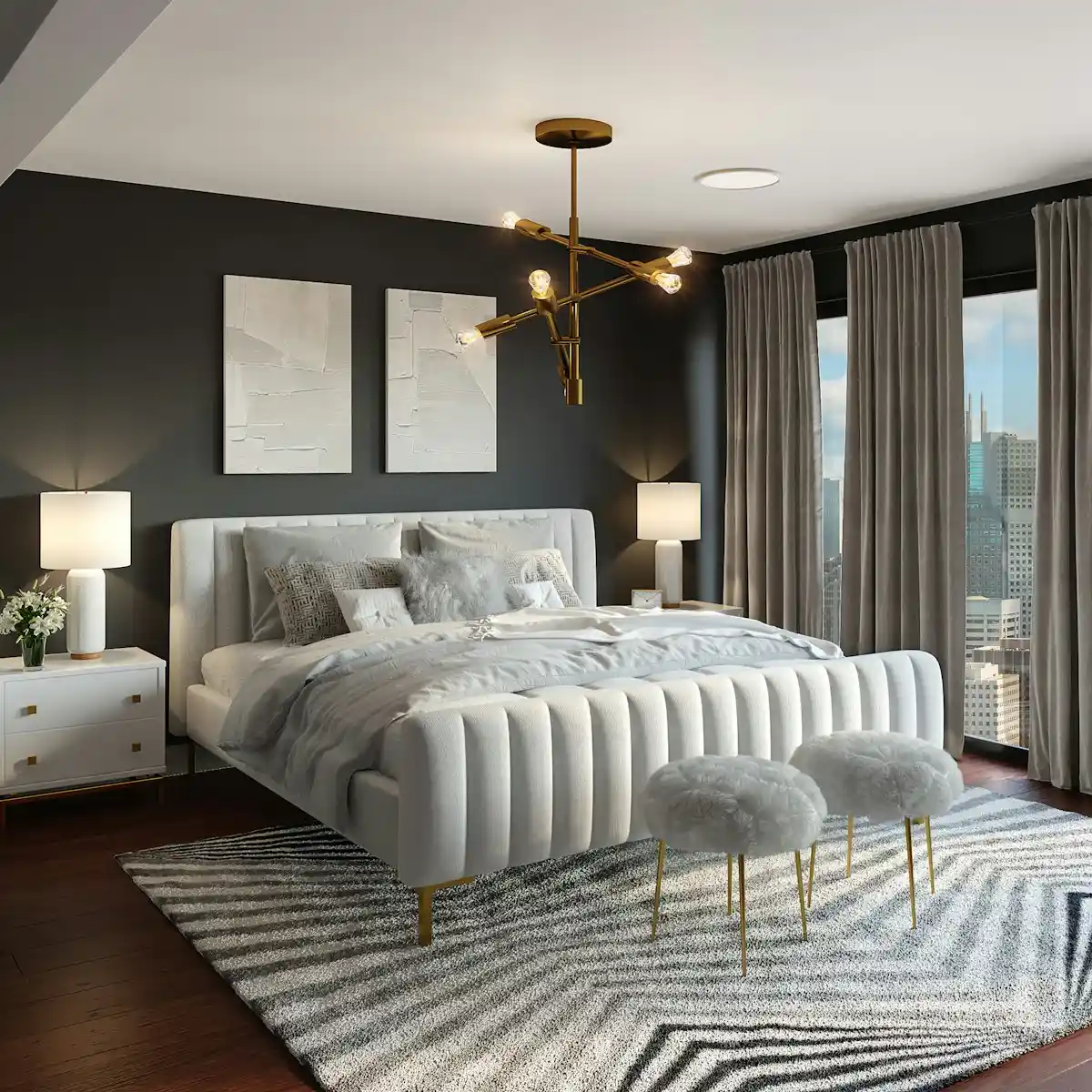
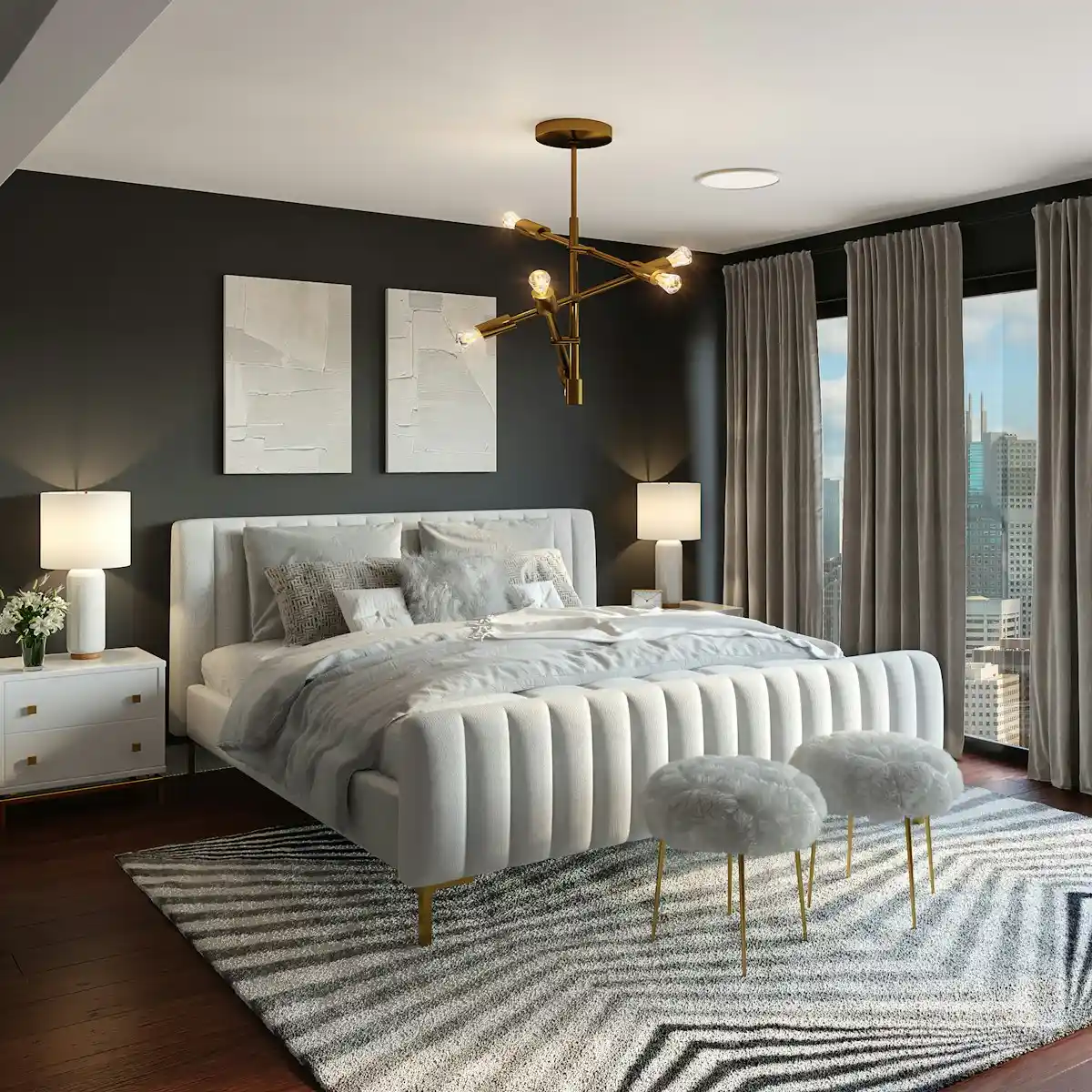
To design a moody dark bedroom without creating a cramped or cave-like space, color-drench all four walls, doors, and trim in a single low-reflectance paint shade between five and fifteen percent LRV. Balance deep charcoal, blackened emerald, or midnight navy walls with pale oatmeal linen bedding and warm honey oak furniture. Distribute soft twenty-seven hundred kelvin indirect lighting across three room elevations to eliminate harsh corner shadows.
Dark bedroom paint suffers from a stubborn design myth. Many believe painting small rooms in charcoal or forest green turns them into gloomy caves. Many homeowners assume only stark white walls feel spacious. They steer clear of rich pigments as a result. The outcome is often a flat, uninspired bedroom. It lacks the restful intimacy essential for sound sleep.
In architectural design, dark paint expands perceived boundaries. Removing contrast between walls, baseboards, and ceiling lines prevents your eyes from registering sharp room corners. This optical shift builds continuous depth. Before ordering paint samples, calculate your daylight balance with our interactive Light Reflectance Value (LRV) Paint Calculator to check pigment depths under specific room lighting.
Moody Dark Bedroom Color Scheme Ideas: Why Corners Dissolve
Dark wall paint expands perceived room size by removing shadow contrasts along wall intersections and ceiling lines. When light values match across perimeter planes, sharp architectural edges disappear. The human eye perceives continuous atmospheric depth without rigid room boundaries.
Human spatial perception relies on shadow cues. In a stark white bedroom, every corner, door casing, and baseboard casts visible gray shadow lines. This high contrast maps the room perimeter clearly. It exposes compact room dimensions immediately. In bedrooms with weak north-facing daylight, white paint looks dingy and cold.
Applying a deep wall color with a Light Reflectance Value between five and fifteen dissolves hard perimeter shadows. Wall corners soften into the background plane. The room shifts from a rigid physical box into an expansive sanctuary reminiscent of evening twilight.
Follow these optical guidelines when planning dark bedroom walls:
- The Low LRV Sweet Spot (5 to 15): Select paint colors with an LRV rating between five and fifteen percent. This narrow range absorbs incoming daylight cleanly. It softens corner shadows without turning chalky or muddy.
- Matte and Chalky Eggshell Sheens: Avoid satin or semi-gloss finishes on dark walls. Glossy sheens create harsh specular glare from bedside lamps. Velvety matte and chalky eggshell formulations absorb glare and preserve rich color depth.
- Embracing Natural Shadow: If your bedroom receives low natural daylight, lean into the mood. Deep walls turn shadowy rooms into deliberate, cozy retreats with authentic architectural character.
Moody Color Schemes Matrix: 5 Deep Palettes for Small Bedrooms
The five most successful dark bedroom color schemes are blackened emerald forest, charcoal midnight navy, rich espresso chocolate, smoked plum aubergine, and deep terracotta rust. Each palette pairs specific wood species, metallic hardware, and bedding textiles to prevent visual heaviness.
A successful moody bedroom balances deep perimeter drywall with tactile, warm furnishings. Pairing charcoal walls with cool gray sheets and polished chrome fixtures produces an institutional feel. Tactile balance comes from pairing deep walls with warm honey timber, unlacquered brass, and breathable flax linen. You can model your accent ratios with our 60-30-10 Color Rule Palette Generator. Review this matrix to select your palette:
| Palette Concept | Wall Color (LRV 5-15) | Bedding & Window Textiles | Wood & Metal Finishes | Spatial Mood |
|---|---|---|---|---|
| Blackened Emerald Forest | Deep pine green with charcoal undertones | Warm oatmeal linen and camel wool throw | White oak timber and unlacquered brass | Biophilic, organic, deeply grounded |
| Charcoal Midnight Navy | Inky indigo navy with slate gray base | Crisp ivory percale and cognac leather | Walnut timber and antique bronze hardware | Tailored, architectural, luxury calm |
| Rich Espresso Chocolate | Deep roasted cocoa with warm red undertone | Cream boucle blanket and taupe velvet | Bleached ash and brushed nickel fixtures | Warm, cocooning, retro richness |
| Smoked Plum Aubergine | Muted dark blackberry with slate veil | Washed clay linen and heather gray drapes | Honey birch and champagne gold sconces | Romantic, historic, twilight calm |
| Deep Terracotta Rust | Oxidized iron red with blackened umber base | Natural sand linen and ecru waffle blanket | Reclaimed pine and blackened iron hardware | Earthy, warm, Mediterranean shelter |
Every palette in this matrix features pale or warm bed linens. Dressing your mattress in high-reflectance flax duvets creates an illuminated central island that balances the surrounding dark drywall planes.
Color-Drenching vs Accent Walls: The Golden Rule for Compact Rooms
Color-drenching all four walls, baseboards, doors, and window trim in a single dark shade expands compact bedrooms visually. In contrast, an isolated accent wall truncates the room footprint by pulling that single dark surface forward and accentuating perimeter boundaries.
The single accent wall undermines small bedrooms. Coating only the headboard wall in dark green while leaving the remaining three walls white creates an awkward visual split. Dark surfaces absorb light and visually advance into the room. This effect cuts the usable floor space in half.
Apply full architectural color-drenching through these methods:
- Trim and Door Integration: Coat baseboards, window casings, radiator covers, and closet doors in the exact wall color. This unified finish removes high-contrast trim bands that segment room walls.
- The Ceiling Strategy: In rooms with eight-foot ceilings, paint the ceiling two tones lighter than the walls to provide subtle lift. You can also extend the exact dark shade overhead to build a restful canopy. Avoid stark white ceilings, which exaggerate low overhead heights.
- Drapery Matching: Hang linen drapery panels that match your wall pigment within two tones. Closed curtains blend cleanly into the walls. They produce an unbroken perimeter.
Upgrade switch faceplates and outlet covers during the color-drenching process. Standard white plastic switch covers stand out like glaring dots against deep charcoal or navy drywall. Swap plastic covers for paintable switch plates coated in matching trim enamel so they blend quietly into the background plane.
Layering Light in Dark Bedrooms: Beating the Cave Effect
To eliminate gloomy cave sensations in dark bedrooms, layer indirect warm twenty-seven hundred kelvin illumination across three levels: bedside sconces for task reading, floor canister uplights for perimeter wash, and concealed LED headboard strips for architectural glow.
Dark pigments absorb up to ninety percent of ambient light. A single overhead center bulb casts harsh downlighting and leaves room corners in deep shadow. You must spread illumination across multiple heights to skim across textures, illuminate surfaces gently, and create inviting pockets of golden light. Test your bulb selections using our Kelvin Color Temperature Visualizer to see how warmth affects dark paint.
Structure your dark bedroom lighting scheme using these techniques:
- Warm 2700K Color Temperature: Use bulbs rated between twenty-four hundred and twenty-seven hundred kelvins. Cool daylight bulbs shift dark paint toward an icy cast.
- Indirect Wall-Grazing Sconces: Mount wall sconces that cast illumination upward and downward. This grazing effect showcases matte drywall texture and bathes walls in golden light.
- Low-Level Perimeter Uplighting: Tuck a small floor canister light behind a tall potted plant or leaning floor mirror. Projecting light upward builds vertical depth along dark floorboards.
- Dedicated Dimmer Controls: Place all fixtures on independent dimmer switches. Dialing illumination down to twenty percent at night turns your dark bedroom into a calming retreat.
High-Contrast Balancing Elements: Warm Woods, Brass, and Light Linens
The key to maintaining an open feel in dark bedrooms is introducing high-reflectance balancing accents: pale oak furniture, unlacquered brass hardware, and washed oatmeal bedding that bounce ambient light across the room.
Without balancing accents, dark drywall feels dense and heavy. Sophisticated moody design builds on the dialogue between dark shadow planes and luminous surfaces. Natural textures with warm undertones construct an authentic visual hierarchy that feels deliberate and inviting.
Incorporate these four balancing elements into your bedroom layout:
- Warm Timber Furniture: Select nightstands, dressers, and bed frames in honey oak, walnut, or natural cane. Wood grains project warm organic tones that contrast crisply against deep walls.
- Reflective Metallic Accents: Install unlacquered brass, antique bronze, or brushed copper hardware. Warm metallic surfaces catch soft lamp light and scatter gentle reflections across dark surfaces.
- Pale Breathable Bed Linens: Outfit your bed in ivory, oatmeal, or pale sand linen sheets. Light duvet covers establish an inviting center that reflects soft light upward toward the ceiling.
- Oversized Leaning Floor Mirrors: Stand a large brass-framed mirror opposite a window. Mirror reflections double room depth and bounce daylight into corners. This placement removes sensations of enclosure.
Floor styling plays an equally direct role. If your bedroom features dark hardwood floors, place an expansive low-pile wool rug in ivory, warm oatmeal, or ribbed sand under the lower two-thirds of the bed frame. This pale horizontal layer breaks up dark floorboards, anchors the sleeping zone, and redirects bedside lamplight upward.
Ventilation, Air Quality, and Matte Paint Durability
Dark painted bedroom interiors show skin oils, surface burnishing, and settled dust much faster than light pale rooms. When you apply deep charcoal, midnight navy, or pine green hues in zero-VOC matte finishes, systematic maintenance preserves rich color depth without chalky streaks or shiny burnish marks.
First, specify ceramic-infused matte paint formulations. Standard builder flat latex contains high pigment volumes with minimal resin binder, which causes scuffs from pillows or fingertips to leave shiny, irreversible friction marks. Ceramic matte coatings deliver the light-absorbing qualities of flat paint while resisting surface burnishing and tolerating damp sponge cleaning.
Second, operate active indoor air filtration to prevent airborne lint from settling on dark surfaces. In dark bedrooms, pale lint fibers from cotton duvets, wool blankets, and clothing show up immediately on charcoal headboards, dark nightstands, and baseboards. Running a quiet HEPA air purifier on low speed pulls floating fibers from the air before they settle.
Third, spot-clean dark drywall with lukewarm water and a drop of clear dishwashing liquid applied with a soft cellulose sponge. Avoid ammoniated glass cleaners and rough scouring pads on dark walls. Harsh chemicals strip microscopic surface binders and leave discolored spots that demand a full wall repaint.
Fourth, balance dark walls with plush natural fiber flooring. An undyed wool rug in heather oat or sand reflects warm illumination upward. The soft weave tempers perimeter shadows while keeping the room tactile and grounded. For broader palette coordination, explore our curated Color Palettes & Styling Guide.
Fifth, arrange subtle satin brass or ceramic tabletop accents on nightstands to catch bedside light. Small reflective accessories break up wide dark planes. They ensure cozy master bedrooms remain intimate and open.
Consult the Benjamin Moore historical color collections for verified technical documentation, safety codes, and official industry standards.
Frequently Asked Questions About Moody Dark Bedrooms
Does painting a small bedroom dark make it look smaller?
No, dark paint does not shrink small rooms when applied across all walls and trim. It blurs corner shadow lines, which removes physical perimeter cues and reveals boundless atmospheric depth.
What is the best paint finish for dark bedroom walls?
Matte or flat eggshell is the best finish for dark walls. These non-reflective finishes absorb glare from lamps and windows. They block harsh reflection spots and preserve rich pigment depth across drywall.
What color temperature lighting should you use in a dark bedroom?
Use warm white lighting calibrated between twenty-four hundred and twenty-seven hundred kelvins. Warm golden light enhances the cozy richness of dark paint, whereas cool daylight bulbs make dark pigments appear commercial and cold.
Should you paint the ceiling dark in a moody bedroom?
Yes, painting the ceiling the same dark shade creates an unbroken canopy that eliminates dividing lines at the top of walls. Alternatively, use a complementary shade two tones lighter for subtle lift.
How do you keep a dark bedroom from looking like a cave?
Prevent a cave-like feel by color-drenching trim, layering multiple warm light fixtures at different heights, adding an oversized floor mirror, and anchoring the room with light ivory or oatmeal linen bedding.
What dark paint colors are best for promoting deep sleep?
Blackened emerald green, deep slate navy, and muted charcoal are best for sleep. These calming, organic tones lower heart rate and reduce nervous system stimulation compared to high-contrast white rooms.
Best Dark Paint Colors for Bedrooms: Tested Formulas and Undertones
Selecting the best dark paint colors for bedrooms requires choosing saturated shades with warm, velvety undertones that promote deep sleep and peaceful rest. Rich charcoals, deep navies, chocolate browns, and blackened greens create intimate sanctuary spaces without feeling harsh or cold under bedtime lamplight.
When selecting dark paint for a bedroom, evaluate undertones under 2700K warm bedroom lighting. Cold black or stark blue-gray pigments can feel clinical at night. In contrast, complex formulas like Benjamin Moore Hale Navy (HC-154), Sherwin-Williams Iron Ore (SW 7069), and Farrow and Ball Studio Green wrap sleeping spaces in soothing elegance.
| Bedroom Paint Shade | Brand & Code | LRV | Primary Undertone | Restful Atmosphere |
|---|---|---|---|---|
| Iron Ore | Sherwin-Williams SW 7069 | 6 | Warm Charcoal Slate | Modern sanctuary, grounding |
| Hale Navy | Benjamin Moore HC-154 | 8 | Deep Indigo Navy | Classic coastal calm, velvety |
| Studio Green | Farrow & Ball No. 93 | 5 | Blackened Pine Forest | Organic, cocooning retreat |
| Urbane Bronze | Sherwin-Williams SW 7048 | 8 | Warm Stone & Brown | Earthy luxury, serene |
| Salamander | Benjamin Moore 2050-10 | 5.7 | Emerald-Black Tone | Opulent vintage warmth |
Pair deep bedroom walls with tactile linen bedding in oat or cream, warm walnut headboards, and brass sconces to create rich material contrast. For broader guidance on whole-home saturated color schemes, explore our analysis of dark colored rooms.