How to Hang Curtains in an Apartment Without Drilling (6 Methods)
Reader Disclosure: This rental guide contains affiliate links. Buying through our links may earn us a small commission. We recommend tested rental hardware, tension rods, and no-drill brackets. These tools protect your security deposit on move-out day. Read our complete editorial policy.
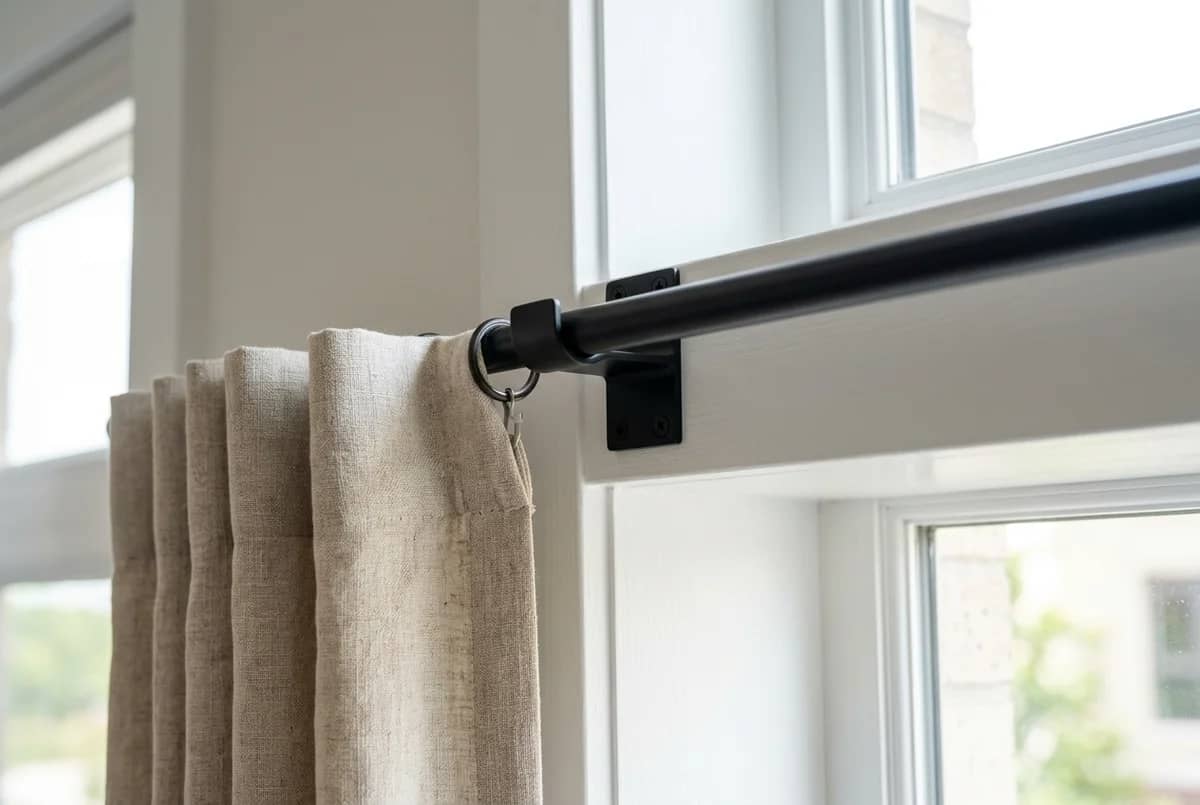
Hang curtains without drilling using tap-in brackets, blind clamps, or tension rods. Tap-in brackets hold up to 20 pounds of heavy drapes. They tap into the top wood trim with small steel pins. These pins leave zero visible marks at standing eye level. They keep your full security deposit safe on move-out day.
Rental hardware must balance fabric weight against wall anchor restrictions. Review exact weight ratings, setup steps, and move-out inspection secrets. These methods protect your rental security deposit on inspection day.
Quick Comparison: 6 Ways to Hang Curtains in an Apartment Without Drilling
Choose rental hardware based on window casing depth, wall type, and curtain fabric weight.
| No-Drill Hanging Method. | Maximum Weight Capacity. | Wall or Window Requirement. | Reddit Community Consensus. | Ideal Curtain Fabric Type. | Recommended Hardware. |
|---|---|---|---|---|---|
| Tap-In Casing Brackets. | Holds up to 20 lbs per pair. | Wood window casing with 1/2-inch top ledge. | Top renter pick. Holds heavy blackout drapes. | Triple-weave heavy blackout drapes. | Kwik-Hang Tap-In Brackets. |
| Blind Headrail Brackets. | Holds up to 15 lbs across headrail. | Existing vertical or mini-blind metal track. | Hides landlord blinds without wall damage. | Medium-weight linen or cotton drapes. | The NO-NO Bracket Headrail Clamps. |
| Spring Tension Rods. | Holds 10 to 15 lbs. | Recessed window jamb with flat side walls. | Fast 60-second setup. Add bumper pads on gloss paint. | Lightweight linen or privacy sheers. | Heavy Duty Spring Tension Rod. |
| Command Jumbo Metal Hooks. | Holds 7.5 lbs per hook (15 lbs pair). | Smooth drywall with cured paint. | Fits trimless drywall. Requires straight downward pull. | Light to medium cotton panels. | Command Jumbo Utility Hooks. |
| Magnetic Curtain Rods. | Holds 8 to 10 lbs. | Steel window frames or metal doors. | Instant magnetic grip. Zero glue and zero holes. | Lightweight sheers or cafe curtains. | Magnetic Multi-Use Curtain Rod. |
| Floor-to-Ceiling Tension Posts. | Holds up to 30 lbs across span. | Solid flat ceiling and floor contact points. | Great for wide patio doors and room dividers. | Floor-length heavy partition drapes. | Floor-to-Ceiling Tension Post System. |
The Rental Dilemma: Why Curtains Cause Security Deposit Deductions
Drilling heavy screws into drywall causes frequent security deposit disputes. Renters often drill plastic anchors into sheetrock to hang curtain rods. Pulling on drapes transfers downward force into those screws every day. Over a standard lease, this repeated pulling loosens the plastic anchors. The sleeves wobble inside the hole and crack the brittle gypsum core. Tenants often patch these holes with uneven spackle before moving out. Landlords then deduct $150 to $300 for drywall repairs and wall painting.
Most leases strictly ban wall punctures in window trim and drywall headers. Using tested no-drill hardware lets you hang drapes while keeping your full deposit.
Explore more rental solutions in our guides. Learn about studio apartment room dividers without drilling. You can also read how to cover ugly rental bathroom floor tiles.
Method 1: Tap-In Window Casing Brackets for Wood Trim
Tap-in brackets are the top no-drill hardware for wood window trim.
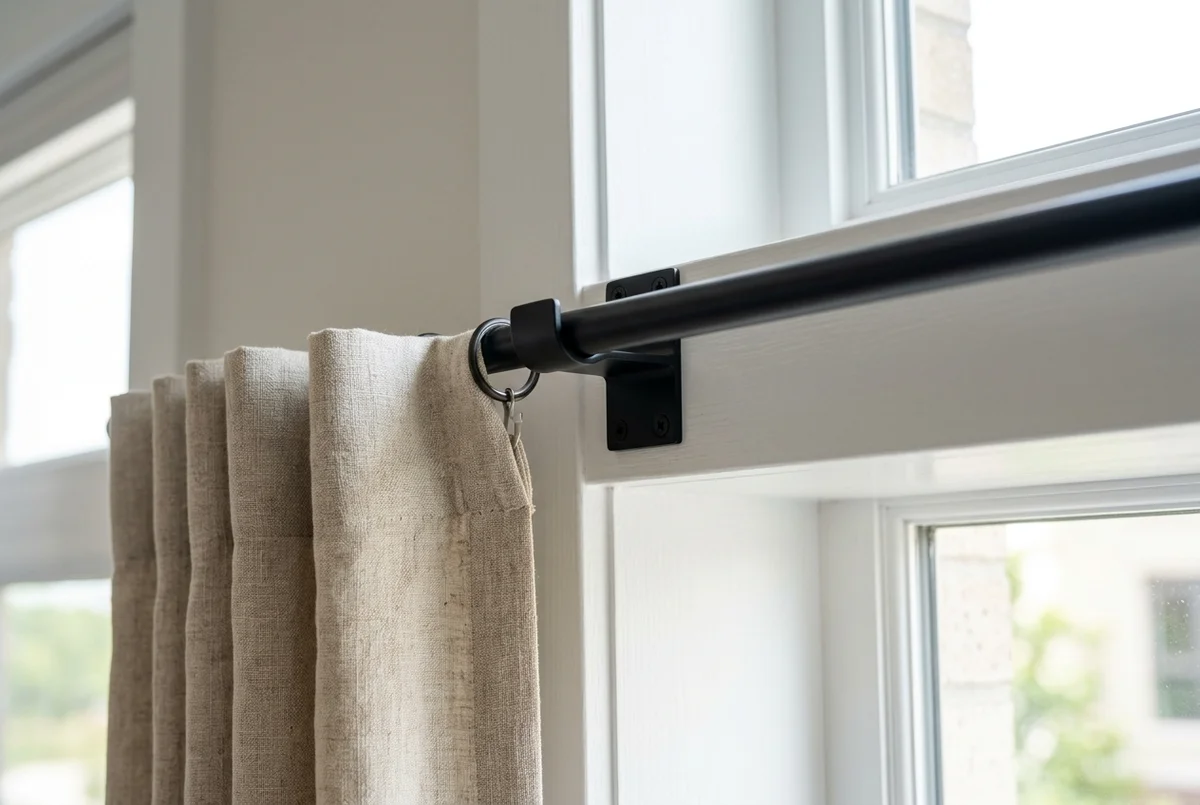
A tap-in bracket uses stamped steel with two sharp downward pins. Place the bracket directly over the top corner of your wood trim. Tap the top bracket face two or three times with a hammer. The pins sink 1/4 inch into the top surface of the trim. Downward rod weight pulls the bracket tight against the molding. This setup holds up to 20 pounds of fabric.
Why Renters Prefer Tap-In Brackets
Tap-in brackets support heavy blackout curtains without wall anchors. Unlike adhesive hooks, steel brackets hold velvet drapes and solid steel rods. The pins sit on the top surface of the casing. Landlords inspect rooms at standing eye level. They cannot see the top trim face. When your lease ends, slide the claw of a hammer under the bracket. Lift it off the wood trim. The tiny pin marks remain hidden from below.
Casing Depth Limits and Workarounds
Tap-in brackets require a flat wood trim ledge at least 1/2 inch deep. They do not fit drywall returns without trim. They also fail on metal frames and rounded bullnose sheetrock. You cannot mount the rod high above the window to boost ceiling height. For flat wood trim, pair these brackets with Kwik-Hang Tap-In Brackets for a fast setup.
Method 2: Heavy-Duty Spring Tension Rods for Recessed Window Jambs
Spring tension rods use internal springs to push outward against window side jambs.
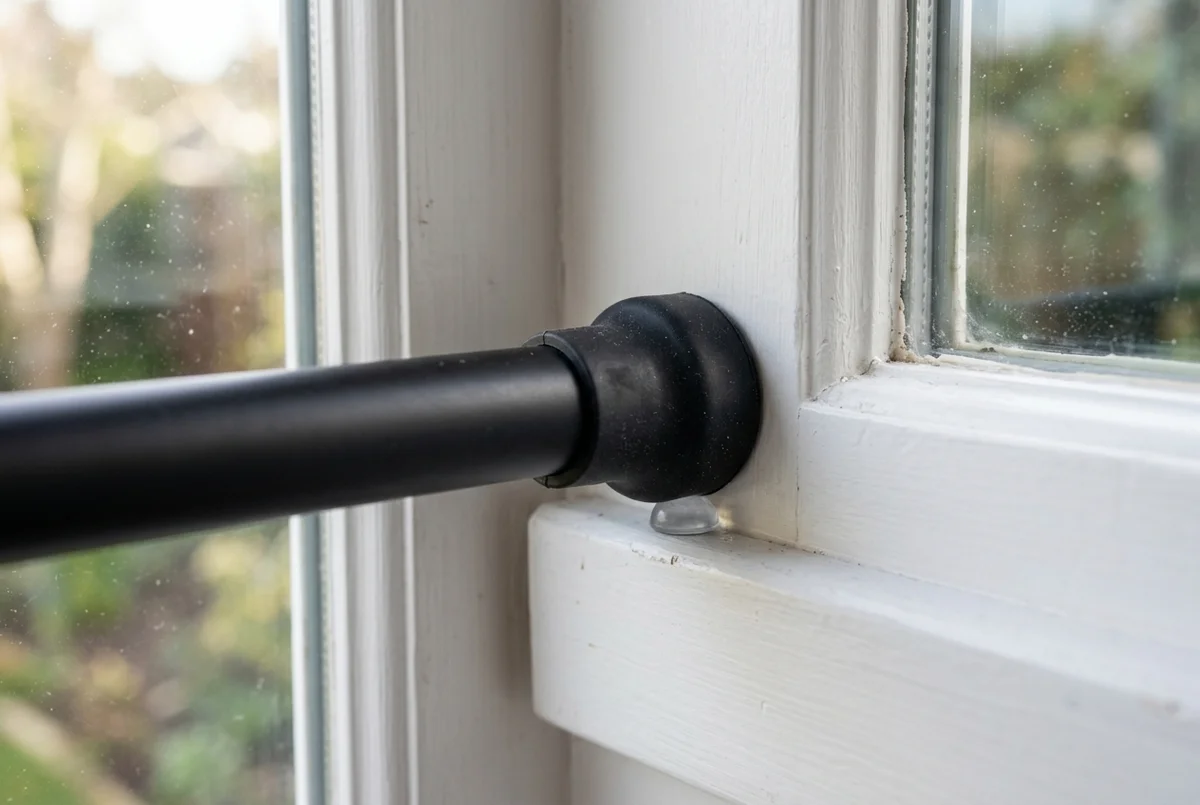
Tension rods suit lightweight linen panels, cafe curtains, and bathroom privacy sheers. Twist the telescoping rod until it measures 1 inch wider than the window opening. Compress the internal spring into place. Position the silicone end caps level against the jamb surfaces. Release the tension to set the rod.
The Anti-Slip Cabinet Bumper Hack
Renters on r/ApartmentHacks report that tension rods slide down slick gloss paint. You can stop this slipping with a simple hack. Clean the window jamb with rubbing alcohol. Stick a clear adhesive silicone bumper directly beneath each rubber end cap. The bumper forms a hidden shelf. It stops downward sliding without damaging paint.
Preventing Light Leaks on Inside-Mount Rods
Inside-mount rods sit inside the frame, letting light bleed around curtain hems. To block light, select curtains with deep rod pockets. Set the rod flush against the top head jamb. Place small adhesive velcro dots on the outer curtain hem and window jamb. Pressing the curtain edges against the pads seals side gaps. For windows with 2 inches of depth, choose a Heavy Duty Spring Tension Rod.
Method 3: Blind Headrail Clamp Brackets (The NO-NO Bracket)
The NO-NO bracket lets renters hang drapes over existing blinds without drilling holes.
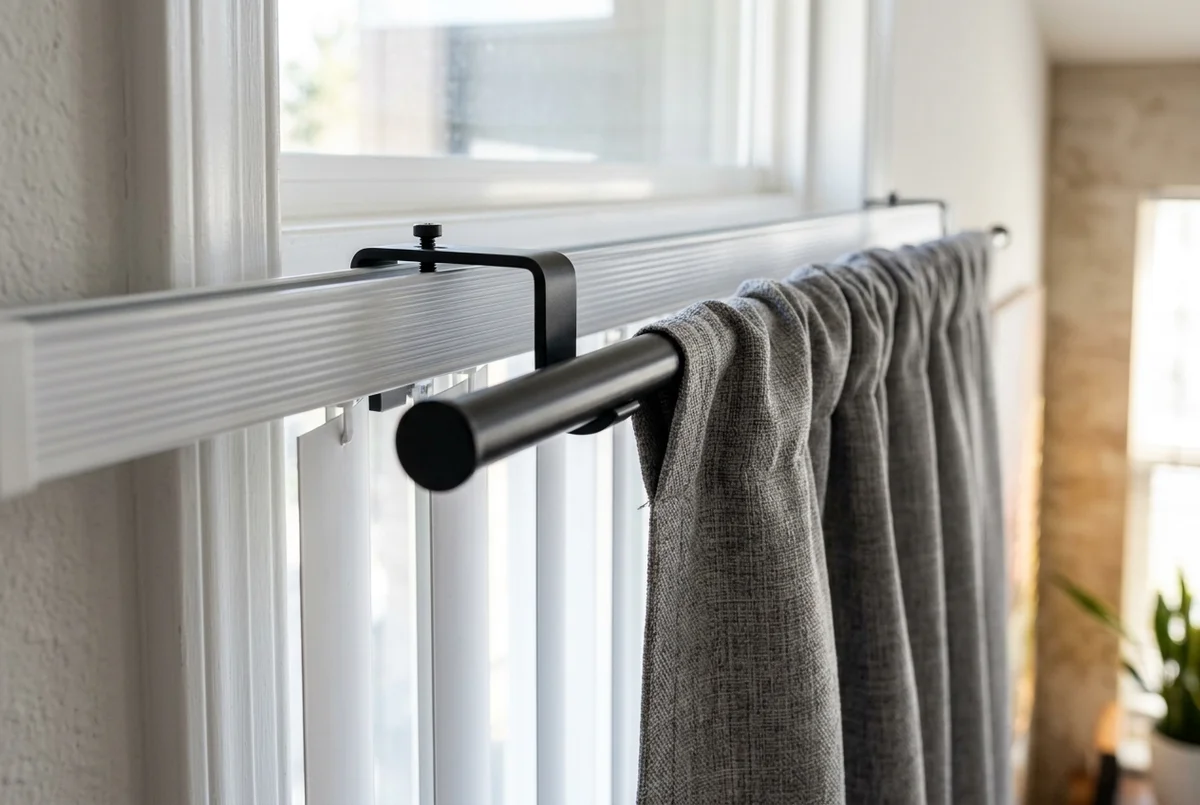
Most rentals feature plastic vertical blinds over patio doors or mini-blinds in bedrooms. Landlords forbid removing these blind tracks. The NO-NO bracket clamps directly onto the existing metal headrail. Slide the bracket hook over the top edge of the headrail. Tighten the lower thumbscrew to lock the clamp. Place your curtain rod into the front cradle.
Styling Curtains Over Existing Rental Blinds
You can create a designer look without removing landlord blinds. Rotate vertical blind slats open so daylight passes through. Slide all slats to one side behind your drapery panels. Mount a curtain rod that extends 6 to 10 inches past the window opening. Drawing your curtains closed hides the plastic slats completely. The headrail holds the weight, keeping walls and trim untouched.
Headrail Weight Limits and Bracket Spacing
Blind headrails mount to the wall with factory metal clips. Keep curtain fabric under 15 pounds total across the span. For wide patio doors over 60 inches wide, install three brackets. Place one on the left, one on the right, and one in the center. Use The NO-NO Bracket Headrail Clamps designed for your blind track style.
Method 4: Command Jumbo Metal Hooks for Drywall Without Trim
Command Jumbo Utility Hooks mount directly to painted drywall without wood trim or blinds.
Command strips use elastomer adhesive that grips the texture of cured latex paint. A pair of Command Jumbo Utility Hooks holds up to 15 pounds. This rating supports lightweight curtain rods and unlined cotton or linen drapes.
Preventing Shear Failure and Dropped Rods
Renters on r/ApartmentHacks report adhesive hooks falling after several days. This issue happens because pulling curtains open creates downward shear force. Daily pulling gradually weakens the adhesive bond. Keep fabric weight under 8 pounds when using adhesive hooks. For heavier curtains, mount three hooks across the span to share the load.
The 30-Day Paint Cure Rule
Never place adhesive strips on freshly painted walls. Fresh interior latex paint dries in hours, but cures over 30 days. Sticking adhesive strips to uncured paint bonds the adhesive to soft paint film. Pulling the removal tab later peels off paint and drywall paper. Verify your move-in paint date first. Clean drywall with rubbing alcohol and let it dry. Press strips firmly for 30 seconds. Wait one hour before hanging the curtain rod. Choose Command Jumbo Utility Hooks for clean, damage-free hanging.
Method 5: Heavy-Duty Magnetic Curtain Rods for Steel Frames and Doors
Magnetic curtain rods mount to steel window frames and metal doors without tools.
Loft apartments and units with metal balcony doors often have steel frames. Adhesives slip on these frames, and tap-in pins cannot pierce metal. Test your frame with a refrigerator magnet. If the magnet sticks, you can use magnetic hardware. These rods hold 6 to 10 pounds of fabric. They work well for sidelight windows, kitchen door curtains, and metal French doors.
Installation and Scratch Prevention
Strong magnets grip steel frames with great force. Pick magnetic bases with soft rubber backing to prevent scuffing factory paint. If your brackets have bare magnets, apply thin electrical tape over the contact face. Set the magnetic bases at your desired height and insert the rod. When moving out, tilt the bracket sideways to release the magnetic grip. Try a Magnetic Multi-Use Curtain Rod for steel door frames.
Method 6: Floor-to-Ceiling Vertical Tension Posts for Sliding Doors and Studios
Floor-to-ceiling tension poles lock between the floor and ceiling to hold drapes.
Standard rods struggle across 10-foot patio doors and open studio apartments. Vertical tension poles solve this span challenge. These poles extend from 7 to 10 feet tall. Non-marking silicone pads press against the ceiling and floor without damage. The crossbar clamps at any height. This system holds up to 30 pounds of heavy drapes across spans up to 12 feet wide.
Studio Zoning and Move-Out Cleanliness
Renters in open studio layouts use tension posts to separate sleeping zones from living spaces. This method leaves zero screw holes in the ceiling plaster. When moving out, twist the tension collar to release pressure. Wipe the ceiling contact area with a damp cloth to clear dust. For wide room dividers, use a Floor-to-Ceiling Tension Post System.
Fabric Weight Guide: Matching Hardware to Curtain Materials
Exceeding hardware weight limits causes curtain rods to collapse. Always calculate total curtain fabric weight before choosing mounting hardware.
| Curtain Fabric Material. | Average Weight per Pair (84-Inch Length). | Safest No-Drill Mounting Method. |
|---|---|---|
| Sheer Voile or Polyester Chiffon. | 1.0 to 1.5 lbs per pair. | Spring Tension Rod, Magnetic Rod, or Small Adhesive Hooks. |
| Unlined Natural Linen. | 3.5 to 5.0 lbs per pair. | Spring Tension Rod or Command Jumbo Hooks. |
| Medium Cotton Blend with Privacy Lining. | 6.0 to 8.5 lbs per pair. | Command Jumbo Hooks (Pair) or Blind Headrail Brackets. |
| Thermal Insulated Linen with Blackout Core. | 9.0 to 12.0 lbs per pair. | Tap-In Casing Brackets or Blind Headrail Brackets. |
| Heavy Velvet or Triple Weave Blackout Drapes. | 13.0 to 18.0 lbs per pair. | Tap-In Casing Brackets or Floor-to-Ceiling Tension Posts. |
Hold drapery panels in place without pulling on rods. Use Magnetic Rope Curtain Tiebacks to gather fabric panels away from the glass.
Prevent Curtain Rod Center Sagging: The 1-Inch Steel Standard
Curtain rods often sag in the middle under heavy fabric weight. This sag creates an unsightly bowed line.
On windows wider than 48 inches, thin 5/8-inch rods bow under standard drapery loads. The center slip joint forms a weak flex point. Renters cannot drill a center wall bracket, so rod strength matters. Always select a heavy-duty steel rod with a 1-inch diameter. A 1-inch steel rod transfers weight evenly to the outer brackets. This extra strength keeps the rod straight across 72-inch windows without a center wall bracket.
Calculate Curtain Weight and Hardware Clearance
Window dimensions and fabric density determine hardware load limits. Use our interactive calculator to verify fabric weights before buying supplies.
Move-Out Inspection Secrets: Protecting Your Security Deposit
Passing a rental move-out inspection requires understanding inspection habits. Tenants on r/Renting and r/ApartmentHacks share useful move-out tips.
Maintenance staff rarely inspect the upper horizontal ledge of window trim. They check eye-level drywall for mismatched spackle, torn drywall paper, and yellow glue marks. This habit explains why tap-in brackets pass inspections without deposit deductions. The tiny steel pins puncture only the top surface of the trim, completely hidden from eye-level view.
Avoid industrial foam tape on rental walls. Foam tape forms a strong bond that fuses with drywall paper. Prying off old foam tape rips away sheetrock paper and damages the core. If a Command adhesive pull-tab snaps flush with the hook, do not pry it with a blade. Warm the plastic hook with a hairdryer for 60 seconds to soften the adhesive strip. Then, slide dental floss behind the hook to cut the adhesive cleanly.
Frequently Asked Questions
Will Kwik-Hang brackets damage my landlord window trim?
Kwik-Hang brackets leave two tiny pin marks on the top surface of the window trim. These marks face the ceiling and remain invisible from eye level. When moving out, lift the bracket upward with the back claw of a hammer. Rubbing a dab of matching wood putty over the pin marks removes all traces.
How do you remove Command strips without peeling rental wall paint?
Pull the bottom adhesive tab straight downward along the wall surface. Stretch the strip downward by at least 15 inches. Pulling outward toward you exerts peel force that tears drywall paper. Pulling straight down releases the adhesive bond cleanly along the wall. If a tab snaps, warm the hook with a hairdryer for 60 seconds. Then, saw through the adhesive with dental floss.
Can you hang heavy blackout curtains with adhesive Command hooks?
Avoid hanging heavy blackout curtains with standard Command hooks. A pair of full-length blackout drapes with a steel rod weighs 14 to 18 pounds. This weight exceeds safe working limits. Pulling curtains open creates downward force that pulls adhesive hooks off the wall. For heavy blackout curtains, choose tap-in casing brackets or tension posts.
Do landlords consider curtain screw holes normal wear and tear?
Most rental agreements treat small picture nail holes as normal wear and tear. However, landlords classify large drywall anchor holes as damage. Property managers often deduct $50 to $100 per window for plastic anchors left in walls. If you must drill holes, pull the plastic sleeves out with pliers. Fill the holes flush with spackle and dab matching paint over the patch.
Can you hang curtains over apartment vertical blinds without removing them?
Yes, you can install NO-NO brackets directly onto existing blind headrails. Rotate the blind slats open, slide them to one side, and clamp brackets onto the track. Place your curtain rod into the cradles to hang drapes. The curtains conceal the plastic blinds without drilling any holes into walls or trim.
Conclusion: Window Privacy Without Security Deposit Risk
Renting an apartment never requires sacrificing bedroom privacy or living with bare windows. Match your window layout to tap-in casing brackets, blind headrail clamps, or heavy tension rods. These tools provide custom drapery styling while protecting your security deposit.
Continue upgrading your rental apartment with our practical design guides.