Wool vs Jute vs Sisal: Which Natural Fiber Rug Holds Up to Pets and High Traffic?

Reader Disclosure: This post contains affiliate links. If you buy through them, we may earn a commission at no extra cost to you. We only recommend durable natural floor coverings and safe cleaning products.
Wool is the best all-around natural fiber rug for households with pets and active foot traffic because its natural sheep lanolin coating repels liquid spills and its coiled crimp fibers spring back after years of compression. Sisal provides the highest raw abrasion resistance for busy front entryways but stains permanently when exposed to water, while jute offers the softest plant-fiber texture for low-traffic bedrooms but sheds vegetable dust and snags under cat and dog claws.
In this comparative buyer guide, we combine textile mechanical abrasion ratings with unfiltered long-term homeowner feedback from design and pet communities. Below, you will discover the real-world good points, pain points, pet claw interactions, and cleaning protocols for wool, jute, sisal, and seagrass.
Quick Comparison: Wool vs Jute vs Sisal Durability
Each natural fiber possesses unique structural qualities that dictate where it thrives and where it will fail in your home.
| Fiber Material | Foot Traffic Rating | Pet Friendliness | Stain Resistance | Barefoot Softness | Community Consensus | Recommended Care |
|---|---|---|---|---|---|---|
| Pure Wool | Very High (Living Rooms & Stairs) | Excellent (Doesn’t Snag) | High (Natural Lanolin Barrier) | 9/10 (Plush & Springy) | Wears for decades; sheds fuzz for first four months | View Cleaner → |
| Natural Jute | Moderate (Bedrooms & Lounges) | Poor (Claws Pull Loops) | Poor (Water Leaves Rings) | 8/10 (Soft Plant Fiber) | Gorgeous boho look; cats treat braided loops like scratchers | View Rug Pad → |
| Agave Sisal | Extreme (Hallways & Foyers) | Fair (Scratching Hazard) | Very Poor (Water Leaves Marks) | 3/10 (Coarse & Prickly) | Indestructible against boots; prickly on bare feet | View Cleaner → |
| Seagrass | High (Dining & Mudrooms) | Good (Non-Porous Reed) | Moderate (Wipes Clean Quickly) | 5/10 (Smooth & Waxy) | Naturally stain-resistant reed; fresh grassy scent initially | View Broom → |
Find Your Perfect Natural Fiber Rug in Seconds
Every home has different traffic patterns, pet habits, and barefoot preferences. Use our free interactive tool to match your room conditions to the ideal natural fiber:
- Traffic & Footwear Analysis: Matches heavy entryway boots versus barefoot bedroom comfort
- Pet Scratching & Spill Scoring: Evaluates cat claw snag risk and liquid spill recovery
- Maintenance & Shedding Rating: Predicts weekly care burden and moisture sensitivity
Fiber 1: Pure Wool (The Generational Champion)
Pure wool is an animal protein fiber that functions as the gold standard of resilient home flooring, offering a unique combination of plush comfort, natural fire resistance, and generational longevity.

The Physics of Wool Durability
At a microscopic level, wool fibers possess a natural three-dimensional crimp resembling tiny coiled springs. When compressed beneath heavy furniture legs or pounding human heels, these coiled protein chains flex and rebound rather than crushing flat like synthetic polyester. Furthermore, unstripped wool contains natural lanolin oils, creating a waxy hydrophobic shield on the exterior cuticle that causes spilled liquids to bead up on the surface for five to ten minutes before soaking into the core.
What Homeowners Praise (Good Points)
- Decades of Wear: Hand-knotted and tufted wool rugs can be passed down through two or three generations looking virtually brand new.
- Forgiving Spill Cleanups: Coffee, juice, and muddy paw prints wipe away cleanly when blotted promptly with lukewarm water.
- Acoustic and Thermal Insulation: Wool absorbs ambient room noise and insulates cold hardwood floors during winter far better than plant twines or thin synthetic weaves.
Real Practical Pain Points & Considerations
- Initial Shedding: For the first four months, new wool rugs shed short surface fibers. Your vacuum canister will fill with white fuzz until loose fibers clear.
- Wet Animal Scent: If soaked with warm water during cleaning, untreated wool emits a distinct wet sheep smell until thoroughly dry.
- Loop Pile Cat Claws: While flatweave and cut-pile wool rugs are immune to pet claws, chunky looped wool rugs can snag if cats knead them with unsheathed claws.
Fiber 2: Natural Jute (The Earthy Texture Favorite)
Natural jute is derived from the inner woody bast fibers of the tropical Corchorus plant, producing the softest, most pliable twine among all natural plant fibers.
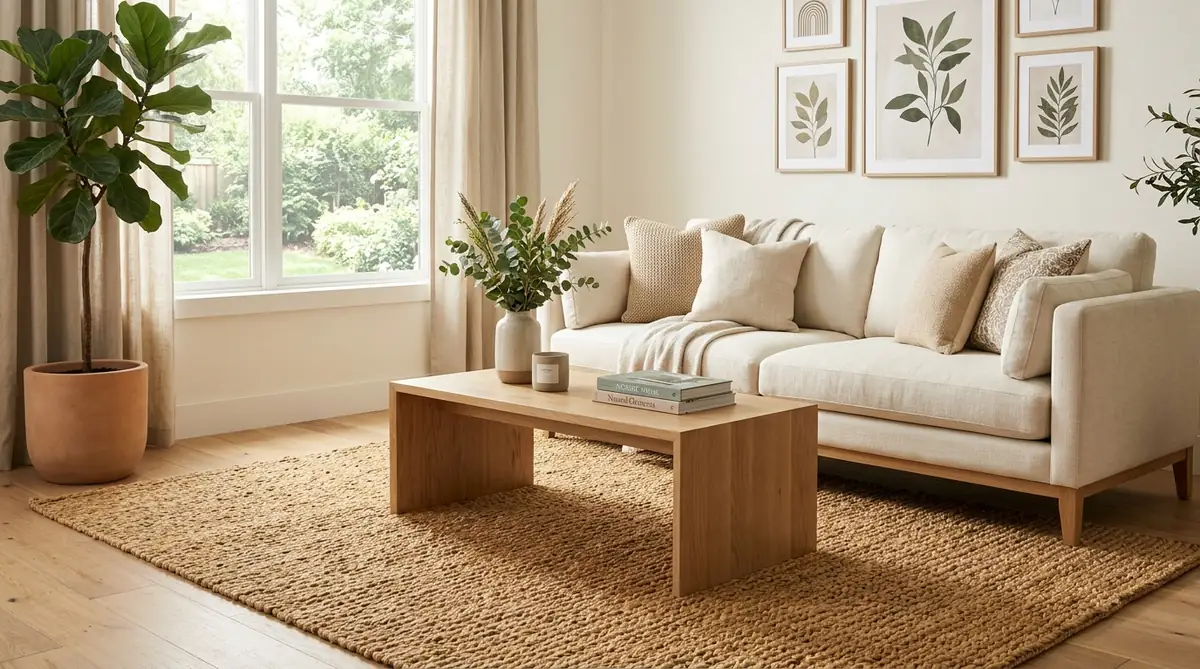
The Physics of Jute Durability
Jute fibers are long, soft, and shiny, held together by natural plant lignins and cellulose. Because jute is naturally softer than agave or reed plants, it feels pleasant beneath bare feet and gives living rooms a relaxed, coastal atmosphere. However, jute cellulose is highly porous. When exposed to liquid, jute absorbs moisture like a sponge, causing fibers to soften, swell, and release natural brown vegetable tannins that create permanent water rings.
What Homeowners Praise (Good Points)
- Effortless Organic Styling: Jute creates an authentic organic backdrop that complements leather sofas, linen drapes, and natural oak furniture.
- The Perfect Inexpensive Base: Jute is budget-friendly, making a large rug an affordable foundation for layering smaller vintage patterned rugs on top.
- Underfoot Comfort: Unlike scratchy sisal, a good quality braided jute rug feels warm and gentle enough to walk on in bare socks.
Real Practical Pain Points & Considerations
- Cat Scratching Hazard: Cat owners frequently discover that cats treat braided jute loops like an irresistible scratching post, pulling up frayed tufts that cannot be tucked back in.
- Permanent Water Stains: A single spilled glass of ice water or pet accident will leave a permanent dark brown stain ring. You cannot scrub jute with wet carpet shampoos.
- Vegetable Dust Accumulation: Jute rugs naturally shed fine microscopic plant powder beneath the rug pad as fibers flex under foot traffic, requiring regular sweeping underneath.
Fiber 3: Agave Sisal (The Heavy-Duty Workhorse)
Sisal is harvested from the stiff, sword-shaped leaves of the Agave sisalana cactus plant, creating the toughest, most abrasion-resistant natural textile used in residential interiors.

The Physics of Sisal Durability
Sisal fibers possess extraordinary tensile strength and abrasion resistance, making them virtually immune to fraying under heavy footwear, running dogs, or dragged dining chairs. The smooth, dense weave creates a clean, architectural look favored in contemporary transitional homes. However, sisal is entirely unforgiving of water. Liquid causes the rigid agave fibers to warp, shrink, and buckle, leaving permanent ripples in the middle of your living room.
What Homeowners Praise (Good Points)
- Indestructible Under Traffic: Sisal handles heavy foot traffic in busy entryways for a decade without showing crushed walking paths.
- Claw and Boot Resistance: Large dogs cannot gouge or snag a tightly woven sisal rug with their nails, making it ideal for entryway mudrooms.
- Crisp Modern Border Styling: The combination of natural honey-colored sisal with wide black or navy cotton twill borders adds architectural structure to formal spaces.
Real Practical Pain Points & Considerations
- Prickly Barefoot Discomfort: Sisal is not a rug for lounging or floor sitting. Walking on sisal without shoes feels rough and prickly, similar to walking on stiff dried pine needles.
- Water Drops Cause Dark Ring Stains: Water, tea, or soda spills cause immediate localized fiber shrinkage and dark discoloration that cannot be removed with traditional liquid carpet shampoos.
- Dry Extraction Cleaning Only: To clean sisal, homeowners must purchase specialized dry cleaning powders and sprinkle them across the rug rather than using steam cleaners.
Fiber 4: Seagrass (The Secret Pet-Friendly Plant Fiber)
Harvested from salt marshes and riverbanks throughout Southeast Asia, seagrass is a smooth, non-porous reed that offers a surprising level of natural stain resistance.
The Physics of Seagrass Durability
Unlike jute and sisal, seagrass grows entirely in water. As a natural defense mechanism, seagrass reeds develop an impermeable, waxy outer cuticle that prevents water absorption. Because the fiber cannot absorb liquids readily, spills sit on top of the weave rather than sinking into the core. Mud, wine, and pet accidents can be wiped off with a damp cloth before staining occurs.
What Homeowners Praise (Good Points)
- Remarkable Liquid Resistance: When pets have accidents on seagrass, the liquid sits on top of the waxy reed rather than soaking into the fibers, allowing prompt cleanup with zero water rings.
- Low Shedding: Seagrass does not shed vegetable dust like jute or wool fuzz, keeping floors beneath the rug pad clean.
- Smooth Surface: While not as soft as wool, seagrass has a smooth, glossy texture that feels pleasant underfoot compared to coarse sisal.
Real Practical Pain Points & Considerations
- Initial Grassy Scent: When first unpacked, seagrass gives off a potent dried hay scent that fills the room, taking two to three weeks of ventilation to clear.
- Rigid Weave: Seagrass cannot be dyed, meaning it is only available in its natural olive-green hue (which cures to a warm golden khaki over time).
- Mildew Vulnerability in Damp Spaces: If installed over a damp basement concrete slab, trapped moisture beneath seagrass can cause mildew growth.
Complete Natural Fiber Durability Scorecard
Here is how all four natural fibers stack up across daily living challenges:
| Living Condition | Wool | Jute | Sisal | Seagrass | Best Choice |
|---|---|---|---|---|---|
| Active Dogs (Running & Claws) | High | Low | Extreme | High | Sisal or Seagrass |
| Active Cats (Scratching Instinct) | High (Cut Pile) | Very Low (Destruction) | Moderate | High (Non-Snag) | Cut Pile Wool or Seagrass |
| Toddler Milk & Juice Spills | High (Lanolin Repels) | Extremely Low | Extremely Low | High (Waxy Reed) | Pure Wool or Seagrass |
| Barefoot Movie Nights on Floor | 10/10 (Pure Cloud) | 7/10 (Comfortable) | 2/10 (Painful) | 5/10 (Smooth Reed) | Pure Wool |
| Muddy Shoes in Entryway | Moderate | Low | 10/10 (Scrapes Clean) | 9/10 (Easy Sweep) | Sisal or Seagrass |
Essential Care Supplies for Natural Fiber Rugs
Proper maintenance dictates whether your natural fiber rug lasts five years or fifty. Never use harsh chemical spot removers on natural fibers:
- Wool-Safe Enzyme Spot Cleaner: Alkaline detergents dissolve natural wool proteins and strip protective lanolin. Use an officially certified pH-neutral cleaner like Wool-Safe Spot Cleaner.
- Dry Carpet Cleaning Compound: For jute and sisal spills, liquid water creates rings. Sprinkle Host Dry Carpet Cleaner to absorb oil and dirt without moisture damage.
- 100% Natural Rubber Rug Pad: Plastic waffle pads ruin hardwood finishes. Lock your rug in place safely with a 100% Natural Rubber Rug Pad.
Frequently Asked Questions
Here are clear, direct answers to the most common questions homeowners ask about natural fiber rug durability:
How do you clean dog or cat urine out of a wool rug without ruining it?
To clean pet urine from a wool rug safely, blot immediately with dry paper towels under heavy pressure, apply a 50/50 mixture of white vinegar and cold water, and blot again with a clean white cloth. Never use hot water, commercial ammonia sprays, or standard carpet shampoos on wool. Wool is an animal protein fiber; hot water causes permanent shrinkage, while alkaline cleaners strip away protective lanolin oils and cause dye bleeding. The mild acidity of white vinegar neutralizes alkaline ammonia salts in fresh pet urine, eliminating the odor at a molecular level without degrading the wool cuticle.
Why do cats love to scratch jute rugs, and can you prevent it?
Cats are instinctively attracted to jute rugs because the fibrous texture and braided resistance mimic natural tree bark, which felines use to groom claw sheaths and deposit territorial scent glands.
To protect a jute rug from being shredded, place tall sisal scratching posts directly adjacent to the rug corners and apply a cat-safe citrus essential oil spray along the rug border. If scratching persists, switch to a smooth seagrass rug or a flatweave wool rug, which provide no loose loops for claws to snag.
What should you do if you spill water on a sisal or jute rug?
If you spill liquid water on a sisal or jute rug, act within thirty seconds by blotting firmly with a clean, dry microfiber cloth and running a cool hairdryer over the wet patch to accelerate drying. Plant fibers contain natural lignins and plant sugars that dissolve upon contact with standing water, forming brown watermark rings as moisture evaporates.
If a brown water spot has dried into the fiber, dampen a clean cotton rag with carbonated club soda and gently blot the edges outward to feather the water line, then dry instantly with a cool air blower.
How can you stop a new wool rug from shedding all over the house?
To minimize shedding on a new wool rug, vacuum twice weekly using pure suction mode only, disengaging the rotating motorized beater bar brush completely. New wool rugs contain short staple fibers trimmed during the shearing process that work their way to the surface under daily foot traffic. When you run a stiff rotating vacuum brush over wool, the bristles pull out anchored yarns unnecessarily.
Using a smooth floor brush attachment lifts loose surface fluff safely without aggravating shedding, reducing fiber loss by 80 percent within three months.
Can you put a natural fiber rug on a screened-in porch or outdoor patio?
Only specialized synthetic poly-twine rugs or treated marine-grade seagrass can survive partially covered outdoor environments; true wool, jute, and sisal must never be placed on an outdoor patio or screened porch. True plant twines absorb atmospheric humidity from outdoor air, causing the dense backing to remain damp for days and fostering black mold and rot. For outdoor porches, select an all-weather polypropylene flatweave designed specifically to mimic natural sisal without moisture degradation.
Conclusion: Matching Your Rug to Your Lifestyle
Selecting the right natural fiber rug is about aligning material physics with your daily family reality. If you have babies crawling or you love walking barefoot, invest in the generational softness and resilience of pure wool. If you want affordable coastal elegance for an adult living room, braided jute provides unmatched texture. For heavy boots in entryways, choose indestructible sisal, and for messy pet dining zones, smooth seagrass is your best friend.
To complete your eco-friendly living room makeover, explore our complementary design guides: