Round vs Rectangular Dining Table: Which Shape Actually Fits Your Room?
Reader Disclosure: We earn an affiliate commission at zero extra cost to you when you purchase through links marked smyblog-20 on our website. We test and review products independently to deliver honest home decor advice.
A round dining table is the best choice for square rooms and compact open-concept dining nooks under twelve by twelve feet because it eliminates sharp corner pinch points and allows smooth circular walking flow. In contrast, a rectangular dining table works best in long rooms and easily seats groups of eight or more guests. Choosing a table shape that matches your room geometry ensures easy chair movement, balanced visual proportions, and relaxed everyday meals.
Before purchasing furniture, test your room layout with our interactive Dining Table Size Calculator to calculate exact perimeter clearances and find the perfect table shape for your floor plan.
Many homeowners struggle when choosing between circular and linear dining tables. Squeezing a rectangular table into a small square room creates sharp corners that bruise hips. Conversely, putting a small round table in a long rectangular dining room leaves massive awkward empty gaps at both ends. This detailed space planning guide compares room geometry, social dining dynamics, base styles, and clearance rules to help you choose the right table shape.
Room Geometry: Why Square Rooms Demand Round Tables
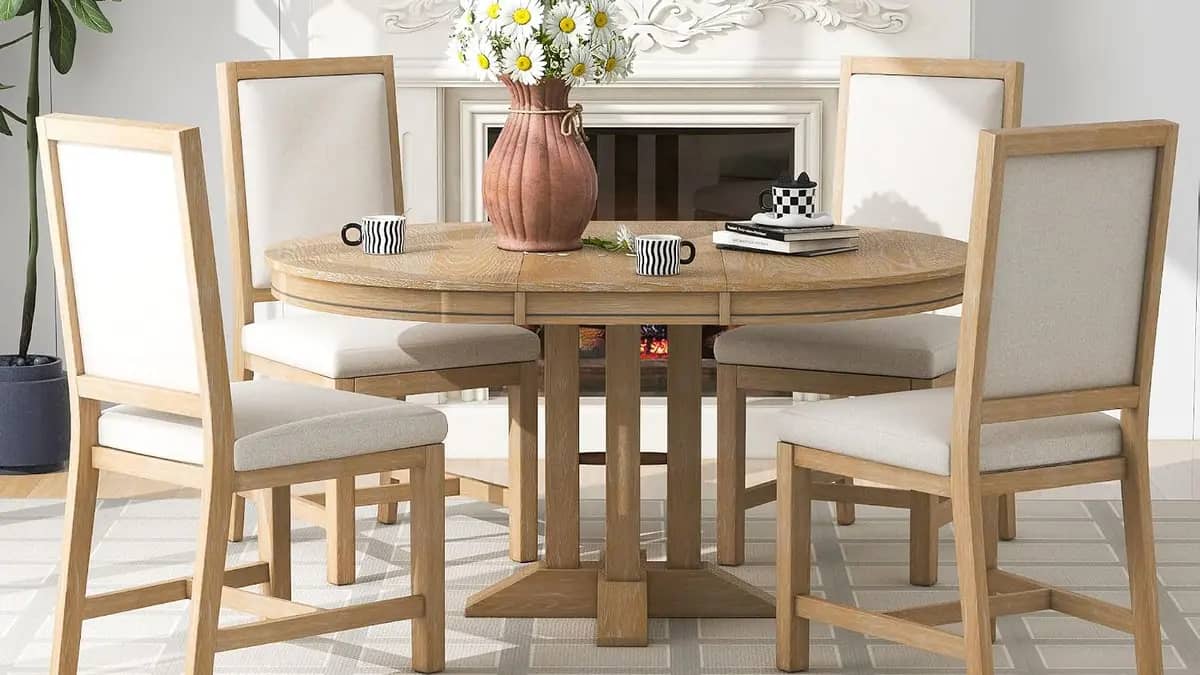
Square dining rooms pair naturally with round dining tables. Circular curves mirror equal wall proportions. They also eliminate sharp corners that choke walking flow. Place a round table in the center of a square room. The distance from the table edge to each wall stays uniform. This equal spacing creates visual harmony that makes small rooms feel open and balanced.
Circular Traffic Flow in Tight Spaces
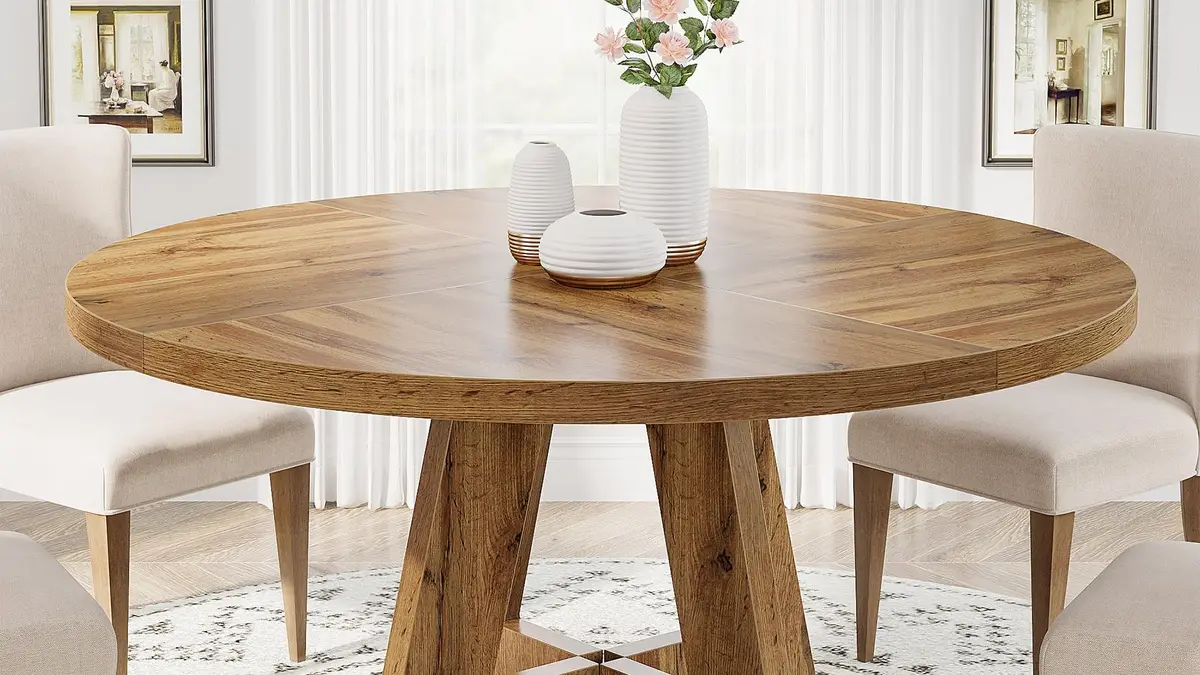
Open living spaces need clear walking paths. You need easy foot routes between kitchen islands, dining tables, and couches. Rectangular tables possess four rigid corners that stick out into pathways. People walking past must dodge these sharp edges continually.
A round table curves gently away from natural walking lines. Diners slide past the curved edges effortlessly without bumping their hips against solid timber. This curved clearance makes round tables ideal for homes with active toddlers who run through dining areas.
Visual Softness in Angular Rooms
Most modern homes feature rigid boxy rooms. Square drywall corners and straight window frames create a rigid look. Flat baseboards and cabinets add to this boxiness. Adding a large rectangular table only reinforces this harsh square shape.
A round table introduces soft organic curves. These curves break up rigid linear patterns effortlessly. The curved silhouette softens room acoustics and draws attention inward toward centerpieces and ambient pendant lighting. It brings relaxed warmth to formal architectural settings.
Conversation Dynamics and Social Ergonomics
Round dining tables encourage lively conversation. Every seated diner faces inward at an equal angle. Circular tables eliminate stuffy head-of-table seating. Hosts sit close to all their guests. Everyone shares eye contact across the table center, creating an intimate, lively dinner party atmosphere.
The Intimacy of 48-to-54 Inch Round Tables
A round table measuring forty-eight to fifty-four inches in diameter represents the gold standard for daily family dining. It seats four to six adults with generous elbow room. Diners can pass food bowls across the table without standing up or shouting over distant table runners.
This compact diameter suits card games, puzzle nights, and casual coffee mornings. Everyone feels connected in a shared circle. Long rectangular tables often divide conversations into two or three isolated clusters at opposite ends of the room.
When Round Tables Become Too Large to Reach the Center
Round tables lose their conversational intimacy when their diameter expands past sixty inches. A seventy-two-inch round table spans six full feet across. Diners sitting opposite each other feel distant, and reaching serving platters in the center becomes physically impossible without standing up.
If you choose a sixty-inch or wider round table, install a rotating twenty-inch marble Lazy Susan in the middle. The turntable circulates condiments, shared dishes, and water carafes smoothly to all seats. For seating needs over eight people, switch to a rectangular table format.
Seating Capacity and Expansion Flexibility: Rectangular Advantages
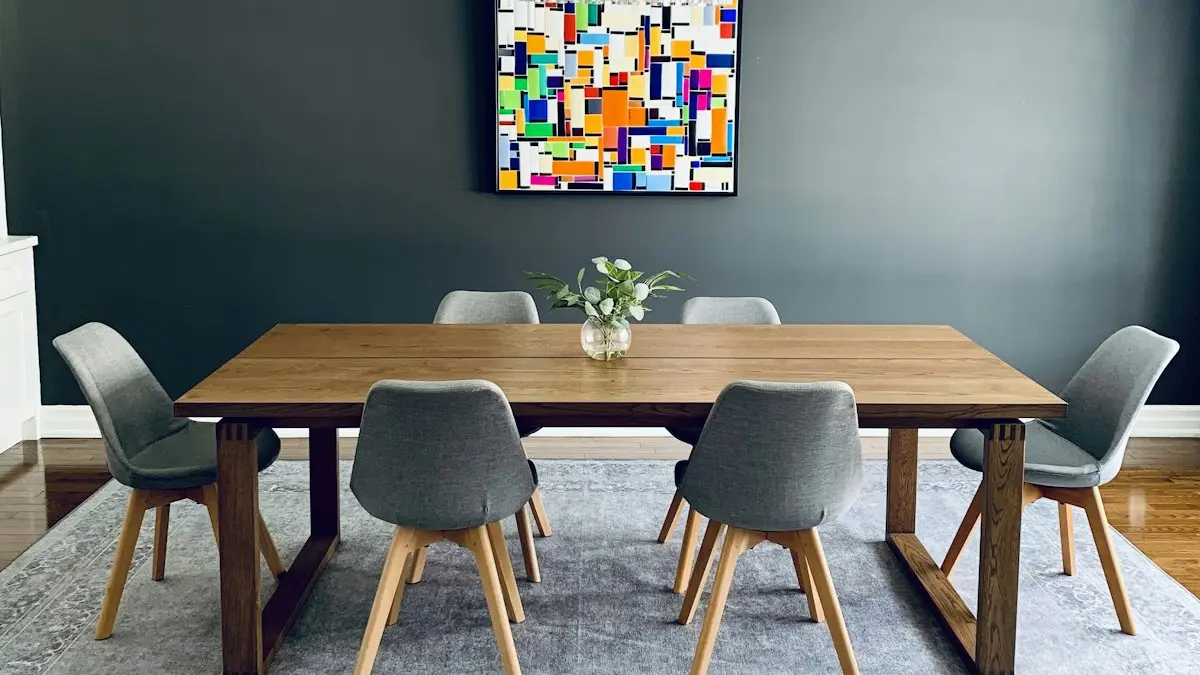
Rectangular dining tables provide superior seating capacity for large groups of eight to twelve guests and adapt easily with hidden leaf extensions. When hosting Thanksgiving dinners or holiday gatherings, a linear table layout handles long banquet seatings with complete stability. Rectangular tables also tuck flush against walls or banquette benches when extra floor space is required.
Maximizing Seating Along Long Walls
In narrow dining rooms measuring ten by fourteen feet or twelve by eighteen feet, a rectangular table matches room proportions. You can position an eight-foot table along the primary axis of the room, leaving forty inches of walking space along both sides.
Rectangular tables also integrate smoothly with built-in dining banquettes. You can slide one long side of the table against an upholstered bench along the wall. This built-in banquette setup seats four children in the footprint of two traditional chairs, freeing up two feet of walking room.
Extension Leaf Mechanisms vs Drop Leaves
Rectangular tables excel at expanding on demand. High-quality dining tables use internal geared ball-bearing slides. One person pulls one table end, and both ends glide apart smoothly to reveal hidden butterfly leaves folded underneath.
A six-foot table expands to eight or ten feet quickly. Round tables rarely feature internal extension leaves. Round drop-leaf tables fold down to save space, but hinged leaves often sag over time under heavy tableware.
Trestle Tables vs Corner Leg Bases
If you choose a rectangular table, consider a trestle base instead of four corner legs. Trestle tables use two central support posts connected by a low horizontal beam. The support posts sit inward from the table edges.
This inward placement frees up the table corners completely. Guests seated at the table ends never bang their shins against wooden corner legs. Diners along the sides can also adjust their chair spacing easily during large dinner parties.
The Pedestal vs Four-Leg Base Dilemma
Choose a central pedestal base for round dining tables to maximize knee freedom and allow flexible chair placement around the perimeter. Traditional tables place four legs at the corners. On round tables, outer legs bump knees and block extra chairs.
Pedestal Base Stability and Weight Distribution
A central pedestal eliminates leg collisions entirely. Family members can slide chairs in at any position around the circle without hitting outer posts. This flexible perimeter lets you squeeze in an extra dinner guest during informal family parties.
Look for pedestal tables with heavy cast iron or solid hardwood weighted bases. A heavy base keeps the table firmly anchored when people lean their elbows on one side. Lightweight hollow metal pedestals can wobble dangerously if diners rest heavy serving dishes on the tabletop rim.
Perimeter Clearance and Rug Coordination
Maintain at least thirty-six inches of clear space between your dining table edge and nearby walls or buffets. This three-foot buffer allows diners to push back chairs and exit comfortably without scraping wall paint. When choosing an area rug, coordinate sizing with our dining table rug size guide to keep all four chair legs flat on the carpet.
Pair circular tables with round or square area rugs that extend twenty-four inches beyond the tabletop. Pair rectangular tables with large rectangular wool rugs. Matching rug shapes to tabletop silhouettes anchors the dining suite with balanced residential symmetry.
Chandelier Sizing and Hanging Heights
Hang your dining light fixture thirty to thirty-six inches above the tabletop. This height keeps light fixtures out of diners’ direct sightlines while casting a warm glow over meals. Measure the suspension height from the tabletop surface to the bottom of the chandelier shade.
Size the light fixture to match your table proportions. Choose a chandelier with a diameter equal to one-half to two-thirds of the tabletop width. A thirty-inch round chandelier fits a fifty-four-inch round table perfectly. For long rectangular tables, hang an oblong linear fixture to illuminate the entire table length evenly.
Round vs Rectangular Dining Table Comparison
Review this comparison matrix to determine which dining table shape best matches your room layout, guest capacity, and daily lifestyle. Matching table format to room geometry prevents awkward traffic pinch points and creates a comfortable dining setting. Examine each design factor before ordering furniture.
| Design Factor. | Round Dining Table. | Rectangular Dining Table. | Best Choice Recommendation. |
|---|---|---|---|
| Ideal Room Shape. | Square rooms (10×10 or 12×12 ft). | Long rooms (11×14 or 12×18 ft). | Match table shape to room footprint. |
| Conversation Flow. | Intimate; all diners face center. | Segmented into side and end pairs. | Round for intimate daily family meals. |
| Corner Traffic Flow. | Fluid; zero sharp corner edges. | Requires wider perimeter paths. | Round for open layouts and tight spots. |
| Large Group Capacity. | Inefficient past eight diners. | Holds eight to fourteen with leaves. | Rectangular for big holiday gatherings. |
| Base Leg Clearance. | Pedestal base maximizes legroom. | Corner legs can limit chair tucking. | Pedestal round for flexible chair spacing. |
Chair Scale: Armchairs vs Side Chairs
Factor your dining chair dimensions into your table shape decision. Wide upholstered armchairs require twenty-eight to thirty inches of table width per seat. Slender wooden side chairs require only twenty-four inches of width. Bulky chairs reduce the seating capacity of any table format.
On round tables, choose armless chairs with low curved backs. Armless chairs tuck all the way under the circular edge when empty, keeping walking routes open. For long rectangular tables, place generous armchairs at the head and foot. Place slim side chairs along the sides. This classic combination gives hosts comfortable seating while maximizing side capacity for family guests.
Frequently Asked Questions About Dining Table Shapes
Is a round dining table better for a small dining room?
Yes. A round table eliminates sharp corner edges, creating smooth walking pathways in compact rooms. Its circular curve takes up less visual space, allowing chairs to tuck neatly around the central pedestal base without crowding walkways.
What size round table fits in a 12×12 foot dining room?
A forty-eight to fifty-four inch round table fits a twelve-by-twelve room perfectly. This size leaves forty to forty-five inches of open perimeter walkway around the table, providing ample room to pull out dining chairs comfortably.
Can you put a rectangular table in a square room?
You can, but it often looks unbalanced. A rectangular table crowds two opposing walls while leaving awkward empty space along the other two walls. For square rooms, choose a round or square dining table instead.
What are the main disadvantages of a round dining table?
Round tables cannot push flush against flat walls to save space. Large round tables over sixty inches make reaching central serving dishes difficult, and they seat fewer total guests than long rectangular tables with extension leaves.
When should you choose an oval dining table?
Choose an oval table when you want the high seating capacity of a rectangular table paired with the soft corner curves of a round table. Oval tables fit long narrow rooms while preserving fluid walking paths around corners.
Decorator Rules for Choosing the Perfect Table
Follow three core decorator guidelines to make your final dining table decision. First, map your room floor with blue painter’s tape before ordering furniture. Outline both circular and rectangular footprints to see how each shape impacts your everyday walking routes between the kitchen and living room.
Second, count your regular weekly diners versus holiday visitors. If you host four people on weeknights and twelve on Thanksgiving, buy a rectangular table with stowable extension leaves. If your household prioritizes intimate nightly dinners, choose a classic round pedestal table.
Third, match your dining pendant light to your tabletop silhouette. Hang a single large round globe or tiered drum pendant directly over a round table. For long rectangular tables, install a linear multi-light chandelier or a pair of matching pendant lamps. By aligning room geometry, table shape, and lighting, you build a welcoming dining space designed for memorable meals.
Fourth, protect your dining table top with heat-resistant table runners and natural linen placemats. Hot serving casserole dishes leave cloudy white heat marks on solid lacquer finishes within minutes. Using natural cork trivets and woven placemats preserves the timber grain, keeping your dining table beautiful through years of daily family meals.