Dining Table Rug Size Chair Clearance: 5 Sizing Rules
Reader Disclosure: This post contains affiliate links. If you buy through them, we may earn a commission at no extra cost to you. We only recommend items with clear specifications, practical value, and honest source checks.
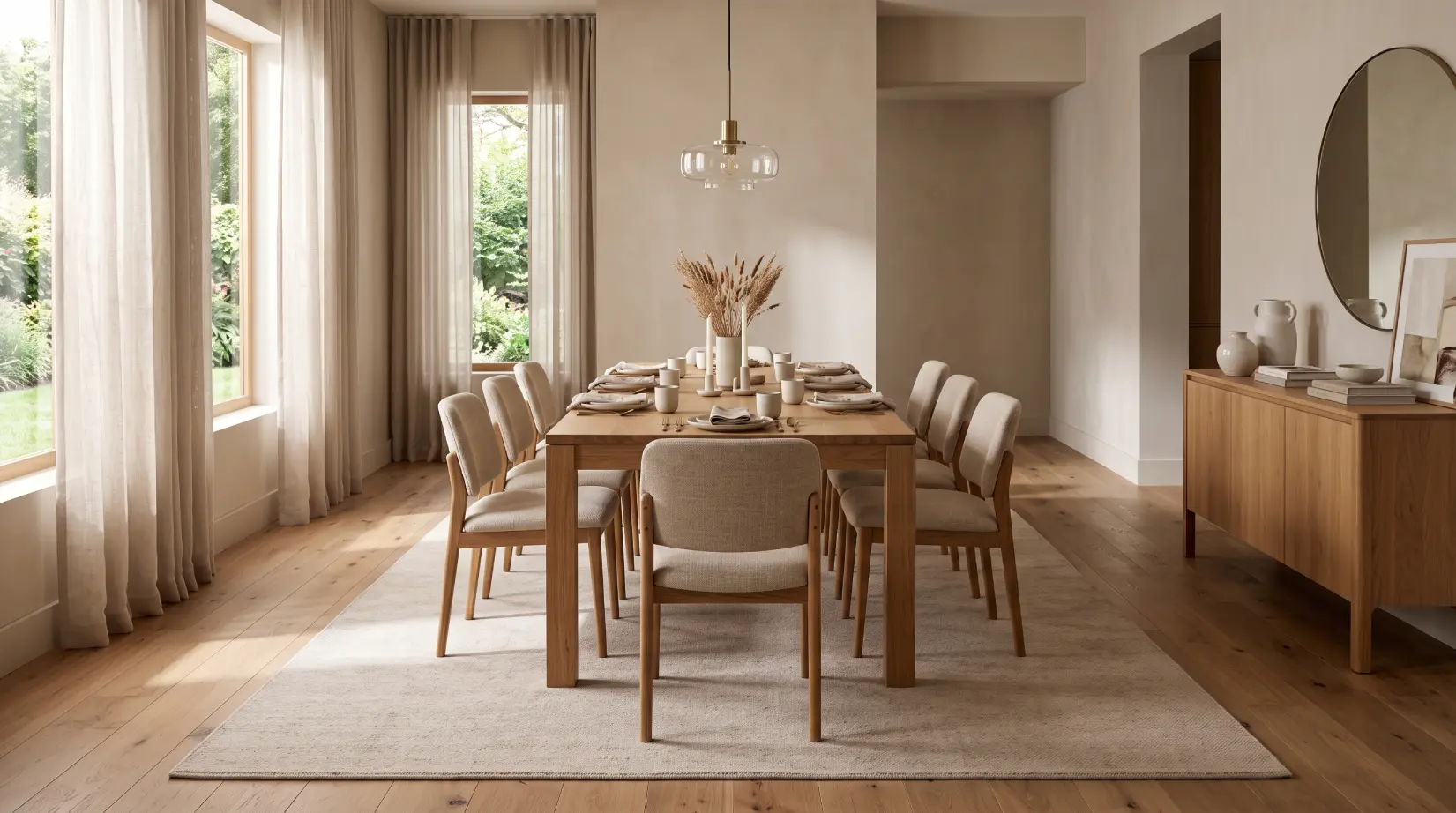
A dining room rug must extend at least twenty-four to thirty inches past all edges of the dining table. This non-negotiable twenty-four-inch chair slide rule guarantees that all four chair legs remain securely on the rug surface when guests push back and stand up from a meal. Sizing your rug with this border eliminates wobbly tilted chairs, stops curled rug edges, and frames your dining area with balanced architectural symmetry.
Homeowners frequently buy undersized rugs that look like small postage stamps beneath large dining tables. When diners push back their chairs to leave, the rear chair legs catch against the raised carpet hem. This snag causes drinks to spill, curls woven borders, and creates dangerous tripping hazards. This practical guide covers exact sizing math, room clearance guidelines, low-pile material selections, and floor protection methods for every dining table shape.
Before ordering, run your room and table measurements through the Rug Size Calculator. It helps you test the twenty-four-inch border before you pay freight shipping on a rug that may not fit.
The Non-Negotiable 24-Inch Chair Slide Rule Explained
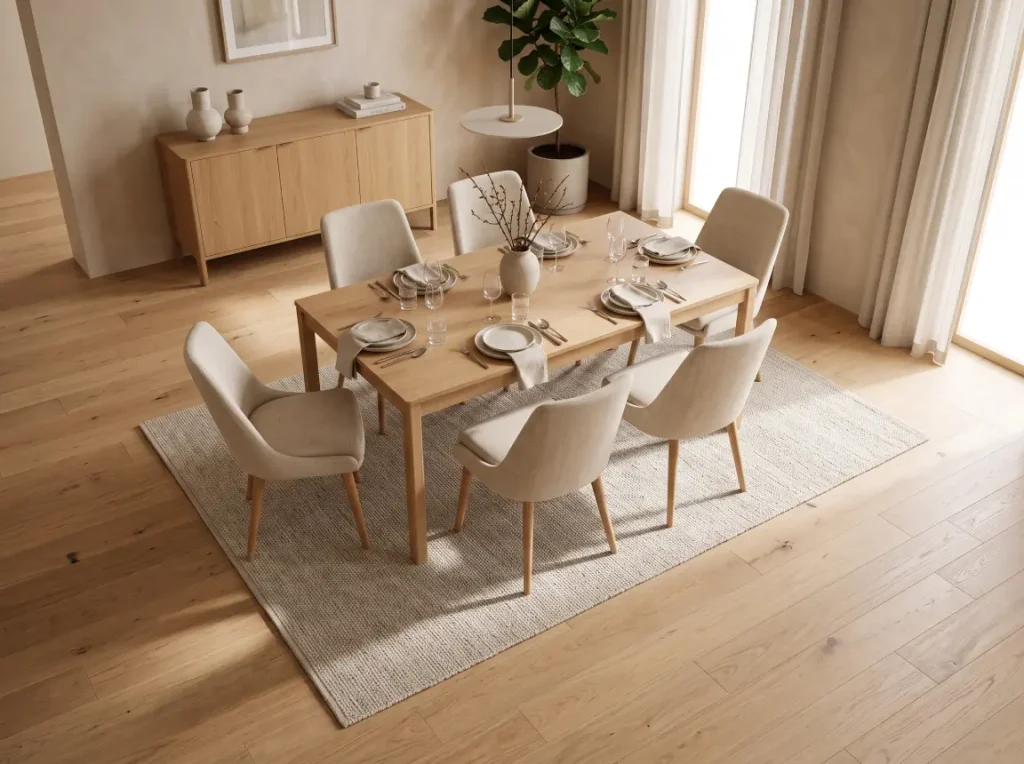
Extend your dining rug twenty-four to thirty inches beyond every side of your tabletop to create a safe, stable landing zone for pushed-back chairs. A seated adult naturally pushes their chair backward eighteen to twenty-two inches when standing up from dinner. If your rug ends sixteen inches from the table edge, the back chair legs fall off onto the bare floor.
The Physics of Chair Pushing and Tipping Hazards
When two chair legs drop off a thick rug edge, the chair tilts backward at an awkward angle. The diner experiences an unsettling wobble that can knock over wine glasses or water tumblers on the table. When the person attempts to pull the chair forward again, the back legs catch against the thick woven border.
Repeated chair leg strikes crush carpet binding and tear delicate fringe. Over several months, the rug border buckles upward into a permanent curved ridge. A twenty-four-inch border keeps all four chair feet level on the rug pile throughout the entire dining experience.
Accounting for Table Extension Leaves
Size your rug for your table’s fully extended length if you host frequent holiday gatherings or family dinners. Adding two eighteen-inch leaves expands a six-person table into a ten-person banquet table. If you buy a rug that fits only the compact everyday table, holiday guests at the ends will sit completely off the carpet.
Measure your table with all leaves locked in place before ordering a rug. Add forty-eight inches to the extended length and forty-eight inches to the width. This calculation ensures generous chair clearance whether hosting a quiet weeknight supper or a full festive celebration.
Standard Dining Table Sizes and Their Matching Rug Dimensions
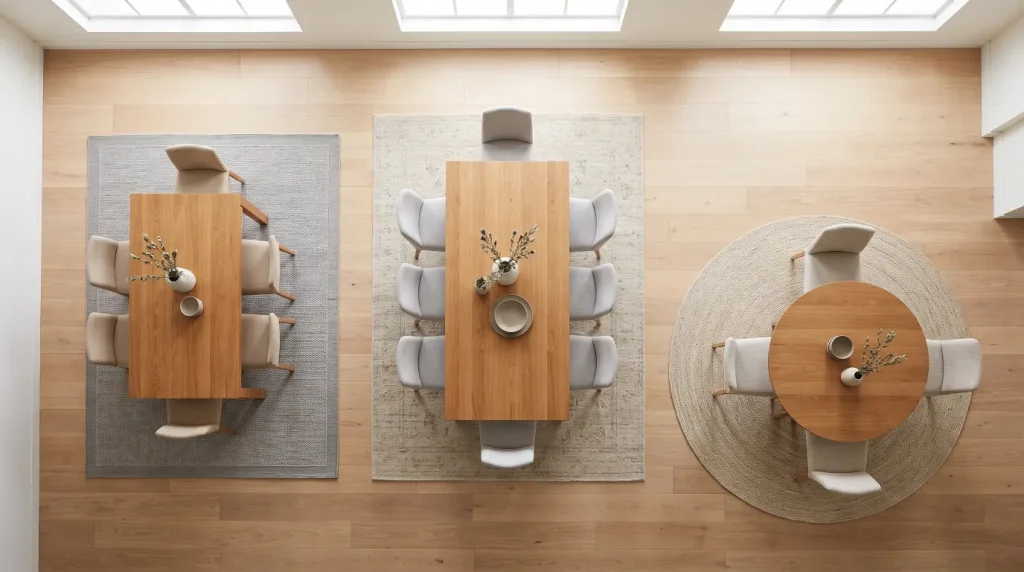
A standard six-person dining table measuring thirty-six by seventy-two inches requires an eight-by-ten-foot rug, while an eight-person table measuring forty by ninety-six inches demands a nine-by-twelve-foot rug. Pairing standard furniture dimensions with matching stock rug sizes saves you money and prevents expensive custom weaving orders. Always round up to the next standard rug size when your room allows.
Rug Sizing for Round Dining Tables
Round dining tables require round or square rugs that echo their circular geometry. To find the correct rug diameter, measure your round tabletop and add four feet to that number. Adding four feet gives you an exact twenty-four-inch border around the entire table perimeter.
A standard forty-eight-inch four-person round table requires an eight-foot round or eight-foot square rug. A sixty-inch round table requires a nine-foot round or nine-foot square carpet. Placing a rectangular rug under a round table creates awkward corner overhangs and unbalanced visual proportions.
If you still need to choose the table shape, compare traffic flow first in our round vs rectangular dining table guide. Table shape controls rug shape, walkway comfort, and chair clearance.
Rug Dimensions for Oversized Tables
Oversized ten-foot dining tables spanning one hundred twenty inches seat ten to twelve people. These long tables require a ten-by-fourteen-foot area rug. An eight-by-ten or nine-by-twelve rug leaves the end host chairs hanging over the border.
In grand formal dining rooms, a ten-by-fourteen rug anchors the entire room with luxurious proportions. It provides thirty inches of chair slide room at the sides and forty-two inches at the head and foot of the table. This generous spacing allows guests to walk behind seated diners without stepping off the rug.
Square Dining Tables and Square Rugs
Square dining tables create intimate conversation zones for four to eight diners. A fifty-four or sixty-inch square table requires an eight-by-eight or nine-by-nine foot square area rug. Square furniture demands an identical square rug shape to keep perimeter borders balanced on all four sides.
Never place a standard eight-by-ten rectangular rug under a square table. A rectangular rug leaves awkward empty flaps of carpet at the table ends while pinching chair clearance along the sides. If you cannot find a stock nine-by-nine square rug, purchase broadloom wool carpeting from a local flooring showroom and pay to have the raw edges custom bound.
Room Clearance: The 18-Inch Wall Reveal Rule
Maintain twelve to eighteen inches of bare hardwood floor between the outer edges of your dining rug and the perimeter baseboards. This exposed wooden border frames your dining area and gives the room architectural breathing space. Running a rug right up against baseboards suffocates the room and looks like cheap wall-to-wall carpeting.
Preventing the Wall-to-Wall Carpet Look
Hardwood and natural stone floors bring warmth, grain, and shine to dining spaces. An eighteen-inch bare floor border showcases your quality flooring while the rug softens room acoustics and cushions footfalls. This border also keeps carpet edges away from floor heating vents and baseboard radiators.
In compact dining rooms measuring eleven by thirteen feet, adjust the bare floor reveal down to ten or twelve inches. Dropping the reveal slightly allows you to fit an eight-by-ten rug with proper chair clearance while maintaining a visible wooden frame around the room.
Handling Buffet and Credenza Clearances
Dining rooms often hold large storage furniture like sideboards, buffets, or china cabinets. Never allow a dining rug to rest partially under the front feet of a heavy storage credenza while leaving the back feet on bare wood. Uneven footing tilts heavy cabinets forward, causing cabinet doors to swing open unprompted.
Keep your dining rug completely clear of side furniture by leaving at least four to six inches of open floor between the rug edge and the credenza base. This gap keeps storage pieces level and prevents dining chair slides from bumping against fine wooden cabinetry.
Best Rug Pile and Materials for Dining Rooms
Select flatweave wool, low-pile synthetic performance weaves, or tightly braided natural fibers with a total thickness under one-third of an inch. Dining chairs must slide across the rug surface with minimal friction. High-pile shag rugs or thick tufted carpets trap chair legs, accumulate food crumbs, and resist spot cleaning.
Why Flatweave Wool Outperforms Shag
Flatweave wool rugs offer the best combination of durability, smooth glide, and natural stain resistance. Pure sheep’s wool contains natural lanolin oils that cause liquid spills to bead up on the fiber surface for several minutes. When red wine or gravy spills, you can blot the liquid cleanly with a dry towel before it penetrates the core.
In contrast, high-pile shag carpets act like giant food traps. Rice grains, bread crumbs, and salad greens vanish deep into long yarn strands where vacuums cannot extract them. Shag fibers also catch against chair legs, causing daily frustration whenever diners pull their chairs forward.
Dense Felt Pads Prevent Rug Bunching
Always place a quarter-inch dense felt pad with a natural rubber backing under your dining rug. Thin waffle-style plastic pads fail under dining tables. When four people push back heavy chairs simultaneously, cheap pads slide and bunch the rug into dangerous folds.
A dense felt pad grips the floor securely with non-marking rubber while providing a firm cushion underfoot. Cut the pad two inches smaller than the rug on all sides. This two-inch inset allows rug edges to taper smoothly to the floor, preventing trip hazards along walkways.
Natural Fiber Rugs: Jute vs Sisal vs Seagrass
Natural plant fiber rugs bring rich earthy texture and neutral warmth to casual dining rooms. However, not all plant fibers perform well under dining chairs. Soft jute rugs shed fine dust continuously and absorb liquid spills like sponges, leaving permanent brown water stains within minutes.
Choose tightly woven seagrass instead of jute or sisal for dining spaces. Seagrass reeds grow in saltwater marshes and feature a natural wax coating. This slick waxy surface repels wine and sauce drips, allowing you to wipe away food spills easily. The tight, hard basketweave also lets dining chair legs slide smoothly without catching delicate plant strands.
Dining Table and Matching Area Rug Size Matrix
Review this practical reference matrix to match your dining table dimensions with the ideal standard rug size. These formulas give you twenty-four inches of chair slide room and proper wall spacing. Measure your dining room footprint before ordering area rugs online.
For seat count, walkway space, and table footprint checks, pair this rug matrix with the Dining Table Size Calculator. Rug size works best after the table footprint fits the room.
| Dining Table Dimensions. | Seating Capacity. | Minimum Rug Needed. | Ideal Standard Rug. | Bare Floor Reveal. |
|---|---|---|---|---|
| 48-Inch Round Table. | Four persons. | Eight-foot round or square. | 8 x 8 Foot Rug. | Eighteen to twenty-four inches. |
| 36 x 60 Inch Rectangular Table. | Four to six persons. | Seven by nine feet. | 8 x 10 Foot Rug. | Eighteen to twenty inches. |
| 38 x 72 Inch Rectangular Table. | Six to eight persons. | Seven-point-five by ten feet. | 8 x 10 or 9 x 12 Foot Rug. | Fourteen to eighteen inches. |
| 42 x 96 Inch Large Table. | Eight to ten persons. | Eight-point-five by twelve feet. | 9 x 12 or 10 x 14 Foot Rug. | Twelve to sixteen inches. |
| 44 x 108 Inch Extension Table. | Ten to twelve persons. | Nine-point-five by thirteen feet. | 10 x 14 Foot Rug. | Twelve to fifteen inches. |
Frequently Asked Questions About Dining Room Rugs
How much rug should show around a dining table?
Your rug should extend twenty-four to thirty inches past all table edges. This border allows seated diners to slide their chairs back and stand up without the rear chair legs dropping off the rug onto bare flooring.
Can you put a round rug under a rectangular dining table?
No. Rectangular tables require rectangular rugs. Placing a round rug under a long table leaves the end chairs hanging over bare floor edges, creating unstable seating angles and visual discord across the dining room layout.
What should you do if your dining room is too small for a rug?
If your room cannot fit a rug that extends twenty-four inches beyond the table, skip the rug completely. Beautiful bare hardwood floors look far better than a cramped, undersized rug that constantly catches dining chair legs.
How do you keep chair legs from snagging on rug borders?
Choose a flatweave rug with a low pile height under one-third of an inch. Install smooth plastic or nylon glides under wooden chair legs. Smooth glides move across tight wool weaves without catching on carpet loops.
What is the easiest dining room rug material to clean?
Solution-dyed polypropylene and flatweave wool offer the easiest cleaning. Polypropylene fibers resist liquid absorption completely, allowing you to wipe away red wine or tomato sauce with a damp cloth and mild dish soap without staining.
Decorator Rules for Dining Room Rug Maintenance
Keep your dining rug clean for years by following three maintenance rules. First, rotate your rug one hundred eighty degrees twice a year. Regular rotation balances foot traffic wear patterns from main kitchen doorways and distributes sunlight exposure evenly across the dyed fibers.
Second, clean spills immediately using clean white microfiber cloths and cold water. Never scrub stained wool with hot water, as heat sets food proteins deep into the yarn. Press down firmly with dry towels to absorb liquid before it reaches the floor pad.
Third, vacuum your dining rug weekly with the rotating beater bar turned off. Suction-only vacuuming lifts loose crumbs gently without pulling at woven flatweave knots. By matching rug dimensions to chair clearance rules, you create a sophisticated dining retreat built for memorable family feasts.