Cork Flooring vs Bamboo Flooring: 5 Durability Tests
Reader Disclosure: This post contains affiliate links. If you buy through them, we may earn a commission at no extra cost to you. We only recommend items tested for clean craftsmanship and authentic durability.
In a direct cork flooring vs bamboo flooring comparison, strand-woven bamboo wins for high-traffic hallways and households with large, active dogs because its Janka hardness rating exceeds 3,000 pounds. Natural cork wins for kitchens, home offices, and bedrooms because its cellular elasticity prevents standing fatigue, cushions dropped glassware, and dampens ambient impact noise by over 50%.
Homeowners seeking eco-friendly alternatives to slow-growth oak and petroleum-based vinyl flooring frequently hesitate between cork and bamboo. Both materials carry stellar environmental credentials. Bamboo grows as a fast-regenerating woody grass that farmers harvest every five years. Cork comes from hand-stripped outer bark harvested from living cork oak trees without felling timber. However, their physical performance inside real homes differs drastically.
Selecting the wrong material for your room conditions causes expensive problems, from swollen click-lock seams around kitchen dishwashers to scratched finishes and bleached floorboards under south-facing windows. Before ordering flooring cartons or paying installation deposits, verify that your chosen manufacturer uses non-toxic, low-emission adhesives. Use our paired interactive tool, the Eco-Material and Non-Toxic Certification Checker, to evaluate VOC emissions, FloorScore ratings, and material safety data sheets in thirty seconds.
Cork Flooring vs Bamboo Flooring: Hardness, Scratches, and Janka Ratings
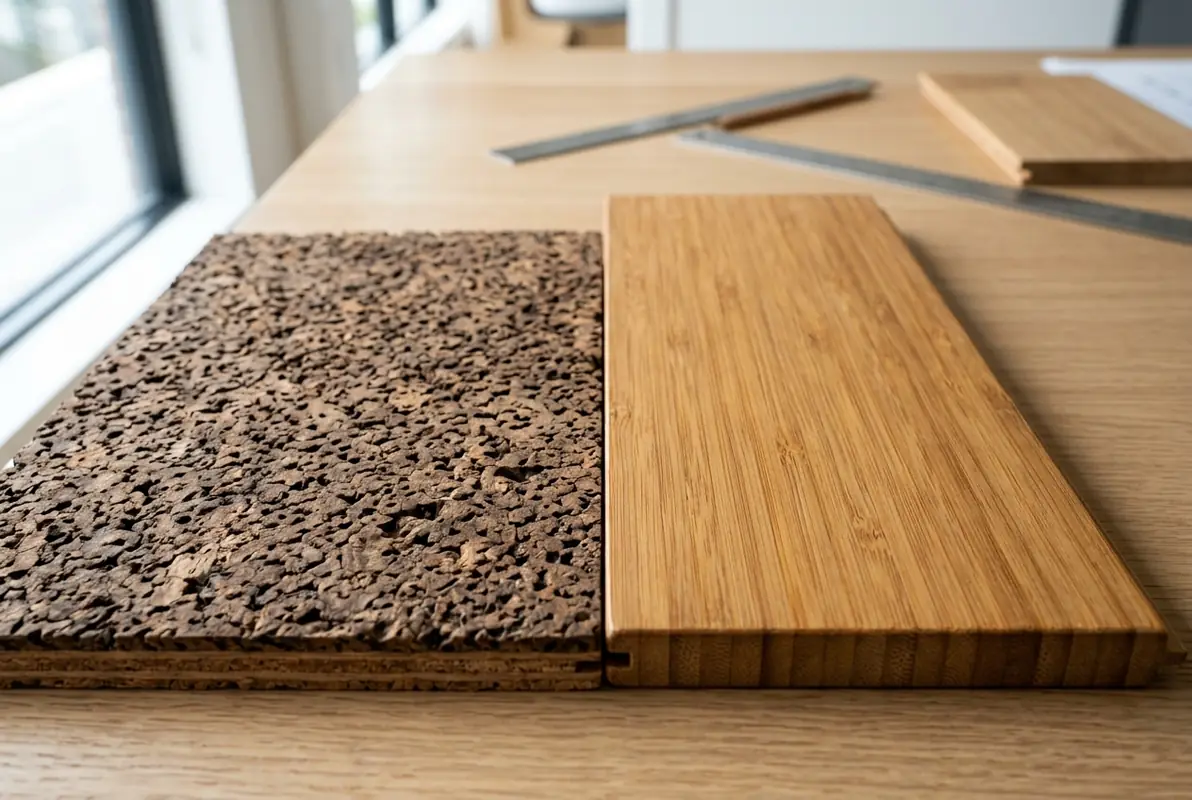
Strand-woven bamboo flooring is significantly harder and more dent-resistant than cork flooring, scoring between 3,000 and 4,500 pounds on the standard Janka hardness scale compared to cork’s modest rating of 200 to 400 pounds. However, cork possesses natural cellular elasticity that allows it to compress and bounce back from blunt pressure, whereas bamboo resists deep gouges but shows fine surface micro-scratches across high-gloss aluminum oxide topcoats.
The Janka hardness test measures the force required to embed an eleven-millimeter steel ball halfway into a wood plank. Understanding the manufacturing difference between bamboo types is essential. Traditional horizontal and vertical bamboo planks score between 1,200 and 1,400 pounds. These traditional cuts perform similarly to soft pine or red oak. In contrast, strand-woven bamboo shreds raw bamboo stalks into individual fibers, saturates them with adhesive resins, and compresses them under two-thousand-ton hydraulic presses. This dense composite structure creates exceptional impact resistance that easily deflects dropped cast-iron pans and high-heeled shoe strikes.
Cork approaches impact resistance through pure cellular physics. A single cubic centimeter of natural cork contains forty million microscopic pentagonal cells filled with an air-like gas. When heavy furniture legs or dropped coffee mugs compress cork, these microscopic cellular pockets compress inward. Once you lift the pressure, the cells expand back toward their original shape. To protect cork from permanent depression under heavy credenzas or dining tables, always install wide heavy duty felt furniture pads for hardwood and cork floors beneath all contact points.
Pet owners face distinct trade-offs with both surfaces. Large dogs with untrimmed nails will scratch the clear protective polyurethane finish on cork floors over time. However, cork provides soft traction that prevents older dogs from slipping. This firm traction protects canine hips and joints. Strand-woven bamboo resists claw puncture completely, but hard dog claws create a distinct, hollow clicking sound with every step across uncarpeted rooms.
Water Resistance and Moisture: What Happens During Real Kitchen Spills?
Natural cork is inherently more water-resistant than bamboo because its cell walls contain suberin, a waxy natural substance that repels liquid penetration, but floating click-lock planks of either material will warp permanently if standing water penetrates their high-density fiberboard (HDF) cores. For kitchens, laundry rooms, and powder rooms, glue-down solid cork tiles sealed on-site with three coats of polyurethane provide the safest moisture defense.
Flooring retailers frequently mislead homeowners by advertising cork and bamboo as naturally waterproof. Raw cork bark repels liquid, which explains its centuries of use as wine bottle stoppers. Similarly, wild bamboo thrives in humid tropical riverbanks. However, once factories mill these materials into floating floor planks, they glue thin surface veneers over synthetic composite cores. If a dishwasher overflows or a pet water bowl leaks unnoticed for hours, water seeps between the click-lock micro-bevels. The inner fiberboard core swells like a sponge, buckles board edges upward, and forces complete plank replacement.
To install cork successfully in kitchens, select 100% solid glue-down cork tiles. Professional installers adhere these tiles directly to level concrete or plywood subfloors using solvent-free contact adhesives. Once the tiles cure, apply three continuous coats of commercial-grade water based polyurethane floor finish satin across the entire floor. The polyurethane pools into tile seams, creating a seamless, monolithic membrane that keeps spilled liquids from reaching the subfloor. For daily cleaning, maintain both surfaces using a gentle pH-neutral spray like Bona hardwood and hard surface floor cleaner spray to protect topcoat resins from dulling.
Subfloor preparation and room acclimation are equally essential before laying planks. Both materials expand and contract with seasonal indoor humidity fluctuations. Strand-woven bamboo requires a strict seven to fourteen-day acclimation period inside the conditioned living space before installation. If you install bamboo straight out of cold shipping boxes, the planks will cup or tent as indoor heating dries out the inner fibers. Cork requires forty-eight to seventy-two hours of acclimation. Always lay a six-mil polyethylene vapor barrier over concrete subfloors before floating click-lock planks to prevent rising foundation dampness from compromising the joints.
Comfort, Acoustics, and Thermal Warmth Underfoot
Cork flooring delivers vastly superior underfoot comfort, thermal insulation, and sound absorption compared to bamboo flooring, providing an Impact Insulation Class (IIC) rating of 55 to 65 that deadens footstep echoes while maintaining pleasant warmth over cold concrete slabs. Bamboo flooring feels rigid, hard, and cool under bare feet, and it transmits acoustic clatter throughout open floor plans.
For home cooks who stand for hours preparing meals, remote professionals working at standing desks, and parents with toddlers playing on the floor, underfoot comfort matters immensely. Walking across solid strand-woven bamboo feels identical to walking on traditional red oak or polished stone. The dense cellulose matrix offers zero ergonomic deflection, which transfers impact shock upward into your ankle, knee, and lower back joints.
Cork acts as a permanent, built-in shock absorber. Its honeycomb cellular structure yields gently under foot pressure before rebounding smoothly. In multi-story homes and urban condominiums, cork provides exceptional acoustic dampening. It absorbs sound vibrations from falling objects, dog paws, and television speakers. This acoustic barrier prevents sound transmission into downstairs living quarters. Cork possesses an R-value of 1.12 per inch, making it five times more thermally insulating than hardwood and thirty times more insulating than ceramic tile. Your floors stay pleasantly warm under bare feet during winter months without radiant subfloor heating.
Cork vs Bamboo Flooring: Performance and Cost Comparison Matrix
Choosing between cork and bamboo requires balancing physical resilience against underfoot luxury and project budget. Material pricing for quality cork ranges between $3.50 and $8.00 per square foot, while strand-woven bamboo averages $4.00 to $9.00 per square foot. Professional installation costs add another $3.00 to $5.00 per square foot depending on whether your layout uses click-lock floating planks or labor-intensive glue-down tiles. Review the comprehensive performance and cost matrix below to determine which eco-friendly material matches your household lifestyle:
| Performance Attribute | Natural Cork Flooring | Strand-Woven Bamboo | Practical Decision Winner |
|---|---|---|---|
| Janka Hardness Rating | 200 to 400 lbs | 3,000 to 4,500 lbs | Bamboo (10x harder surface) |
| Pet Claw Scratch Resistance | Moderate (coat scratches) | Exceptional (resists gouges) | Bamboo for young active dogs |
| Standing Joint Comfort | Exceptional (cellular spring) | Rigid (like solid hardwood) | Cork for cooks and desk workers |
| Acoustic Footstep Dampening | IIC 55 to 65 (whisper quiet) | IIC 40 to 48 (hollow clicking) | Cork for condos and upstairs rooms |
| Refinishing Feasibility | Screen and recoat poly topcoat | Extremely difficult to drum-sand | Cork for easy topcoat refreshes |
| Material Cost per Sq Ft | $3.50 to $8.00 per sq ft | $4.00 to $9.00 per sq ft | Tie (comparable green pricing) |
| Installation Labor Cost | $3.00 to $5.50 per sq ft | $3.00 to $4.50 per sq ft | Bamboo (faster click-lock floating) |
| Ideal Room Placement | Kitchen, nursery, bedroom | Entryway, living room, hallway | Balanced by room traffic levels |
Notice the refinishing divide. When strand-woven bamboo suffers deep surface damage, professional floor sanders often refuse the job. Dense bamboo fibers shred under sanding drums, and cross-grain fibers burn quickly. Homeowners must keep spare boards for plank replacement. With cork, you simply screen the top polyurethane layer with a mild abrasive pad and apply fresh clear coat every six years without disturbing the cork veneer. If you want to coordinate natural flooring alongside existing woodwork, read our decorator recommendations on what wood tones go with honey oak trim.
If you plan to install new flooring throughout open living zones, harmonize your plank undertones with your furniture and trim. For example, honey-toned strand-woven bamboo pairs naturally with warm walnut credenzas and mid-century modern upholstery. If you purchase pre-owned wood furnishings to complete your newly floored space, review our inspection guide on how to buy secondhand furniture to detect solid timber joints before buying.
Environmental Sustainability and Indoor Air Quality Standards
Cork flooring represents the most renewable flooring material on earth because workers harvest outer bark by hand from living Quercus suber cork oak trees every nine years without cutting down the tree, while strand-woven bamboo regenerates rapidly but requires substantial adhesive binders that require strict VOC certification checks.
Stripping the outer bark of a mature cork oak tree actually stimulates tree health, prompting the tree to absorb three to five times more atmospheric carbon dioxide during the bark regrowth cycle. Cork oak forests in Portugal and Spain form biodiversity sanctuaries that shelter endangered species like the Iberian lynx. Once harvested, factories steam cork granules and press them into blocks using natural suberin binders and minimal solvent-free polyurethane.
Bamboo is an exceptionally renewable perennial grass that reaches full harvest maturity in four to six years without replanting root systems. However, manufacturing bamboo into rigid flooring planks requires heavy industrial processing. Low-budget imported bamboo frequently utilizes cheap urea-formaldehyde adhesives that off-gas carcinogenic fumes into indoor living spaces for years. To guarantee healthy indoor air quality, demand independent certification labels. Insist on products bearing the FloorScore seal or GREENGUARD Gold certification, which verify that boards use no-added-formaldehyde (NAF) or methylene diphenyl diisocyanate (MDI) resins.
Consult verified technical reports from the USDA Forest Products Laboratory durability tests for independent engineering data on cellular resilience and timber mechanics.
Frequently Asked Questions About Cork vs Bamboo Flooring
Is cork flooring or bamboo flooring better for homes with large dogs?
Strand-woven bamboo is better for homes with large dogs because its Janka hardness rating over 3,000 pounds prevents deep claw gouges. However, cork provides superior traction for senior pets suffering from arthritis and completely deadens claw-clicking noise.
Can you install cork flooring or bamboo flooring in full bathrooms?
Neither material is recommended for full bathrooms where standing tub water and steam penetrate seams. Persistent puddle moisture causes floating plank cores to swell. Glazed porcelain tile remains the safest choice for wet bathroom environments.
Does cork flooring fade when exposed to direct sunlight through windows?
Yes, natural cork flooring is sensitive to ultraviolet rays and fades to a lighter straw shade under unshaded windows. Install low-emissivity window films, hang sheer linen curtains, or position area rugs over sunny exposure zones to prevent uneven color bleaching.
Can you sand down and refinish cork or bamboo flooring like hardwood?
Solid cork floors can be screened and recoated with fresh polyurethane every five to seven years. Strand-woven bamboo is extremely difficult to sand because its ultra-dense fibers shred and burn under sanding drums. Board replacement serves as the preferred repair method for damaged bamboo planks.
Which flooring material feels warmer under bare feet in winter months?
Cork flooring feels significantly warmer underfoot due to its millions of air-filled cellular pockets that provide an R-value of 1.12. Bamboo conducts room temperatures like standard hardwood and feels cool against bare skin over unheated concrete subfloors.
How long do cork and strand-woven bamboo floors last in practice?
Both cork and strand-woven bamboo floors last twenty-five to forty years with proper maintenance. Maintaining indoor humidity between 35% and 55% and promptly wiping standing spills ensures both surfaces remain durable throughout decades of use.