Ceiling Paint Rules Flat White vs Half-Strength: 5 Tips

Reader Disclosure: This post contains affiliate links. If you buy through them, we may earn a commission at no extra cost to you. We only recommend items tested for clean craftsmanship and authentic durability.
Tinting ceiling paint with twenty-five to fifty percent of your wall color formula softens the harsh stark boundary between walls and ceilings, creating cohesive architectural warmth without lowering perceived ceiling height. In contrast, standard off-the-shelf flat ceiling white works best when walls wear cool pastels or pure neutrals where crisp contrast is desired.
Homeowners constantly fall into two major paint traps when updating ceilings. First, they paint warm beige or earthy clay walls and cap them with stark builder white ceiling paint. That cold white ceiling acts like a fluorescent office lid. It drains warmth right out of the room. Second, they paint the ceiling at full wall strength in dark rooms. That turns the space into an oppressive cave. Explore our full library in the Color Palettes & Styling section to build balanced home palettes.
You can avoid costly paint blunders before you pop open a single lid. Use our interactive Ceiling Paint Calculator to estimate exact gallon quantities, test formula dilution percentages, and preview light reflectance balances for your ceiling dimensions.

The Physics of the Horizontal Ceiling Plane: The Shadow Effect
Because ceilings sit horizontally above light fixtures and receive no direct downward light, paint applied to a ceiling naturally reads ten to twenty percent darker than the exact same paint on a wall. This optical shadow effect catches many DIY painters off guard. Light from windows and table lamps strikes vertical drywall directly. That same light washes past the ceiling overhead, leaving it in soft ambient shadow.
When you brush full-strength wall paint onto a flat ceiling, the overhead surface looks noticeably darker than the vertical walls. That unwanted darkening lowers the perceived ceiling line. It makes standard eight-foot rooms feel small and heavy. Reducing the pigment formula offsets this shadow effect. It balances overhead light values with vertical wall planes.
Why 50% Tint Looks Like an Exact Match Overhead
Cutting your wall color formula by fifty percent creates an optical match overhead. When you cut color tints in half, you produce a lighter version in the can. Once you roll that lighter tint onto the horizontal ceiling, ambient room shadows darken the paint surface. The darkened ceiling then mirrors the tone of your full-strength vertical walls.
This half-strength method unifies the entire room. Your eyes sweep across the space without hitting hard color stops. You enjoy cozy, wrap-around color without the boxed-in feeling of dark ceilings. Designers rely on this trick in bedrooms, dining rooms, and dens to build quiet luxury.
Test your sample paints on drywall scraps before coating the entire ceiling. Tape a painted sample flat against the ceiling surface. Check it during morning sunlight and evening lamp light. You will see how shadows deepen the pale swatch into an exact match for your walls.
The Harsh Problem with Off-the-Shelf Flat Ceiling White
Standard canned ceiling white contains raw titanium dioxide with cool undertones. When you pair that cold blue-white with warm greige, soft olive, or terracotta walls, the two surfaces fight each other. The ceiling draws unwanted attention. It looks like an unfinished drywall patch instead of an intentional architectural feature.
Stark white lids also spotlight drywall flaws. Bright white paint reflects raking light across ceiling joints. Any slight tape hump or drywall dip casts visible shadows. A soft tinted ceiling diffuses raking light. It blurs tape joints and leaves a clean, velvet surface across the entire room.
If you prefer white ceilings, choose a warm off-white like Benjamin Moore Cloud White or Sherwin-Williams Alabaster. These soft blends carry yellow or grey undertones that harmonize with warm walls. They provide clean brightness without harsh blue glares.

How to Order Tinted Ceiling Paint at the Paint Counter
Ask the paint store technician to dispense the exact color formula at twenty-five or fifty percent tint strength directly into a dedicated dead-flat ceiling paint base. Clear communication at the paint counter prevents messy tinting errors. Do not ask for half-strength paint without specifying the base can, or the counter staff might dilute standard wall paint instead.
Computerized tint carousels dispense colorants in minute fractional shots. The computer software divides each colorant drop by two to formulate fifty percent strength. Always verify the printed formula label on top of your paint can before leaving the counter. Ensure each colorant quantity shows half of the master wall formula.
Why Base Can Selection Matters: Ceiling Base vs Wall Base
True ceiling paint bases use specialized resin blends unlike standard wall paint bases. Ceiling paints feature dead-flat sheen with zero percent gloss. They also contain anti-splatter agents that prevent fine paint mist from spraying over your hair and floors during overhead rolling.
Standard flat wall paint still carries two to four percent sheen. That tiny sheen level looks fine on vertical walls, but it creates nasty flashing marks overhead. When sunlight hits a ceiling finished in wall paint, every roller lap shines like an oily streak. Dedicated ceiling paint bases dry dead flat to swallow light evenly from every viewing angle.
Make sure the technician selects an extra-white ceiling base capable of holding custom tints. Some economy ceiling paints come pre-mixed with fixed white pigments that cannot accept extra colorants. Request premium tintable ceiling bases like Benjamin Moore Waterborne Ceiling Paint or Sherwin-Williams Eminence.
25% vs 50% Tint: When to Choose Lighter Formula Ratios
Choose a twenty-five percent formula when your walls wear dark, highly saturated colors like navy, forest green, or charcoal. Cutting a very dark color by fifty percent still leaves a heavy, saturated tone. In a dark room, a fifty percent ceiling can easily overwhelm the space and drop the perceived height.
A twenty-five percent tint injects just enough pigment to tie the ceiling to the walls. It gives the ceiling a hint of color while maintaining essential light reflection. For light or medium neutral walls like greige, warm beige, or soft sage, stick with the classic fifty percent formula. Light neutrals have lower pigment loads, so fifty percent creates the ideal soft canopy.
Order one test quart of your chosen dilution before purchasing five-gallon buckets. Roll a four-foot test square in the center of the room. Let the paint cure for twenty-four hours to check the true dry tone under daylight and lamps.
When to Stick with Crisp Flat White Ceilings
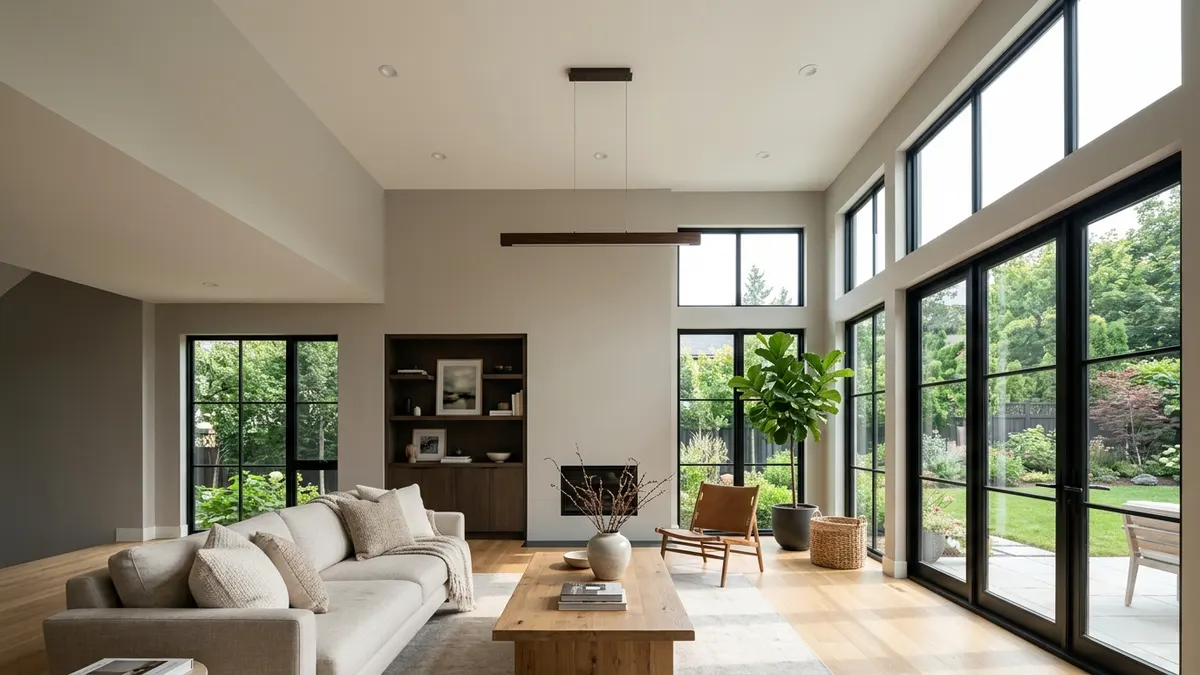
Stick with pure flat white ceilings in rooms with low eight-foot ceilings, rooms painted in cool blues or greys, and spaces lacking generous natural window daylight. While tinted ceilings add custom elegance, classic flat white remains the ultimate tool for pushing ceilings upward and bouncing daylight into dark corners.
Pure white reflects over eighty-five percent of ambient light. In basement living areas, interior corridors, and small windowless laundry rooms, you need every bit of light reflection you can get. A crisp white ceiling keeps these enclosed utility spaces bright, clean, and functional.
Maximizing Ambient Daylight Bounce in Dim Rooms
Rooms with north-facing windows receive cool, indirect daylight throughout the day. Tinting the ceiling in these spaces can make the room feel dim and chilly. Pure flat white overhead catches weak northern light and bounces it down onto furniture and rugs.
Pair crisp flat white ceilings with pale pastel or light neutral walls in low-light rooms. The bright white lid creates a sharp vertical lift that expands compact square footage. It also offers a fresh contrast that makes small spaces feel airy and crisp.
To maximize brightness, clean your ceiling surface before rolling paint. Dusty drywall absorbs light rays and dulls fresh white coats. Wipe the ceiling with a dry microfiber mop to remove dust webs and furnace soot before applying primer.
Crown Moulding Transitions: Framing the Flat White Cap
Crown moulding creates a clean architectural transition between colored walls and flat white ceilings. Without crown moulding, a sharp white ceiling can look harsh against saturated wall colors. Thick crown moulding softens that break by introducing stepped shadow lines.
Paint your crown moulding to match your baseboards and door casings in semi-gloss or satin enamel. This frames the room in crisp architectural trim. The semi-gloss wood finish contrasts nicely with the dead-flat ceiling paint, creating rich textural variety across your upper room perimeter.
If your room lacks crown moulding, use high-tack painter tape along the ceiling corner. Press the tape edge down with a putty knife to prevent paint bleed. Crisp, straight lines keep flat white ceilings looking clean and professional.
Application Rules: Preventing Flashing and Roller Marks
Apply ceiling paint in parallel rows across the shortest room dimension, maintaining a wet edge and rolling toward the primary natural light source with a dead-flat sheen. Rolling across the short span keeps edges wet and prevents dry lap lines. If you let paint edges dry before rolling the next strip, visible seams will appear across your ceiling.
Work steadily across the ceiling without taking breaks midway through a room. Load your roller evenly using a sturdy paint tray grid. Avoid pressing hard on the roller pole, as heavy pressure forces paint ridges out from the roller ends. Let the plush roller nap do the work.
Rolling Toward the Window: The Secret to Invisible Seams
Always align your final roller passes toward the main window wall. When daylight floods into a room, it skims across the ceiling surface. If you roll perpendicular to the window, incoming light catches microscopic paint ridges and casts long shadows across the room.
Rolling parallel to light paths allows incoming sunbeams to glide along the roller texture. This simple trick hides minor stipple marks and produces a smooth, invisible paint finish. Use a nine-inch or twelve-inch roller with a three-eighths-inch woven nap for smooth drywall ceilings.
Maintain consistent room temperature between sixty-five and seventy-two degrees Fahrenheit while painting. High heat and drafts dry waterborne paints too fast, which ruins your wet edge. Turn off ceiling fans and central heat vents while rolling to keep edges workable.
Interactive Tool Integration: Ceiling Paint Calculator
Calculating ceiling paint needs requires factoring room square footage, surface texture, and formula dilution ratios. Before you visit the paint store, check your project specs with our interactive Ceiling Paint Calculator. This tool calculates exact paint gallons and tint dilutions for your space.
Input your room width, length, and ceiling height into the calculator. The algorithm estimates how many gallons you need for two full coats. It also provides exact formula mixing instructions to hand directly to your paint counter technician.
Using digital paint calculations cuts product waste and saves money on expensive custom tinted bases. You buy the exact quantity needed, dodge mid-project store runs, and achieve flawless ceiling coverage on your first pass.
Ceiling Paint Options and Design Outcomes Matrix
Comparing ceiling paint methods shows that half-strength wall color tinting provides the most cohesive, designer-level atmosphere for living rooms and bedrooms. The following matrix details four common ceiling painting methods across height perception, room mood, sheen needs, and ideal home locations.
| Ceiling Paint Approach | Perceived Ceiling Height | Room Mood & Atmosphere | Sheen Recommendation | Best Room Applications |
|---|---|---|---|---|
| Standard Flat White | Tallest perceived ceiling height. | Crisp, classic, high-contrast. | Dead Flat (0% gloss). | Low 8-foot ceilings, north-facing rooms. |
| 50% Wall Color Formula Tint | Softly unified, expansive. | Warm, tailored, cozy. | Dead Flat ceiling base. | Bedrooms, living rooms with warm neutrals. |
| 25% Wall Color Formula Tint | Subtle architectural transition. | Gentle, airy, harmonious. | Dead Flat ceiling base. | Rooms with deep green, navy, or terracotta walls. |
| 100% Full-Strength Color Drench | Enclosing, intimate. | Dramatic, immersive, cocooning. | Flat or Ultra-Matte. | Powder rooms, home libraries, media dens. |
Choose your ceiling paint strategy to match the architectural strengths of your room. In standard rooms with warm neutral palettes, a fifty percent formula provides custom decorator warmth. In spaces with dark accent walls, opt for a twenty-five percent dilution. For low ceilings or dim basements, crisp flat white remains the gold standard.
Frequently Asked Questions About Ceiling Paint
Direct answers to common homeowner inquiries regarding bathroom moisture, textured popcorn ceilings, and crown moulding matching.
What does 50 percent wall color for ceiling mean?
It means the paint store mixes only fifty percent of the color tint drops into the ceiling paint base. This creates a lighter half-strength shade of your wall color that visually coordinates with the room.
Why does a 50 percent ceiling tint look like the wall color?
Because ceilings sit horizontally and receive no direct light, they sit in natural room shadow. This shadow makes a fifty percent lighter paint appear almost identical in depth to the vertical wall color.
Can you use regular wall paint on a ceiling?
Avoid regular eggshell or satin wall paint on ceilings. Wall paint sheens highlight every minor drywall imperfection and tape seam. Dedicated ceiling paint is formulated with zero-sheen dead-flat finish to hide flaws completely.
When should you just paint a ceiling flat white?
Choose flat white ceilings if your ceilings are under eight feet tall, if the room lacks natural light, or if your walls are painted a cool grey where maximum light reflection is required.
Should crown moulding match the ceiling or the trim?
Crown moulding should almost always match the baseboard and window trim color in a semi-gloss or satin sheen. This establishes a crisp architectural frame between the vertical wall and the horizontal ceiling surface.