Bedside Reading Sconce Height: 5 Mounting Rules

Reader Disclosure: This post contains affiliate links. If you buy through them, we may earn a commission at no extra cost to you. We only recommend items tested for clean craftsmanship and authentic durability.
Mount bedside reading sconces thirty to thirty-six inches above the top of your mattress. Position the fixtures eight to twelve inches outward from the outer edge of your headboard. In most bedrooms, this places the junction box fifty-five to sixty inches above the finished floor. This ergonomic height casts focused light downward onto reading material while preventing direct glare into your eyes.
Homeowners constantly encounter two painful bedside lighting blunders. They mount sconces directly behind their pillows at sitting eye level. Bare bulbs shine directly into their retinas while reclining, causing instant headaches. Other renovators install fixtures too high or too far out over wide nightstands. Turning off the light forces you to climb out from under warm bed sheets. Proper placement keeps controls within a relaxed arm reach.
Before drilling drywall holes or running armored cable, measure your bed frame and mattress profile with our Nightstand Height Calculator to align your sconce backplates with your bedside furniture proportions.
The 30-to-36 Inch Mattress Clearance Rule
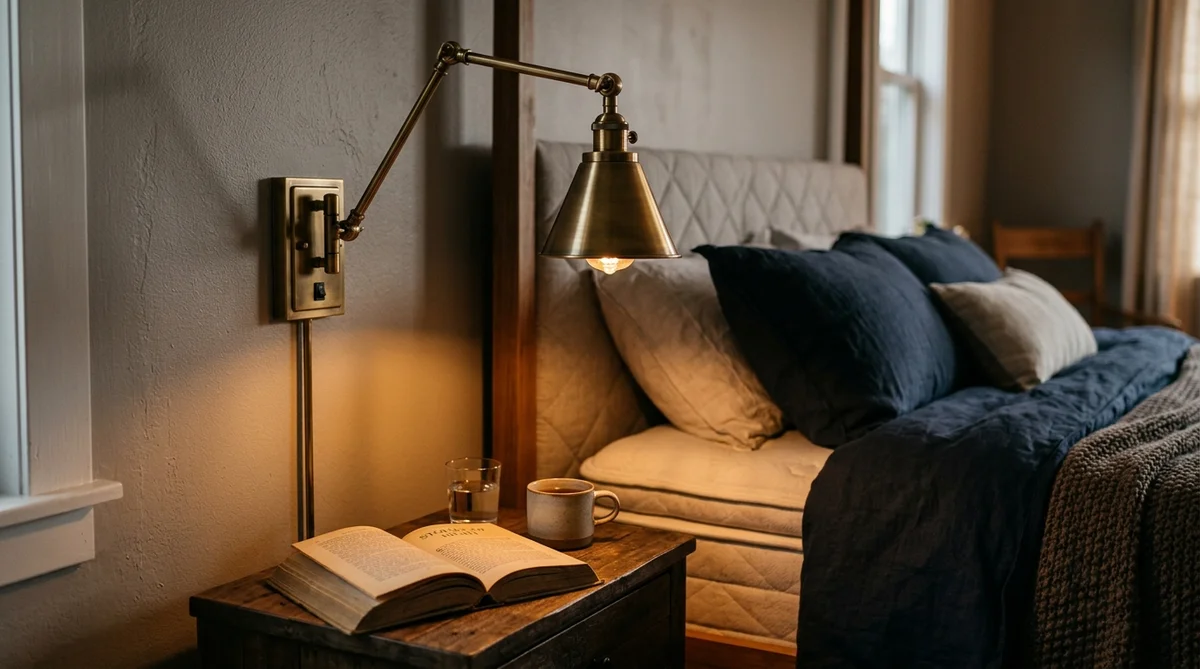
Measure from the top surface of your mattress crown up the wall to locate your sconce mounting center. Target thirty to thirty-two inches for fixed down-light sconces with opaque metal or ceramic shades. Allow thirty-four to thirty-six inches for upward-flaring glass shades or adjustable swing-arm fixtures. This height keeps the shade rim slightly above shoulder level when sitting propped against pillows.
An interior decorator on Reddit’s r/HomeDecorating explained why measuring from the floor often fails. Mattress heights vary wildly across modern beds. A platform frame with a thin memory foam pad sits twenty inches high. A traditional box spring with a pillow-top mattress stands thirty-two inches high. A floor-based measurement of sixty inches leaves one setup perfectly positioned and another buried behind headboard pillows. Always use your mattress top as the primary reference point.
The Reclined Reading Posture Test
Test your personal reading position before committing to an electrical box location. Sit in bed propped up against your usual stack of sleeping pillows. Hold a book or tablet in your hands at your natural reading angle.
Have a helper hold a cardboard template or flashlight on the wall behind you. The light source should sit roughly six to ten inches above your shoulder and ten inches to the outside. At this angle, the shade rim cuts off direct sightlines to the glowing bulb filament while casting bright foot-candles across your book pages.
Adjusting for Deep Pillow-Top Mattresses
Luxury hybrid mattresses and featherbed toppers add three to six inches of vertical height. When replacing an older mattress, recalculate your wall marks before electricians rough in wiring. If you plan to buy a taller mattress later, mount your sconces at thirty-four to thirty-six inches above your current mattress top.
Mounting slightly higher provides insurance against thicker future bedding. Adjustable down-rod knuckles and rotating shade joints allow you to tilt the light cone downward to compensate for extra height easily.
Horizontal Spacing: Distance from Headboard and Nightstands
Position your sconce eight to twelve inches outward from the outer vertical edge of your headboard. Centering the sconce between the headboard edge and the outer edge of your nightstand creates visual symmetry. This placement gives your head ample clearance when sitting up or turning over in bed.
Never mount sconces directly above your pillows on the back wall. Leaning back against the headboard risks bumping your skull into metal shades. Placing the fixtures slightly outside the bed boundary also prevents reading light from spilling directly across your partner’s sleeping face on the opposite side of the mattress.
Swing-Arm Versus Fixed Sconce Extension
Swing-arm sconces feature hinged brass or steel extension joints. They pull out twelve to twenty-four inches from the wall, allowing you to position light directly over your lap. When reading ends, fold the arm flat against the drywall to open up bedroom sightlines.
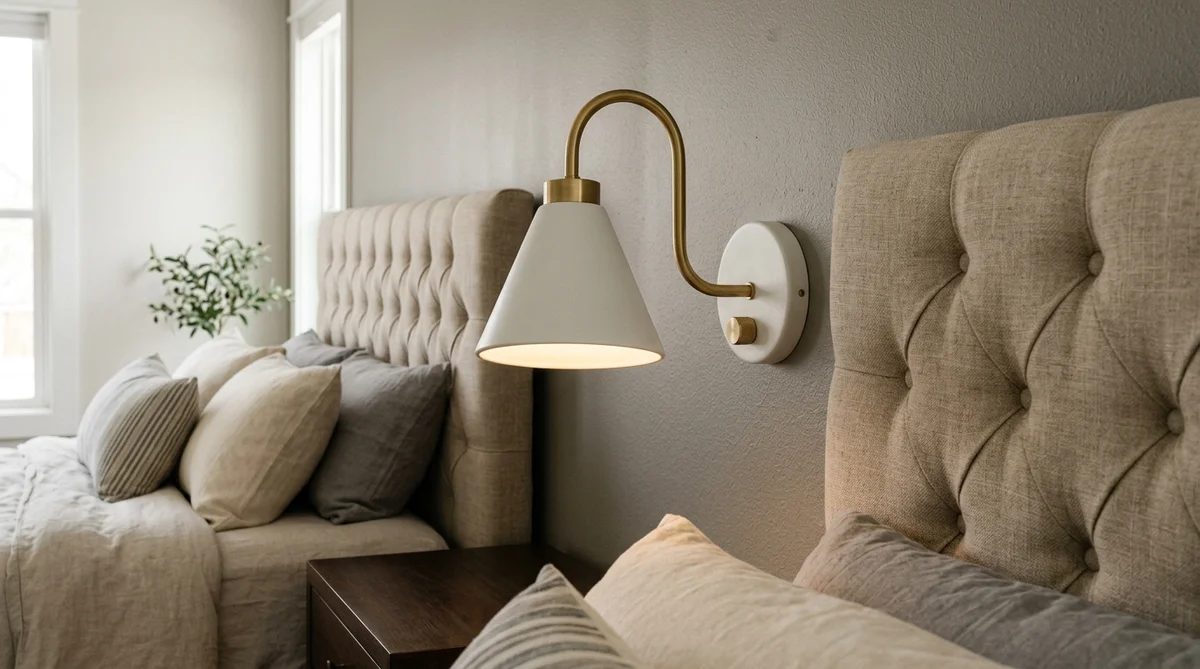
Fixed sconces project six to nine inches from the wall. They offer simpler profiles that work well in minimalist modern bedrooms. When installing fixed down-lights, angle the shade ten to fifteen degrees inward toward the mattress center to ensure proper page illumination.
Clearance Around Floating and Built-In Nightstands
Wall-mounted floating nightstands require careful vertical alignment. Maintain at least twelve to sixteen inches of vertical open space between the top of the nightstand and the bottom of the sconce shade. This gap leaves generous room for water carafes, alarm clocks, and phone chargers without crowding the lamp shade.
For custom bedrooms with full-wall paneled headboards, mount the sconces directly onto the wood paneling. Use shallow pancake electrical boxes recessed into the millwork. This technique hides all wiring behind the paneling while creating an ultra-clean boutique hotel appearance.
Switch Accessibility and Dimming Controls
Ensure the sconce power switch sits within easy arm reach while your head rests on your pillow. You should be able to turn off your light with a single forearm movement without bending your waist or throwing off blankets. Look for fixtures with rotary dimmer knobs or push buttons built directly onto the wall backplate.
If your sconces lack built-in backplate switches, wire them to a dedicated bedside wall switch. Place this low-voltage switch box twenty-four to twenty-eight inches above the floor, directly above your nightstand surface. Never wire bedside reading lights exclusively to a doorway switch across the bedroom.
Lumens and Kelvin Temperatures for Evening Reading
Bedside reading lights require 300 to 500 lumens per fixture. This brightness delivers 30 to 50 foot-candles of light onto printed book pages without over-illuminating the rest of the bedroom. Excessively bright lights above 600 lumens disrupt sleep melatonin production and strain tired eyes.
Select warm white bulbs rated at 2700K with a minimum Color Rendering Index (CRI) of 90. Warm 2700K light promotes natural evening relaxation. Avoid 4000K or 5000K cool daylight bulbs beside beds. Blue-heavy light suppresses sleep hormones and mimics harsh daytime sun.
Hardwired Versus Plug-In Sconces with Cord Covers
Hardwired sconces deliver the cleanest aesthetic by hiding all electrical wiring behind finished drywall. They require rough-in electrical boxes connected to wall switches. This approach works best during new home construction or full bedroom remodeling projects.
Plug-in sconces offer an outstanding alternative for renters and quick retrofits. Mount the backplate to wall anchors and plug the cord into an existing outlet behind your nightstand. Pair the fixture with a matching metal cord channel cover to conceal the wire neatly against the wall.
Mounting Hardware and Drywall Anchor Safety
Articulated swing-arm sconces exert significant forward leverage on wall fasteners when extended over your lap. Standard plastic expansion plugs pull out of drywall under repetitive daily adjustment. Whenever possible, secure at least one side of the mounting bracket directly into a vertical wood wall stud.
If your bed position places the sconce in an open stud cavity, use heavy-duty steel toggle bolts rated for fifty pounds or more. Toggle bolts spread the physical pull load across the back face of the drywall. This prevents wall crumbling and keeps your expensive brass fixtures firmly anchored through years of nightly movement.
Coordinating with Bedroom Accent Walls and Millwork
Bedrooms with board and batten walls, shiplap, or picture frame molding require precise coordination. Never mount a sconce backplate half-on and half-off a raised wood molding strip. This tilts the light fixture and cracks drywall around the mounting screws.
Plan your headboard width and sconce positions before carpenters nail up trim battens. Center the sconce backplate within a flat wall panel between vertical battens. Alternatively, have your carpenter install solid wood mounting blocks flush with the raised molding to provide a flat, stable foundation for the fixture canopy.
Bedside Sconce Mounting Specification Matrix
Review the direct reference table below to cross-check your bed size, mattress height, and recommended sconce placement dimensions.
| Bed & Mattress Setup. | Height Above Mattress. | Distance from Headboard. | Recommended Fixture Type. | Target Lumens. |
|---|---|---|---|---|
| Low Platform Bed (18 to 22 in high). | 30 to 32 inches. | 8.0 to 10.0 inches. | Articulated swing-arm. | 350 to 450 lumens. |
| Standard Frame & Box Spring (24 to 28 in). | 32 to 34 inches. | 10.0 to 12.0 inches. | Down-light cone with shade. | 400 to 500 lumens. |
| Deep Pillow-Top Bed (30 to 34 in high). | 34 to 36 inches. | 10.0 to 12.0 inches. | Adjustable knuckle arm. | 400 to 500 lumens. |
| King Bed with Wide Nightstands. | 32 to 34 inches. | 12.0 to 14.0 inches. | Dual-joint swing-arm. | 450 to 550 lumens. |
| Twin or Daybed Reading Nook. | 28 to 30 inches. | 6.0 to 8.0 inches. | Compact directional spotlight. | 250 to 350 lumens. |
Plan your furniture heights and check proportional spacing with our Nightstand Height Calculator to create a cohesive bedroom layout.
When selecting brass swing-arm fixtures, pin-up plug-in sconces, and metal cord hide covers, explore verified trade options on Amazon to review user photos, arm reaches, and switch mechanisms.
Five Common Bedside Lighting Mistakes to Avoid
Bedroom renovation threads and master suite design forums frequently discuss these five placement blunders. Avoid them to ensure peaceful evening reading.
Mounting fixtures too high. Installing sconces sixty-six inches from the floor above a low platform bed places the light far above your shoulders. Light spreads across the ceiling rather than your book.
Placing lights directly over pillows. Centering fixtures directly behind your sleeping head invites forehead bumps whenever you prop up pillows to read. Always shift sconces outward past headboard edges.
Using non-dimmable switches. Fixed single-output lights cannot transition between bright reading tasks and soft midnight ambience. Always install rotary dimmers or smart step-down switches.
Choosing exposed bulb styles. Vintage Edison bulbs look charming on Pinterest but produce blinding glare when mounted at eye level beside a bed. Choose downward-facing opaque metal or fabric shades.
Ignoring swing-arm pivot radius. Long swing arms can collide with headboard wings, window shutters, or tall headboard posts. Check the full articulation radius before drilling wall studs.
For more home lighting advice covering ceiling fixtures, bathroom vanities, and dining chandeliers, explore our full Lighting Design and Fixtures guide collection.
Frequently Asked Questions About Bedside Sconces
How high should bedside sconces be mounted above a mattress?
Mount bedside sconces thirty to thirty-six inches above the top surface of your mattress. This positions the lower shade rim slightly above shoulder level when seated in bed, casting bright light onto pages without blinding glare.
How far from the headboard should bedside sconces be?
Position sconces eight to twelve inches outward from the side edge of your headboard. This spacing prevents accidental head bumps when sitting up and leaves ample open wall space to center fixtures over your nightstands.
How many lumens are ideal for a bedside reading light?
Choose bulbs delivering 300 to 500 lumens for bedside reading. This output provides clear, focused task illumination for books and tablets without over-brightening the bedroom or disrupting your partner sleeping on the other side.
Should bedside sconces have their own switches?
Yes. Bedside reading lights should always feature independent switches on the fixture backplate or within easy arm reach over the nightstand. You should never have to get out of bed to turn off your light.
What color temperature is best for bedroom reading lights?
A warm 2700K color temperature with 90+ CRI is best for bedside reading. Warm light encourages natural melatonin production before sleep, whereas cool 4000K or 5000K bulbs emit blue wavelengths that disrupt your sleep cycle.
Final Installation Checklist for Bedside Sconces
Measure from your mattress crown up thirty to thirty-six inches. Mark your horizontal position eight to twelve inches outside the headboard edge. Sit in bed to confirm the switch sits within comfortable arm reach. Choose 2700K warm white LED bulbs between 300 and 500 lumens. Verify the shade covers the bulb filament from eye level.
Taking fifteen minutes to test your sitting reading posture before drilling holes guarantees an ergonomic, hotel-quality reading setup that enhances your bedroom comfort for years.