Thermal Insulated Linen Curtains: 5 Heat-Saving Rules

Reader Disclosure: This post contains affiliate links. If you buy through them, we may earn a commission at no extra cost to you. We only recommend items tested for clean craftsmanship and authentic durability.
Thermal insulated linen curtains cut winter window heat loss by twenty-five percent and block thirty-three percent of summer sun heat. They pair natural flax fabric with dense cotton fleece linings to make a sealed air pocket over cold glass. Good curtain hanging traps warm air inside your room and lowers monthly utility bills.
Most homes lose hundreds of dollars through leaky window glass each winter. Thin unlined curtains let cold air pour across floors, making living rooms cold even with heaters on high. Cheap plastic curtains stop drafts, but they look stiff and smell like chemicals in hot sun. Insulated natural linen curtains give you high thermal savings with warm organic texture.
Before ordering your custom drapes, check our interactive energy savings curtain calculator. It calculates exact fabric yardage, thermal insulation ratings, and rod heights for your home windows.
How Thermal Linen Curtains Cut Winter Heat Loss and Summer Solar Gain
Windows cause up to thirty percent of all heating energy loss in homes. Cold outside winter air chills window glass quickly. When warm room air hits this cold glass, the air cools and drops to the floor. It then pulls more warm air down from the ceiling. This endless motion makes a cold draft loop called a room air current.
Thermal insulated linen curtains break this air loop by locking cold air behind thick fabric. The multi-layer drape traps a pocket of still dead air against the window glass. Still air acts as a natural heat wall. It slows down heat movement between your warm living room and cold outdoor air.
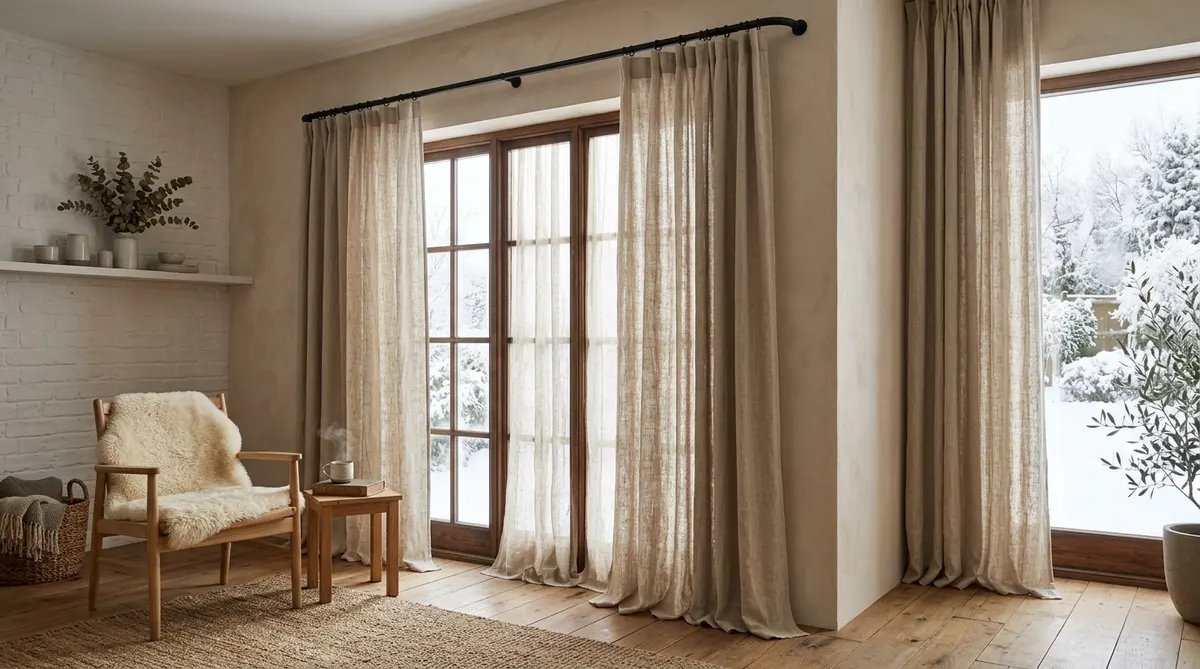
Rule 1: Choose 3-Layer Interlined Construction Over Single-Layer Flax
Never rely on thin single-layer linen curtains for winter heat control. Pure flax linen has an open cellular weave that lets drafty air pass through open fibers. While unlined linen looks breezy during summer, winter drafts blow straight through the open weave into your home.
Understanding the Three Vital Curtain Layers
Real thermal linen curtains use three distinct fabric layers sewn with blind hem stitches:
- Face Fabric: Pure natural flax linen weighing at least two hundred and sixty grams per square meter.
- Middle Thermal Core: Thick cotton flannel fleece that traps dead air inside soft fluffy fibers.
- Backing Layer: Tightly woven white cotton blackout lining that blocks sunlight and stops fabric sun rot.
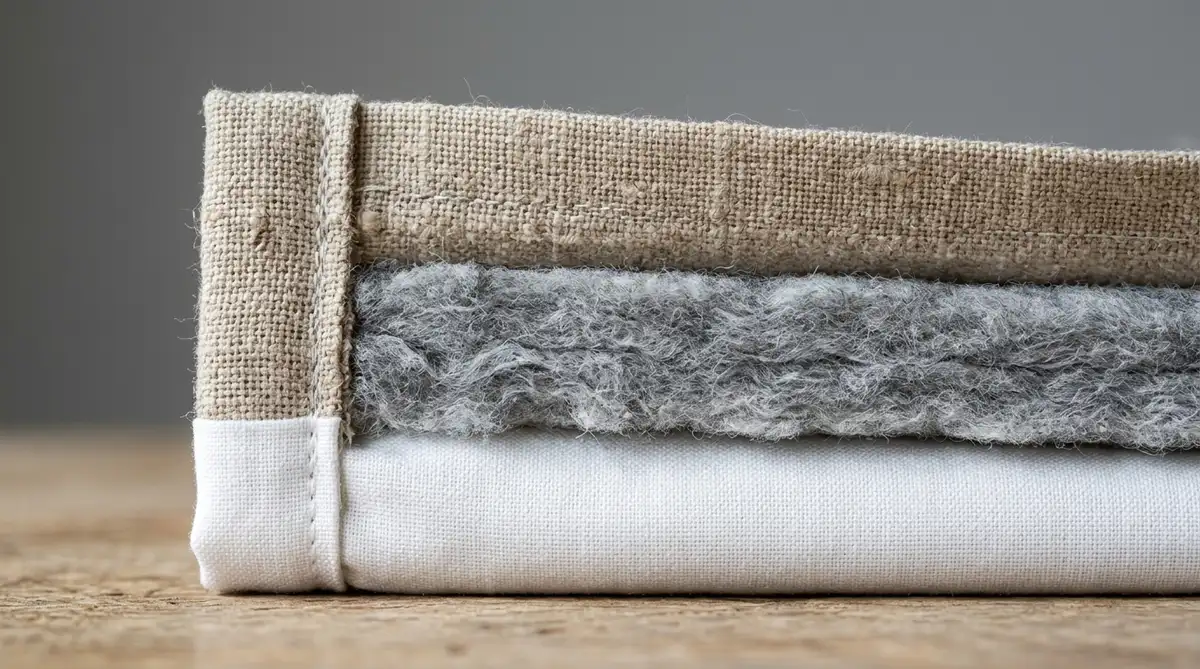
This three-layer design lifts the insulation value of your window from R-1 up to R-4. The thick cotton flannel core adds weight. This extra weight helps linen drapes hang with deep straight folds that look neat and full.
Cotton Flannel Bump vs Wool Felt Interlining
Choose the right middle lining for your local climate. Heavy cotton flannel bump is the standard choice for most homes. It adds rich body and blocks moderate winter drafts at a fair price. It also softens outdoor street noise by absorbing sound waves.
For extreme northern winter climates, pick needle-punched wool felt interlining instead. Natural wool fibers have crimped hollow air pockets that trap thirty percent more heat than cotton. Wool also resists moisture and never grows mold when cold window condensation forms on winter nights.
Rule 2: Install French Return Curtain Rods Flush Against the Wall
Standard straight curtain rods leave three-inch open gaps between the drapery fabric and the side walls. Cold air spills around these open curtain edges like water from a broken pipe. Hanging heavy thermal drapes on a straight rod wastes half of their energy savings.
How Curved French Rods Seal Side Drafts
Choose curved French return rods for your windows. These metal rods bend ninety degrees at each end and screw flat into the wall. When you close your drapes, the outer curtain edge wraps around the curve and sits tight against the wall paint.
This curved shape seals the side air gap completely. It stops cold drafts from entering the room and keeps warm indoor air from slipping behind the fabric. French return rods also block side light leaks, making your bedroom darker and quieter for sleeping.
Heavy-Duty Wall Anchors for Heavy Thermal Drapes
Thermal linen curtains are very heavy. A pair of three-layer floor-length drapes can weigh over twenty pounds. Cheap plastic drywall anchors will pull out of the wall after a few months of daily pulling. Mount your curtain brackets directly into solid wall studs whenever possible.
If no wall stud sits near your window frame, use steel toggle bolts or threaded zinc drywall anchors. Steel toggle bolts spread the weight behind the drywall sheet, holding up to fifty pounds per bracket. Test each bracket by pulling down firmly before you hang your heavy drapes.
Rule 3: Hang High, Wide, and Break on the Floor (Puddling Mechanics)
Curtain hanging height controls overall room heat efficiency. Short curtains that hang just below the window sill leak cold air straight into the living room. Follow these three mounting steps for best draft protection:
The Eight-Inch Height and Width Rule
Mount your curtain rod eight to twelve inches above the top window trim, or right under the ceiling molding. Extend the rod eight to fourteen inches past the outer window frame on both sides. This wide overlap covers the entire window casing and makes your room feel larger.
Never let thermal curtains float an inch above your hardwood floors. Floating curtains act like open exhaust vents, pulling cold air across your bare feet. Allow the curtain bottom to touch the floor with a half-inch break, or puddle one full inch of fabric on the rug. Floor contact blocks bottom draft leaks completely.
Rule 4: Seal the Top Header with a Cornice Box or Pelmet
The top opening of an open curtain rod lets warm ceiling air drop behind the drapes. Because warm air rises, ceiling heat slips over open curtain rods. The cold glass chills this air, making a draft cycle even when curtains stay closed.
Put a solid wood cornice box or fabric pelmet over the top of your curtain rod. A cornice box caps the open top space, forming a complete seal between the ceiling and your curtain header. Building energy tests show that adding a top pelmet box improves window insulation by twenty-five percent over open curtain poles.
DIY Plywood Pelmet Box Construction
Build a simple wooden pelmet box to seal your curtain header on a budget. Cut three strips of half-inch birch plywood: one front face board and two short side return wings. Make the box six inches deep so your curtain rings slide freely without rubbing against the wood frame.
Join the wooden pieces with wood glue and finish screws. Wrap the outside of the box with thin quilt batting and matching linen fabric. Fasten the fabric neatly to the back using a hand staple gun. Mount the finished pelmet directly above your window frame with sturdy steel corner braces. This simple box hides curtain hardware while stopping all ceiling air leaks.
Rule 5: Select Proper Fabric Weight and Fullness Ratios
Fabric fullness decides how many deep insulating folds your curtains make. Flat, stretched curtains lack the air pockets needed to block outdoor cold. Order curtain panels with a fullness ratio of two to two-and-a-half times the width of your window frame.
For example, if your window opening measures sixty inches wide, your pair of curtain panels must measure at least one hundred and twenty inches in total width. When you pull the curtains shut, deep pleated ripples stay in the fabric. These ripples trap still air inside their folds, giving you double the insulation of flat drapery panels.
Double Rod Layering: Pairing Sheers with Heavy Drapes
Pairing sheer linen with heavy thermal panels gives you flexible seasonal light control. Install a double French return rod over your window opening. Hang lightweight, semi-sheer unlined linen curtains on the inner rod closest to the glass pane. Hang your heavy three-layer thermal drapes on the outer rod facing the room.
During winter daytime hours, pull the heavy thermal panels open to let warm sunlight fill your living space. The sheer inner curtains soften bright winter glare while providing daytime privacy from outside neighbors. As soon as sunset arrives, pull the heavy insulated panels shut. This dual-layer system gives you year-round comfort in every season.
Magnetic Side Closures for Zero-Draft Edge Sealing
Stop edge air leaks by adding small hidden magnetic fasteners to your curtain side hems. Even with a French return rod, minor air gaps can open along window trim when drafts blow hard. Small nickel-plated craft magnets solve this problem in minutes.
Sew thin neodymium magnets inside the side hem of your curtains every twelve inches. Stick matching metal strike plates to the window frame trim using clear adhesive tape. When you close the curtains, the magnets snap the fabric flat against the trim. This magnetic seal stops side drafts and keeps bedroom drapes dark and secure.
Thermal Linen Curtains vs Standard Window Coverings Comparison
Review this comparison table to see how thermal insulated linen drapes compare to other common window treatments:
| Window Treatment | Winter Heat Loss Reduction | Summer Heat Blocking | Sound Absorption | Aesthetic Look |
|---|---|---|---|---|
| 3-Layer Thermal Linen Drapes | 25% to 30% reduction | 33% heat reflection | High sound dampening | Timeless, organic, luxurious |
| Unlined Sheer Linen Curtains | Under 5% reduction | Light glare control only | Very low | Breezy, casual, modern |
| Vinyl Roller Blackout Shades | 10% to 15% reduction | 25% heat reflection | Low sound dampening | Minimal, sterile, plastic |
| Wooden Plantation Shutters | 12% to 18% reduction | 20% heat reflection | Moderate | Traditional, solid, rigid |
| Cellular Honeycomb Shades | 20% to 28% reduction | 30% heat reflection | Moderate | Functional, synthetic, plain |
Frequently Asked Questions About Thermal Linen Curtains
Do thermal linen curtains really lower energy bills?
Three-layer insulated linen curtains cut window heat loss by up to twenty-five percent in winter. Closing drapes at dusk stops cold window drafts, lowering monthly heating utility costs by ten to fifteen percent.
Can you wash thermal insulated linen curtains in a washing machine?
Never put multi-layer thermal linen curtains in a home washing machine. Water washing shrinks natural flax fibers unevenly against cotton interlinings. Take your drapes to a professional dry cleaner every two years to protect delicate seams.
Why does unlined linen feel drafty in winter?
Pure flax linen features an open, porous fiber weave designed for summer breathability. Without dense cotton fleece interlining, cold air passes straight through linen pores into the room, creating constant chilling floor drafts.
What is a French return curtain rod?
A French return rod curves ninety degrees at both ends to attach flush against the wall. The curved ends wrap drapery edges tight to the wall, blocking side light leaks and stopping cold airflow completely.
How much should thermal curtains touch the floor?
Thermal curtains should break on the floor with a half-inch to one-inch puddle. Firm floor contact seals the bottom fabric gap, stopping cold air from spilling across living room floors like a draft chimney.
Final Decorator Advice on Styling and Maintaining Insulated Drapes
Train your new thermal linen curtains to hang in clean columnar folds. When you first hang your drapes, arrange the folds neatly by hand. Tie soft fabric ribbons around the panels in three spots: top, middle, and bottom. Leave the ribbons tied for forty-eight hours so the heavy linen and interlining memorize clean vertical fold lines.
Open your thermal drapes on south-facing windows during sunny winter days. Direct winter sunlight gives you free solar heat that warms interior walls and wood floors. Close the drapes as soon as the sun sets to lock that warmth inside your home overnight. This simple daily habit keeps your living space warm, quiet, and energy-smart all winter long.