Non-Toxic Mattress Certification: 5 Essential Badges
Reader Disclosure: This post contains affiliate links. If you buy through them, we may earn a commission at no extra cost to you. We only recommend items tested for clean craftsmanship and authentic durability.
A non-toxic mattress certification needs third-party organic proof. You must check public database license numbers. Do not trust marketing claims on a sales page. Look for the Global Organic Latex Standard (GOLS) on natural rubber cores. Look for the Global Organic Textile Standard (GOTS) on cotton and wool covers. These two badges guarantee zero off-gassing, zero chemical flame retardants, and zero hidden fiberglass.
Shoppers often get confused by greenwashing claims. Mattress ads use vague eco-friendly buzzwords that mean very little. For example, brands rebrand polyurethane foam as soy foam. Yet they only swap five to ten percent of the petroleum oil with plant oil. Cheap brands also wrap mattress cores in fiberglass socks. These socks can leak glass needles into your bedroom if opened. Checking mattress construction protects your indoor air and gives you restful sleep.
Before you buy, test our interactive non-toxic mattress finder. It helps you pick the right firmness, test layer thickness, and verify certifications for your sleep style.
What Makes a Mattress Truly Non-Toxic?
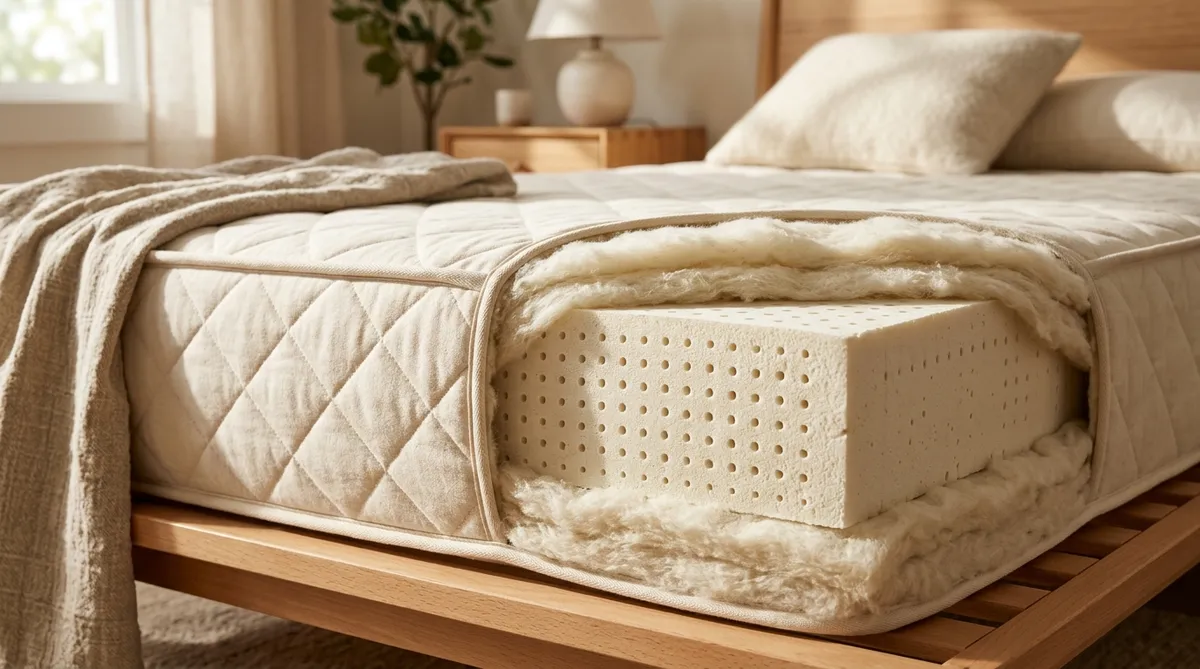
A mattress is non-toxic only when every layer uses verified clean materials. The core must be organic latex. The cover must be organic cotton and pure wool. It must have no chemical flame barriers, no toxic glues, and no petroleum foam. Real clean construction uses simple raw materials tested for off-gassing by trusted labs.
Good decorators inspect mattress layers with care. They check foam density, glue types, and fire barrier layers. When brands cut corners, bedrooms trap airborne chemicals that linger for months. Seasoned bedding experts warn against buying a bed without checking the law tag. Take time to read labels so you protect your health and your wallet.
The Off-Gassing Hazard of Polyurethane Foam
Standard memory foam beds release fumes when new. These fumes are called volatile organic compounds. They come from petroleum oils used during foam production. These gases can include benzene and formaldehyde. Breathing these fumes every night can trigger headaches, sinus issues, and poor sleep.
To avoid these fumes, choose natural rubber latex. Natural latex comes from rubber tree sap. It uses zero synthetic polyurethane foam. If you buy a boxed synthetic bed, air it out first. Keep it in an open garage or porch for at least four days before sleeping on it.
The Truth Behind Soy and Plant-Based Foam Marketing
Do not let plant names fool you. Mattress brands often advertise plant foam, eco-foam, or soy foam. They want you to think the bed is natural. In truth, foam makers can only replace five to ten percent of petroleum oil with soy oil. If they add more soy, the foam loses its spring and sags quickly under body weight.
The rest of the foam is ninety percent petroleum polyurethane. Real organic bedding never hides behind vague words. Ask the seller for the exact latex percentage. Check lab test sheets to confirm there is no synthetic foam inside.
GOLS vs GOTS: How to Verify Real Organic Mattress Certifications
GOLS certifies that a natural latex core has at least ninety-five percent organic rubber sap. GOTS guarantees that fabric covers and wool batting have ninety-five percent organic fibers. These two standards check different parts of the bed. Together, they represent the gold standard for clean sleep.
Some brands use tricky marketing. They buy organic cotton for the outer zipper cover. Then they pack the inside with cheap synthetic foam. To stay safe, make sure both the inner core and outer cover have active certificates. Real organic beds track materials from rubber farms straight to the sewing shop.
Step-by-Step Public Database Verification
Never rely on pretty green logos on a website. Anyone can copy a logo onto an image. Protect yourself by running this quick four-step check before you buy:
- Ask the seller for their official GOTS or GOLS license number and factory name.
- Visit the public search page at global-standard.org or Control Union.
- Type the license number into the search box to check if the status is active.
- Confirm that the certificate covers finished mattresses, not just raw spools of yarn.
OEKO-TEX Standard 100 vs MADE SAFE Standards
OEKO-TEX Standard 100 tests finished fabrics for harmful chemical residues. It checks for heavy metals and formaldehyde. But OEKO-TEX is not an organic standard. It often certifies polyester and regular cotton that pass chemical limits. The fabric can be synthetic and still get an OEKO-TEX badge.
MADE SAFE is much stricter. It screens every ingredient against human health records. It bans synthetic fire barriers, toxic glues, and harsh chemical treatments. A bed with GOTS organic fabric and a MADE SAFE badge gives you the cleanest sleep setup you can buy.
The Hidden Hazard of Fiberglass Flame Barriers in Mattresses
Many budget mattress makers cut costs by using fiberglass fire socks. They wrap foam cores in woven glass threads. Fire laws require mattresses to resist open flames. But cheap glass covers create major health risks in residential homes.
If you unzip or wash the outer cover, tiny glass fibers escape into the air. These sharp fibers get into your clothes, carpet, and air vents. Cleaning glass contamination costs thousands of dollars. You often have to throw away bedding and rugs. Clean mattress brands avoid glass completely by quilting dense sheep wool into the cover.
How Pure Organic Wool Naturally Charres to Block Fire
Pure wool stops fire without added chemicals. Wool fibers hold natural moisture and protein. When exposed to a flame, wool does not melt. It does not flare up. Instead, it chars into a thick ash layer. This ash layer blocks oxygen and snuffs out the fire.
Wool also helps control your body temperature. It can absorb moisture without feeling wet to the touch. This moisture flow keeps hot sleepers cool in summer and warm in winter. It prevents the sweaty heat buildup typical of memory foam.
How to Read the Federal Law Tag for Hidden Glass
Every new mattress has a white federal law tag sewn into the bottom edge. This label lists all internal filling materials by exact percentage. Read this tag carefully before accepting your delivery.
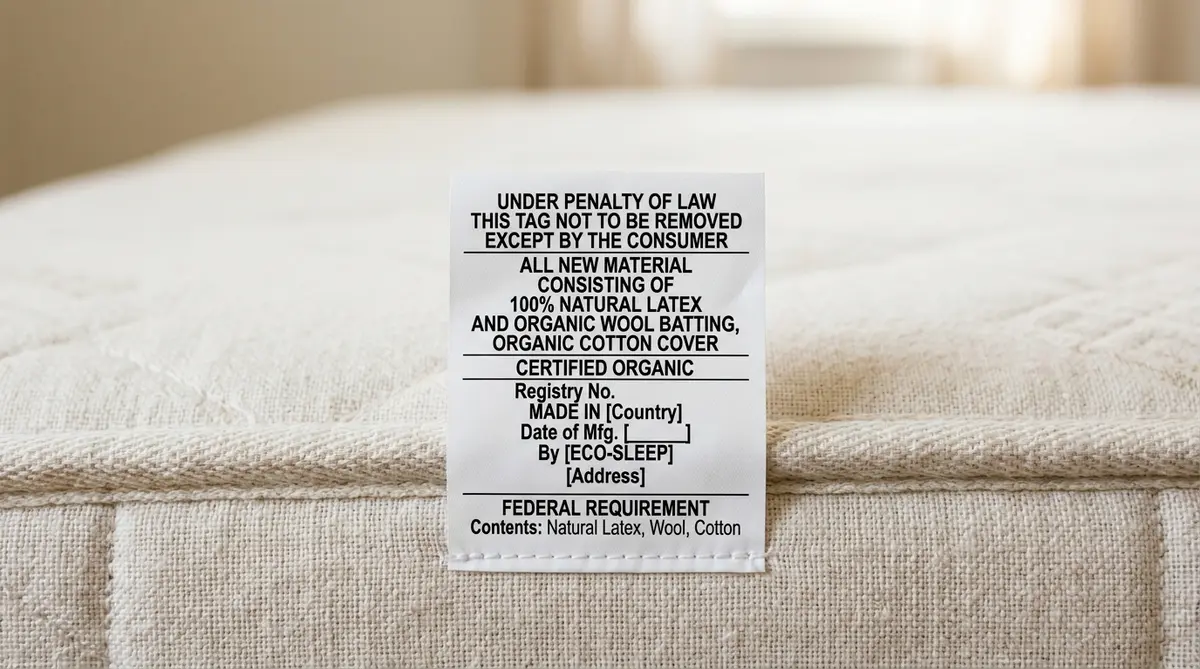
- Look for words like glass fiber, glass wool, or silica blend under the fire barrier section.
- Check for words like modacrylic or treated rayon, which mean chemical fire coatings.
- Verify that the tag says 100% natural latex, organic wool batting, and organic cotton.
- Read the registration number on the bottom of the tag to confirm the true factory origin.
CertiPUR-US vs Organic Latex: Key Differences Explained
CertiPUR-US checks regular synthetic foam for heavy metals and select phthalates. Organic latex is pure plant sap made without petroleum foam chemistry. CertiPUR-US does not mean a bed is organic or natural. It only means the synthetic foam meets basic chemical safety limits.
Many buyers think a CertiPUR-US badge means a healthy organic mattress. But the bed is still synthetic foam made from refined crude oil. Certified natural latex contains no ozone blockers, formaldehyde, or harsh off-gassing. Knowing this difference saves you from buyer regret and helps you pick a truly healthy bed.
Dunlop vs Talalay Natural Latex Cores
When buying organic latex, you will pick between Dunlop and Talalay rubber. Dunlop latex is poured into molds and baked with steam. This method makes dense, firm foam. It works great for bottom support layers and gives strong back support. Dunlop uses less energy to make and easily earns full GOLS organic badges.
Talalay latex is vacuum-sealed and frozen before baking. This step creates a lighter, springy cushion. Talalay makes a plush top layer for side sleepers who need pressure relief on hips and shoulders. Many organic mattresses use a firm Dunlop base with a soft Talalay top layer for the best mix of support and comfort.
Slat Spacing and Support Bases for Heavy Latex
Natural latex mattresses are very heavy. A queen-size all-latex bed can weigh over one hundred and twenty pounds. Because latex is so flexible, it needs firm support underneath. Never place an organic latex mattress on a weak, flexible box spring. Flexible box springs cause the rubber core to sag in the middle within two years.
Use a solid platform bed or a sturdy wooden slat base instead. Make sure the wooden slats are at least three inches wide. Keep the space between each slat under three inches. If the gap between slats is wider than three inches, the heavy rubber foam will squeeze through the gaps. You can also place a breathable coconut coir pad between the slats and your mattress for extra air flow.
Interactive Tool Integration: Paired Mattress Finder
Picking between latex beds, pocket spring hybrids, and soft tops depends on your body shape. Your sleep position and body heat also matter. Instead of guessing your firmness, use our mattress matching calculator to test support levels before ordering.
The tool looks at your sleep habits, calculates your ideal cushion depth, and checks certifications on top brands. Enter your room size and firmness goals to find your ideal mattress without paying return shipping fees.
Non-Toxic Mattress Construction and Certification Comparison
Comparing bed builds shows that organic hybrid latex beds with pocket coils offer great value. They combine air flow, back support, and clean materials. Review the side-by-side specs below to pick the best build for your budget and comfort.
| Mattress Core Construction | Verified Certifications | Flame Barrier Method | Off-Gassing Chemical Risk | Expected Lifespan |
|---|---|---|---|---|
| 100% Organic Dunlop Latex | GOLS, GOTS, MADE SAFE | Pure Organic Wool Batting | Zero Synthetic VOCs | 15 to 25 Years |
| Organic Pocket Coil Hybrid | GOTS, OEKO-TEX Standard 100 | Wool and Hydrated Silica | Negligible Natural Scent | 12 to 15 Years |
| CertiPUR-US Polyfoam Bed | CertiPUR-US Only | Chemical Barrier or Rayon Sock | Moderate VOC Off-Gassing | 6 to 8 Years |
| Traditional Memory Foam | Standard TB117-2013 | Fiberglass Sleeve or Antimony | High Initial VOC Emissions | 5 to 7 Years |
As shown in the table, organic beds cost more at first. But they last more than twice as long as petroleum memory foam beds. Buying clean materials keeps chemical fumes out of your home. It also stops body dents and sagging for up to twenty years.
When shopping for organic bedding, mattress toppers, and wool pads, explore tested options on Amazon to compare verified reviews, sizes, and stock availability.
Frequently Asked Questions About Non-Toxic Mattresses
What is the healthiest mattress certification?
GOTS and GOLS are the gold standards for healthy mattresses. GOTS certifies organic cotton and wool casings, while GOLS certifies ninety-five percent organic latex sap, guaranteeing zero toxic chemical additives or synthetic polyurethanes.
Does CertiPUR-US mean a mattress is organic?
No, CertiPUR-US does not mean a mattress is organic. It certifies conventional synthetic polyurethane foam tested for heavy metals and specific phthalates, but the material remains petroleum-based foam that off-gasses volatile organic compounds.
How do you know if a mattress has fiberglass?
Check the white federal law tag sewn onto the mattress seam. Look for glass fiber, glass wool, or silica blend in the filling declarations. If the cover warns never to remove it, fiberglass is present.
Does a natural organic mattress smell?
New organic mattresses have a mild earthy scent from natural sheep wool and pure rubber sap. Unlike synthetic chemical VOC off-gassing, this natural scent is non-toxic and dissipates within a few days in ventilated rooms.
How long does an organic latex mattress last?
A certified organic latex mattress lasts fifteen to twenty-five years with proper care. Natural rubber sap resists body impressions, sagging, and dust mites far better than synthetic memory foam, which typically degrades within seven years.
Final Decorator Advice and Next Steps
Designing a calm bedroom starts with clean materials. We spend one-third of our lives resting in our beds. That makes non-toxic mattress selection one of your most important wellness choices. By checking public license numbers, picking natural wool barriers, and avoiding greenwashed foam, you secure clean air and deep sleep for years to come.
Keep planning your home decor by reading our guides in Sustainable & Eco-Friendly Decor. Test custom room sizes with our free tools. Simple material checks turn tricky shopping choices into calm, healthy home upgrades.