Mixing Metals in Kitchen Rules: 7 Designer Guidelines
Reader Disclosure: This post contains affiliate links. If you buy through them, we may earn a commission at no extra cost to you. We only recommend items tested for clean craftsmanship and authentic durability.
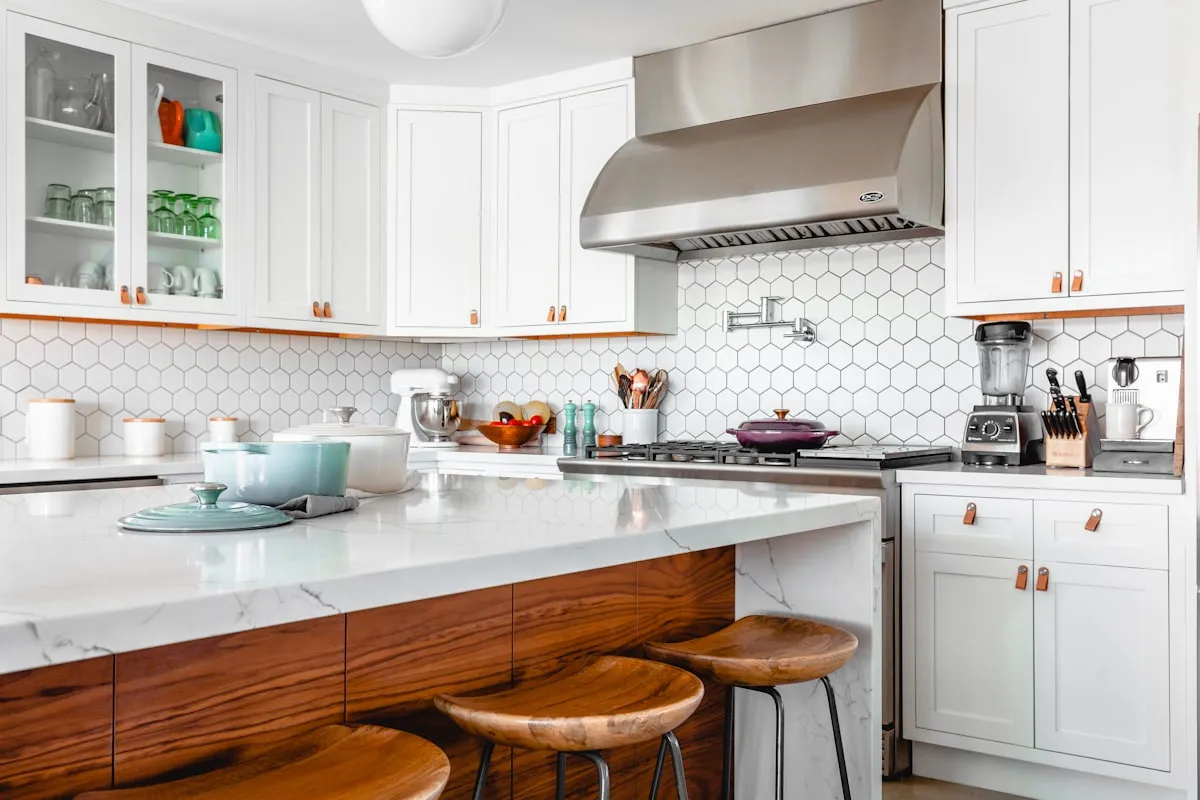
Applying standard mixing metals in kitchen rules requires restricting your palette to two or maximum three distinct finishes, allocate seventy percent of fixtures to a dominant foundational metal (such as brushed brass cabinet hardware), reserve thirty percent for a contrasting accent metal (such as a matte black faucet or island light pendants), and maintain consistent matte or brushed sheens across finishes to prevent jarring reflective clashes.
For decades, traditional kitchen design dictated that every metallic element in the room had to match down to the exact manufacturer SKU. Homeowners diligently matched their stainless steel sink with a chrome gooseneck faucet, brushed nickel cabinet knobs, and nickel pendant stems. While safe, this strictly matched approach often results in a sterile, showroom-like aesthetic that feels flat, cold, and devoid of curated architectural depth.
Modern luxury kitchen design treats metallic finishes like fine jewelry and tailored tailoring. By combining warm, cool, and neutral metallic finishes with deliberate proportional balance, you create an organic, collected-over-time ambiance that feels custom-crafted. Before ordering cabinet handles or plumbing fixtures, use our interactive Mixed Metals Ratio and Finish Calculator to verify percentage balances and preview warm-cool harmony across your kitchen zones.
Mixing Metals in Kitchen Rules: The 70/30 Dominant Metal Ratio
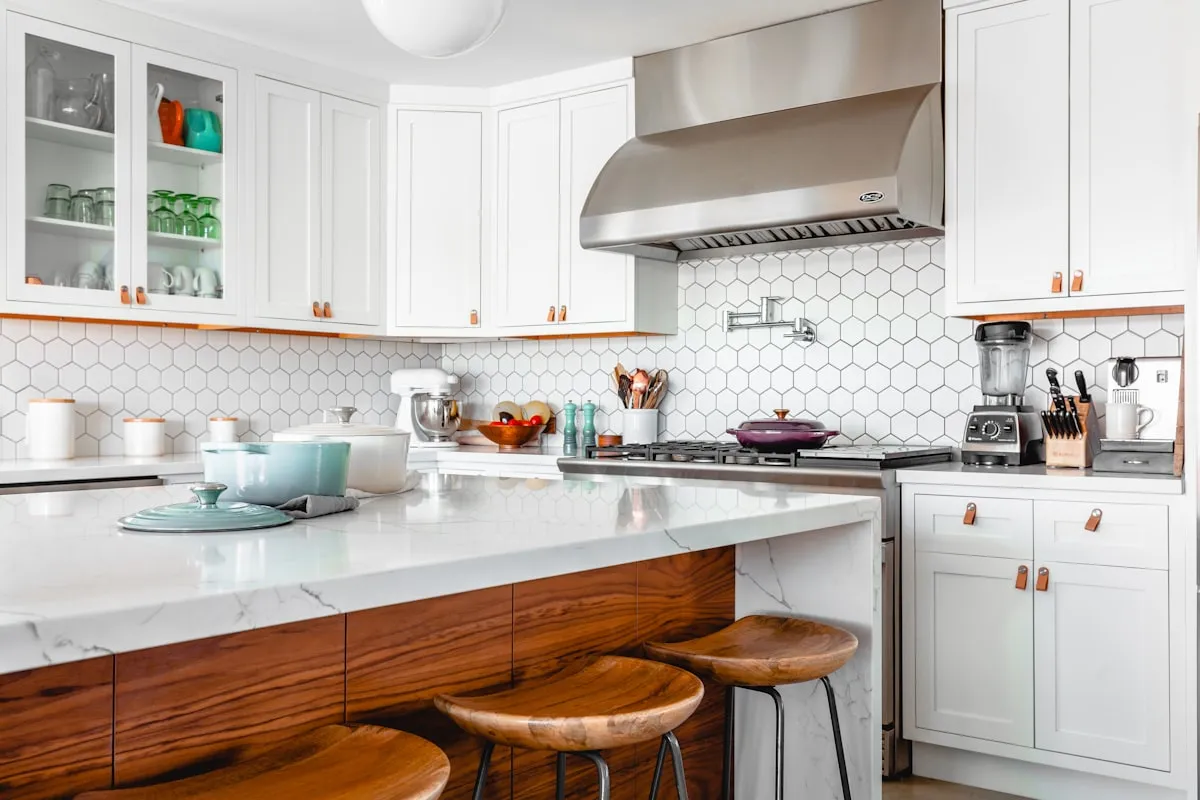
The foundational seventy-thirty rule for kitchen metals requires establishing one dominant metal finish across seventy percent of visible fixtures (primarily cabinet pulls and knobs) while reserving thirty percent for a contrasting accent finish (such as the sink faucet and island pendants).
The primary reason mixed-metal kitchens fail is an equal fifty-fifty split. When a kitchen features fifteen brass cabinet handles, fifteen chrome cabinet handles, a brass faucet, and chrome lighting, the finishes compete for visual supremacy. The human eye cannot determine which finish is the architectural foundation and which is the decorative accent, leaving the room feeling chaotic, unfinished, and accidental. Establishing an undisputed seventy percent dominant metal provides immediate structural grounding.
Apply these proportional rules to anchor your kitchen layout:
- The Dominant 70% Anchor: Because cabinet hardware repeats thirty to forty times across drawers and doors, making cabinet pulls your dominant metal automatically fulfills your seventy percent quota. Brushed brass, polished nickel, or matte black work exceptionally well as dominant bases.
- The Statement 30% Accent: Reserve your secondary metal for singular focal points. The primary kitchen sink faucet, a trio of glass-shaded island pendant lights, or decorative counter stools provide high-impact stages for your thirty percent accent.
- The 60-30-10 Three-Metal Exception: If incorporating three metals in a spacious open-concept kitchen, assign sixty percent to cabinet hardware (e.g., brushed brass), thirty percent to lighting and barstools (e.g., matte black), and ten percent to functional plumbing (e.g., polished chrome). Never exceed three distinct metal finishes.
Always source all seventy percent foundational hardware pieces from the same manufacturer and batch run. Hardware brands use proprietary electroplating formulas; Delta Champagne Bronze carries distinct rosy champagne undertones, whereas Kohler Vibrant Moderne Brass leans toward bright sunny gold. Locking in one brand for your cabinet pulls guarantees flawless tonal consistency across every drawer and door front.
Metal Finish Compatibility Matrix: Warm, Cool, and Neutral Combinations
The most enduring kitchen metal combinations pair a warm metallic tone with a cool metallic tone or anchor either with universal neutral matte black, balancing color temperatures across cabinetry and plumbing.
All decorative metals belong to one of three thermal families: warm (unlacquered brass, satin bronze, brushed gold, copper), cool (polished chrome, polished nickel, brushed stainless steel), or neutral (matte black, oil-rubbed bronze, gunmetal). The secret to designer-grade mixing is ensuring your chosen metals belong to different temperature families. Pairing two slightly different warm metals (like yellow brass with rose copper) creates an awkward clash, whereas pairing warm brass with cool polished nickel produces rich, intentional contrast. Review this compatibility matrix to choose your kitchen pairing:
| Dominant Metal (70%) | Accent Metal (30%) | Temperature Balance | Recommended Sheen Pairing | Best Kitchen Cabinetry Style | Visual Atmosphere |
|---|---|---|---|---|---|
| Brushed Brass / Gold | Matte Black | Warm + Neutral | Satin Brass + Flat Matte Black | White, Charcoal, or Forest Green Shaker | Modern transitional, graphic, high contrast |
| Polished Nickel | Unlacquered Brass | Cool (Warm-undertone) + Warm | High-Luster Nickel + Living Raw Brass | Navy Blue, Pale Cream, or Classic Inset | Timeless English heritage, bespoke luxury |
| Matte Black | Brushed Warm Gold | Neutral + Warm | Ultra-Flat Black + Satin Brushed Gold | Light Natural White Oak or Bleached Ash | Organic modern, minimalist Scandinavian |
| Brushed Stainless Steel | Brushed Brass / Bronze | Cool Neutral + Warm | Directional Brushed + Satin Warm Gold | Flat-Panel Slab, Walnut, or Concrete Grey | Industrial chic, professional chef kitchen |
| Polished Chrome | Matte Black | Cool + Neutral | Mirror Polished + Flat Matte Black | High-Gloss White or Dark Graphite Grey | Crisp contemporary, architectural, clean |
Notice that matte black acts as the ultimate universal bridge. Because black is a true neutral absence of color, it harmonizes effortlessly with both warm gold tones and cool chrome fixtures without creating thermal competition.
Temperature Harmony: Pairing Warm Brass with Cool Nickel and Black
Pairing warm brass with cool polished nickel or neutral matte black works because the distinct thermal temperature contrast prevents visual confusion and establishes clear functional hierarchy across hardware and plumbing.
When selecting your metals, understanding undertone chemistry prevents costly mistakes. Polished nickel, for example, is technically a cool metal, but it contains a subtle golden-amber undertone that distinguishes it from cold blue-tinted chrome. This subtle yellow cast makes polished nickel the premier cool metal to pair with unlacquered brass or satin gold, establishing an effortless vintage English look that feels warm rather than clinical.
Execute temperature harmony with these guidelines:
- The Faucet Temperature Decision: Kitchen faucets endure heavy daily use, hot water, and mineral-rich dish soaps. Choosing a cool, durable finish like polished nickel, stainless steel, or matte black for the faucet provides superior durability, while reserving luxurious brushed brass for dry cabinet pulls.
- Appliances as Neutral Background: Do not worry if your large kitchen appliances (refrigerator, range, dishwasher) are stainless steel. Stainless steel is considered a neutral baseline metal in modern kitchens. You do not need to match your cabinet hardware to your oven handle; simply let the appliances function as background equipment.
- Avoid the Two-Warm Trap: Never pair bright yellow polished brass with rose gold or bright copper. The competing warm hues will fight for dominance, making your kitchen look like a mismatched salvage yard.
Extend your chosen accent finish naturally to perimeter room details. If matte black serves as your thirty percent accent metal, select counter stool legs, black metal window mullions, or iron open-shelf brackets in matching matte black. This intentional repetition pulls the accent metal across the entire room without requiring extra metal finishes.
The Zone Separation Strategy: Cabinets, Plumbing, and Overhead Lighting
The zone separation strategy organizes mixed metals by functional room elevation: keep all cabinet handles in one uniform finish, allocate plumbing fixtures to a second finish, and use overhead lighting to bridge or repeat secondary accents.
Chaos erupts when homeowners alternate metals randomly within the same functional zone, such as putting brass handles on upper cabinets and black handles on lower drawers. This horizontal checkerboarding creates severe visual clutter that distracts from countertops and millwork. By grouping metals strictly by architectural zone, every finish has a clear structural purpose that feels disciplined and intentional.
Divide your kitchen into these three distinct metallic zones:
- Zone 1: Cabinet Hardware (The Uniform Foundation): Treat every knob, cup pull, and appliance latch on your cabinetry as a single unified family. Whether you have fifteen drawers or fifty cabinets, keep the metal finish 100% consistent across all cabinetry doors.
- Zone 2: Plumbing and Pot Fillers (The Water Zone): Keep your primary sink faucet, side spray, and stovetop pot filler in matching finishes. If you select a matte black bridge faucet for your main island sink, use a matching matte black pot filler above your gas range.
- Zone 3: Overhead Lighting (The Visual Bridge): Island pendant lights and breakfast nook chandeliers sit at eye level between upper cabinets and ceiling drywall. Lighting fixtures frequently feature two-tone construction (such as black metal arms with brass socket cups), making them the perfect decorative bridge that ties your cabinet hardware and plumbing together.
Do not forget peripheral sink fixtures within Zone 2. Your hot water dispenser, reverse osmosis filtration faucet, soap dispenser, and garbage disposal air gap switch must strictly match your primary sink faucet finish. Scattering different finishes across a thirty-inch sink deck creates visual confusion in your primary work basin.
Sheen Consistency: Why Matching Textures Beats Mixing Polished Finishes
Matching sheen textures across metal finishes (such as pairing satin brushed brass with matte black) creates visual cohesion, whereas combining high-gloss polished brass with high-gloss chrome creates competing specular reflections that make kitchens feel disjointed.
When mixing metals, surface texture is just as critical as color temperature. A metal sheen can be polished (reflective, mirror-like), brushed or satin (directional, soft, diffused), or matte (flat, non-reflective, chalky). When you mix two high-gloss polished metals, both surfaces cast sharp reflective hotspots whenever under-cabinet lights or island pendants turn on. These competing reflections fight for attention and exaggerate fingerprints and water spots.
Follow these sheen rules for flawless harmony:
- The Dominant Matte/Brushed Baseline: Prioritize satin, brushed, or matte sheens for at least one (ideally both) of your chosen metals. Brushed brass and matte black diffuse light softly, forgiving grease smudges and creating a velvety luxury feel.
- Limit Polished Finishes to One: If you love the high-end sparkle of polished metal, restrict it to a single fixture family. For example, pair a mirror-polished nickel faucet with satin-brushed brass cabinet hardware and matte black light fixtures. The polished faucet stands out as a singular sparkling jewel.
- Living Finishes vs Lacquered Coatings: Be mindful of living finishes like unlacquered brass. Raw brass will naturally oxidize, develop rich brown patinas, and soften in sheen over time. Embrace this organic aging process by pairing it with timeless natural stones and matte companion metals.
When selecting brass plumbing fixtures, choose Physical Vapor Deposition (PVD) treated finishes. PVD bonds molecular finish layers to solid brass under a vacuum chamber, creating an ultra-durable surface impervious to corrosion, fingerprints, and acidic citrus cleaners. Standard electroplated brass faucets quickly tarnish under heavy kitchen duty, while PVD satin brass maintains uniform luster for decades.
By enforcing the seventy-thirty rule, balancing warm and cool color temperatures, grouping fixtures by functional zone, and maintaining consistent sheens, you can design a mixed-metal kitchen that exudes bespoke architectural sophistication for decades.
Consult the National Kitchen and Bath Association finish guidelines for verified technical documentation, safety codes, and official industry standards.
Frequently Asked Questions About Mixing Metals in a Kitchen
Can you mix brass hardware with stainless steel appliances?
Yes, brass hardware pairs naturally with stainless steel appliances. Stainless steel functions as a neutral background metal in modern kitchens, allowing warm brushed brass or unlacquered gold cabinet pulls to shine as intentional decorative accents.
How many different metals can you mix in a kitchen?
You can safely mix two to three different metals in a kitchen. Limiting finishes to two or three maintains clear visual hierarchy, whereas mixing four or more creates visual clutter that looks accidental and disjointed.
Can your kitchen faucet be a different metal than cabinet hardware?
Yes, having a faucet in a different metal than your cabinet pulls is a designer-approved practice. A matte black or polished nickel faucet creates a stunning focal point when paired with warm brushed brass cabinetry hardware.
What metal finishes look best with white kitchen cabinets?
Brushed brass, matte black, and polished nickel look best with white cabinets. Warm brass injects cozy sunshine into white spaces, matte black creates crisp modern contrast, and polished nickel delivers timeless English elegance.
Should island pendant lights match the kitchen faucet or cabinet pulls?
Island pendant lights can match either the faucet or cabinet pulls, or feature a two-tone design bridging both. Using two-tone pendants with black frames and brass sockets unifies the entire room effortlessly.
Can you mix shiny chrome with brushed brass in a kitchen?
Yes, but balance sheens carefully. Pair a polished chrome faucet with soft satin brushed brass cabinet pulls to avoid competing high-gloss glare spots and create clear contrast between wet plumbing and dry cabinetry.