How to Mix Textures in Living Room Decor: The 4-Layer Tactile Formula
Reader Disclosure: This post contains affiliate links. If you buy through them, we may earn a commission at no extra cost to you. We only recommend items tested for clean craftsmanship and authentic durability.
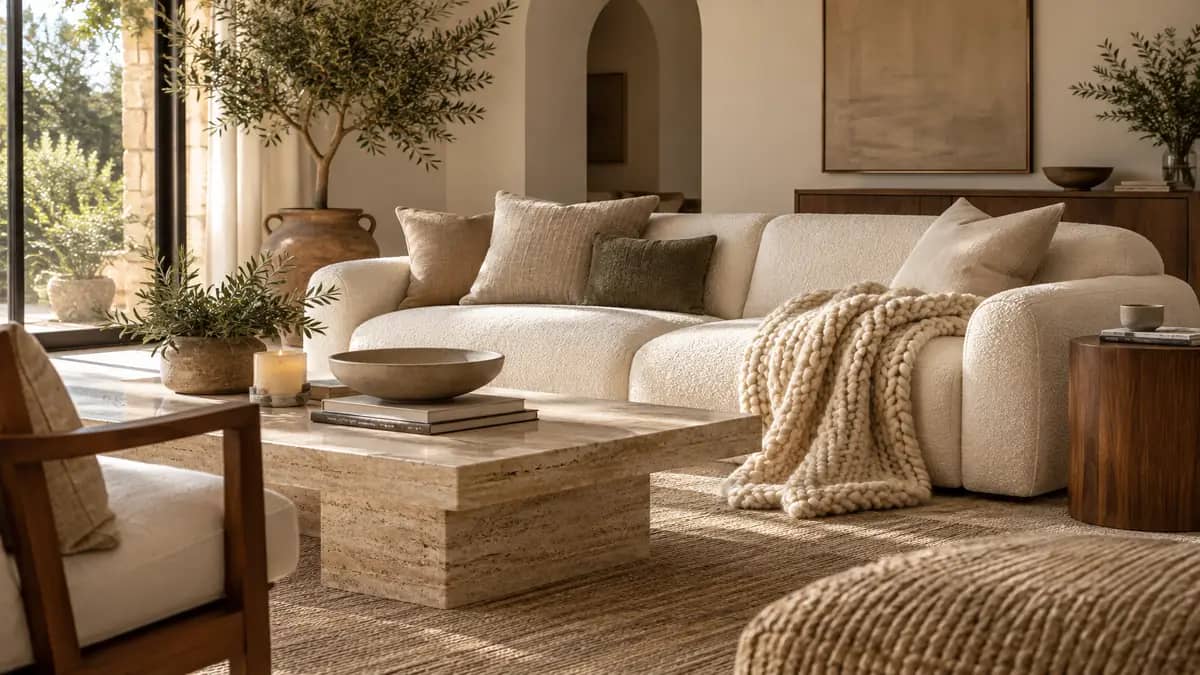
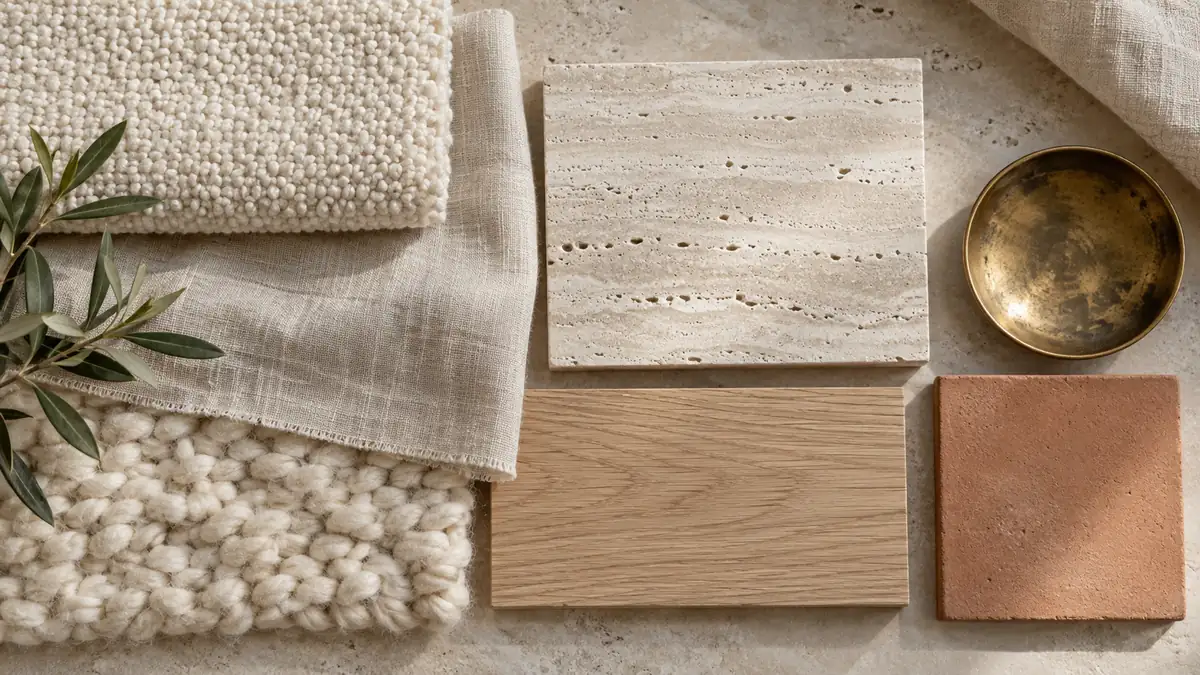
A sophisticated neutral living room requires layering four distinct tactile texture categories: rough woven textiles (bouclé, chunky wool), smooth reflective surfaces (polished stone, glass, mirror), matte organic materials (raw white oak, terracotta, linen), and living biophilic elements. Balancing rough and smooth elements prevents monochromatic spaces from feeling cold or visually flat.
A room turns flat when every surface has the same finish. It turns noisy when every object asks for attention. Start with your sofa, rug, coffee table, and one plant. Give each item a different surface feel, then stop. That small mix gives a neutral room depth without making it busy.
Before purchasing materials or moving heavy furniture across your floor, use our interactive Texture Mixing Calculator to calculate exact measurements, test layout clearances, and preview spatial balances customized to your specific room geometry.
The 4-Layer Tactile Formula Explained
To prevent neutral rooms from feeling flat, incorporate four essential texture families: chunky woven textiles, smooth reflective planes, raw porous ceramics or woods, and sleek metallic accents. Start with one soft surface and one hard surface. That pairing gives a neutral room depth without extra color.
Hold the color palette steady while you vary surfaces. Cream, tan, and brown support many finishes without noise.
Why Texture Replaces Color in Monochromatic Rooms
Texture gives a neutral room light and shadow. Wool catches light softly, while stone and glass reflect it. Those small shifts make white, beige, and grey rooms feel deeper. Use a rough item beside a smooth item so each surface has a reason to show up.
Tactile vs Visual Texture: What Hands Feel vs What Eyes See
Tactile texture is what your hand feels, such as a nubby cushion or a cool stone table. Visual texture is what your eye reads, such as wood grain or a woven pattern. Use both. A printed pattern alone can look flat if every surface feels smooth.
Layer 1 & 2: Chunky Textiles vs Smooth Reflective Planes
Pair nubby high-texture textiles like bouclé, chunky wool, and slubby linen against polished marble, smoked glass, and lustrous velvet to create immediate sensory contrast. Give the seating area one raised fabric and one sleek finish. The change in feel adds calm depth.
Use a narrow set of colors as textures change. Warm white, camel, olive, and black keep the room settled.
Bouclé, Slubby Linen, and Waffle Weaves
Boucle, linen, and waffle weave work best when they do different jobs. Put boucle on an accent chair, linen on pillows, and wool on a throw or rug. Keep one fabric calm and one fabric raised. This gives your sofa area contrast without too many patterns.
Polished Marble, Tempered Glass, and Glazed Ceramics
Smooth surfaces give soft fabrics a clean edge. A glass table, glazed lamp, or stone tray can break up a deep pile rug. Use one or two smooth pieces near the sofa. Too much glass or chrome can make the room feel cold and show fingerprints.
Layer 3 & 4: Matte Organic Woods and Sculptural Biophilic Elements
Ground the room with open-grain white oak or walnut furniture, rough terracotta pots, and sculptural botanical branches to introduce natural warmth and organic imperfection. Set a matte object near a reflective object. This small contrast makes a table or shelf feel considered.
Let surface feel change more than color. A calm mix of beige, walnut, charcoal, and green keeps order.
The Tactile Depth of Wire-Brushed Open-Grain Timber
Natural wood brings warmth because its grain is visible. Choose oak, walnut, ash, or teak with a matte finish. Put wood at more than one height, such as a table and picture frame. This repeats a warm note without buying a matching furniture set.
Biophilic Textures: Fiddle Leaf Figs, Olive Trees, and Preserved Moss
Plants add a living texture that fabric and furniture cannot copy. An olive tree, rubber plant, or branch arrangement softens hard lines around a sofa. Pick a plain pot in terracotta, stone, or woven fiber. The pot should add another surface, not another loud color.
The 60-30-10 Rule Applied to Living Room Textures
Allocate sixty percent of room surfaces to soft comfortable textiles, thirty percent to grounding timber and stone, and ten percent to sparkling metallic or glass accents. Mix a woven piece with a smooth piece in each main zone. The room will stay layered and calm.
Choose a small color family before you add texture. Soft neutrals make different fabrics and materials feel related.
Preventing Sensory Overload: The Quiet Eye Rest Principle
Leave some surfaces plain so the eye can rest. A smooth wall, simple curtain, or clear tabletop gives texture room to work. If the rug, sofa, pillows, and art all have strong patterns, remove one. Contrast needs empty space around it.
Interactive Tool Integration: Texture Mixing Calculator
Use the Texture Mixing Calculator after you list your main surfaces. Count your soft textiles, smooth hard pieces, wood or clay pieces, and plants. The result helps you see whether one group takes over the room before you spend money on another pillow or table.
Build a Texture Plan One Zone at a Time
Build texture in small zones, starting with the sofa area. Pick one soft textile, one smooth surface, one natural material, and one living or shaped object. This keeps the plan clear. You can see what the room lacks without buying five new things at once.
Start with the rug because it covers the largest soft surface. A low pile wool rug feels calm under a linen sofa. A jute rug adds roughness, but it can feel hard under bare feet. Layer a small wool rug where people sit if you want the jute look.
Style a Sofa with Three Textures
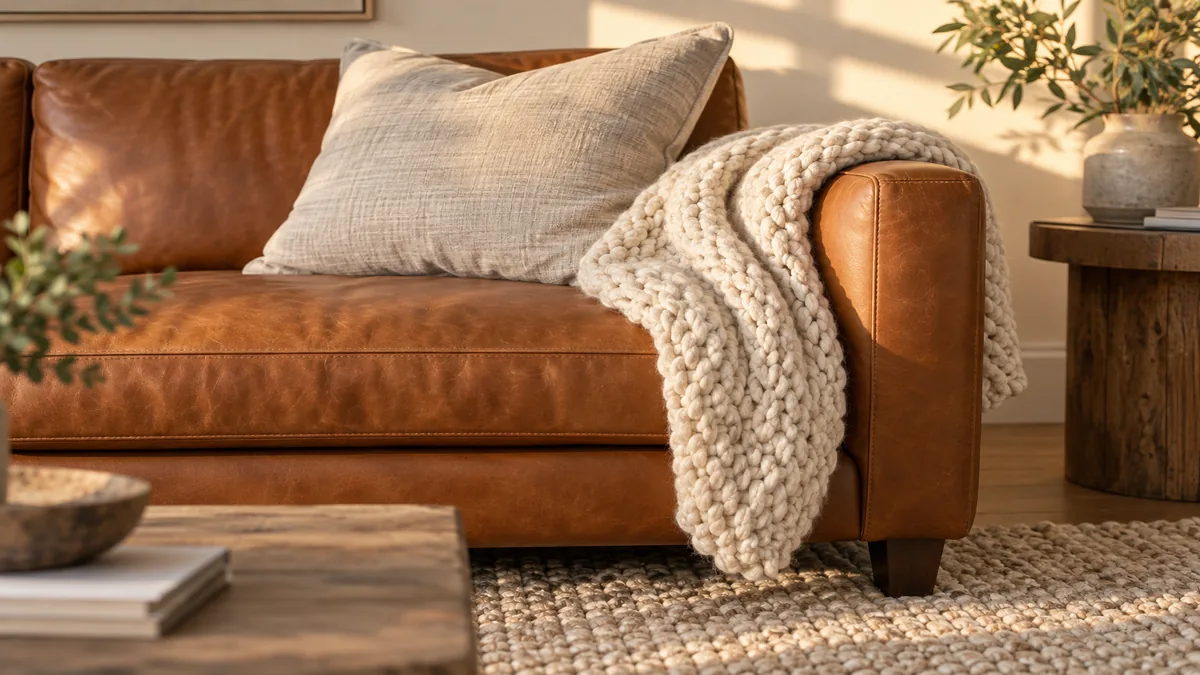
Use three texture types on a sofa. Begin with the sofa fabric, then add one smooth pillow and one raised pillow. Finish with a throw that has a different weave. A linen sofa can take velvet, boucle, and wool. A leather sofa needs softer fabric beside it.
Keep the pillow colors close together. Use cream, camel, olive, brown, or charcoal in one room. The surface change should do most of the work. This rule lets you mix a nubby pillow with a smooth leather arm without creating a busy patchwork effect.
Balance Your Coffee Table
Choose a coffee table that contrasts with the rug and sofa. A wool rug looks good under glass, stone, or smooth wood. A sleek table needs a rough ceramic bowl, woven tray, or branch arrangement on top. Keep the objects few so the table still feels useful.
Matte ceramics hide marks better than glossy pieces. Glass and polished metal reflect light well, yet both show fingerprints. Use them where you can wipe them easily. A honed stone top gives a soft finish and works well with linen, boucle, and warm wood.
Choose Textures for Pets and Daily Use
Pick tight weaves for homes with pets and busy family rooms. Loose boucle loops can catch claws. Heavy linen, performance velvet, leather, and low pile wool often handle daily use better. Bring home a fabric sample and rub it with your hand before you order furniture.
Texture should feel good in real life, not only in photos. Scratchy rugs and hard chairs make a room less inviting. Put soft materials where skin touches them, such as rugs, throws, cushions, and ottomans. Use rough clay, wood, and woven fiber on tables or shelves.
Walk through the room and name each main surface. Write down sofa, rug, curtains, table, lamp, art, and plant. If five items are smooth, add one woven or matte piece. If every item is rough, add a glass tray or glazed lamp for relief.
Use your hands during this audit. Touch the rug, sofa, pillows, table, and curtains. If they all feel alike, change one item first. A linen cushion, ceramic lamp, or wood tray can shift the whole group. You do not need to replace large furniture to make the room richer.
Keep a photo of the room on your phone while you shop. It helps you notice repeat finishes before you bring something home. Look for a missing surface, not a random trend. This makes each purchase useful and keeps the room free from small clutter.
Use your hands during this audit. Touch the rug, sofa, pillows, table, and curtains. If they all feel alike, change one item first. A linen cushion, ceramic lamp, or wood tray can shift the whole group. You do not need to replace large furniture to make the room richer.
Keep a photo of the room on your phone while you shop. It helps you notice repeat finishes before you bring something home. Look for a missing surface, not a random trend. This makes each purchase useful and keeps the room free from small clutter.
Living Room Texture Combinations Comparison Matrix
Analyzing texture pairings shows that contrasting opposing tactile properties produces a rich, curated designer interior that withstands changing trends. Review the direct side-by-side criteria below to identify the optimal configuration for your specific space and budget constraints.
| Texture Layer Category | 2. Primary Material Examples | 3. Role in the Room | 4. Sensory Tactile Feeling | 5. Recommended Ratio |
|---|---|---|---|---|
| Layer 1: Nubby & Woven Textiles | Bouclé, chunky wool, waffle linen, cable knit | Adds cozy physical comfort and sound absorption | Soft, warm, deep, tactile | 60% of room surfaces |
| Layer 2: Smooth & Reflective | Polished marble, clear glass, mirror, brass | Bounces light and adds clean visual polish | Cool, sleek, hard, luminous | 15% of room surfaces |
| Layer 3: Matte & Porous Organics | Open-grain oak, terracotta, raw clay, leather | Grounds the room and adds organic warmth | Earthy, velvety, authentic | 20% of room surfaces |
| Layer 4: Living Biophilic | Trailing ivy, olive branches, dried seed pods | Softens rigid straight architectural lines | Fresh, organic, dynamic | 5% of room surfaces |
As demonstrated in the comparison matrix above, trade-offs between initial material expense and long-term resilience require careful prioritization. While budget alternatives provide immediate cost relief, premium construction grades incorporate reinforced joinery, certified non-toxic coatings, and tighter manufacturing tolerances that resist wear under daily family use.
Launch Interactive Calculator →
When shopping for verified hardware, organic textiles, and precision mounting accessories, you can explore tested options on Amazon to compare verified customer reviews, dimensions, and current stock availability.
Frequently Asked Questions About Mixing Textures
What is the 4-layer texture formula in interior design?
The 4-layer texture formula combines nubby woven textiles (bouclé, wool), smooth reflective surfaces (marble, brass), matte porous materials (raw wood, terracotta), and living biophilic plants to create rich visual depth in neutral rooms.
How do you mix textures without cluttering a room?
Stick to a tight, cohesive monochromatic or neutral color palette while varying the textures. Keeping colors unified allows you to mix rough bouclé, smooth leather, and open-grain wood without creating visual chaos.
What textures look best with a leather sofa?
Balance the smooth, cool sheen of leather with cozy matte textiles like chunky knit wool throws, soft washed linen pillows, and a thick plush wool or high-pile Moroccan rug underfoot.
Why does my all-white living room feel cold and sterile?
An all-white room feels sterile when it lacks varied tactile textures. Introducing nubby bouclé fabrics, warm white oak furniture, textured woven rugs, and leafy indoor plants adds essential warmth and visual interest.
What is the most durable texture for homes with pets?
Tightly woven performance fabrics, smooth micro-velvet, and distressed full-grain leather are the most durable pet-friendly textures. Avoid loose open-weave linens and looped bouclés, which catch and snag easily on pet claws.
Final Decorator Advice and Next Steps
Achieving a polished, magazine-worthy home design requires harmonizing verified technical rules with personal comfort and room architecture. By starting with accurate measurements, respecting structural anchor ratings, and investing in authentic non-toxic materials, you build an enduring environment that nurtures daily well-being.
Continue your interior design planning by exploring our dedicated guides on Color Palettes & Styling and testing spatial calculations with our comprehensive suite of interactive tools. Thoughtful preparation turns complex decorating decisions into straightforward, enjoyable home improvements.
Finish with one small check before you buy. Ask what the room needs: softness, shine, grain, or life. Add only that missing texture. This keeps your budget focused and gives every object a clear role in the room. Take one picture from the doorway after each change. The image shows heavy corners and repeated finishes that your eye can miss while you stand inside the room.