End Table Height Compared to Sofa: 5 Sizing Rules
Reader Disclosure: We earn an affiliate commission at zero extra cost to you when you purchase through links marked smyblog-20 on our website. We test and review products independently to deliver honest home decor advice.
An end table must sit level with the top of your sofa arm or rest up to two inches below it. Standard sofa arms measure twenty-four to twenty-six inches high, requiring side tables between twenty-two and twenty-five inches tall. Never position an end table higher than the sofa arm. Matching table heights to your couch arm allows you to set down drinks naturally without spilling or stretching your shoulder.
Before buying living room accent furniture, measure your seating layout with our interactive Living Room Table Size Calculator to calculate ideal clearance corridors and proportional surface dimensions.
Homeowners constantly miscalculate side table heights. Tables that stand taller than couch arms look clunky and force your arm upward into awkward angles. Tables that drop too low turn simple tasks like setting down a coffee mug into clumsy bending maneuvers. Ill-fitting accent tables also cause drink spills across upholstery and block natural room flow. This decorator guide teaches you exact height measurements, rolled versus track arm sizing, table depth scale, lamp balancing rules, and smart solutions for deep modular sectionals.
The Golden Sizing Rule: Level with Sofa Arm to Two Inches Lower
Position your end table tabletop within two inches below the sofa arm height. If your couch arm measures twenty-four inches from the finished floor, pick a table between twenty-two and twenty-four inches tall. This slight downward step aligns naturally with your elbow when you relax back against the seat cushions.
Why Higher End Tables Look Clumsy and Feel Awkward
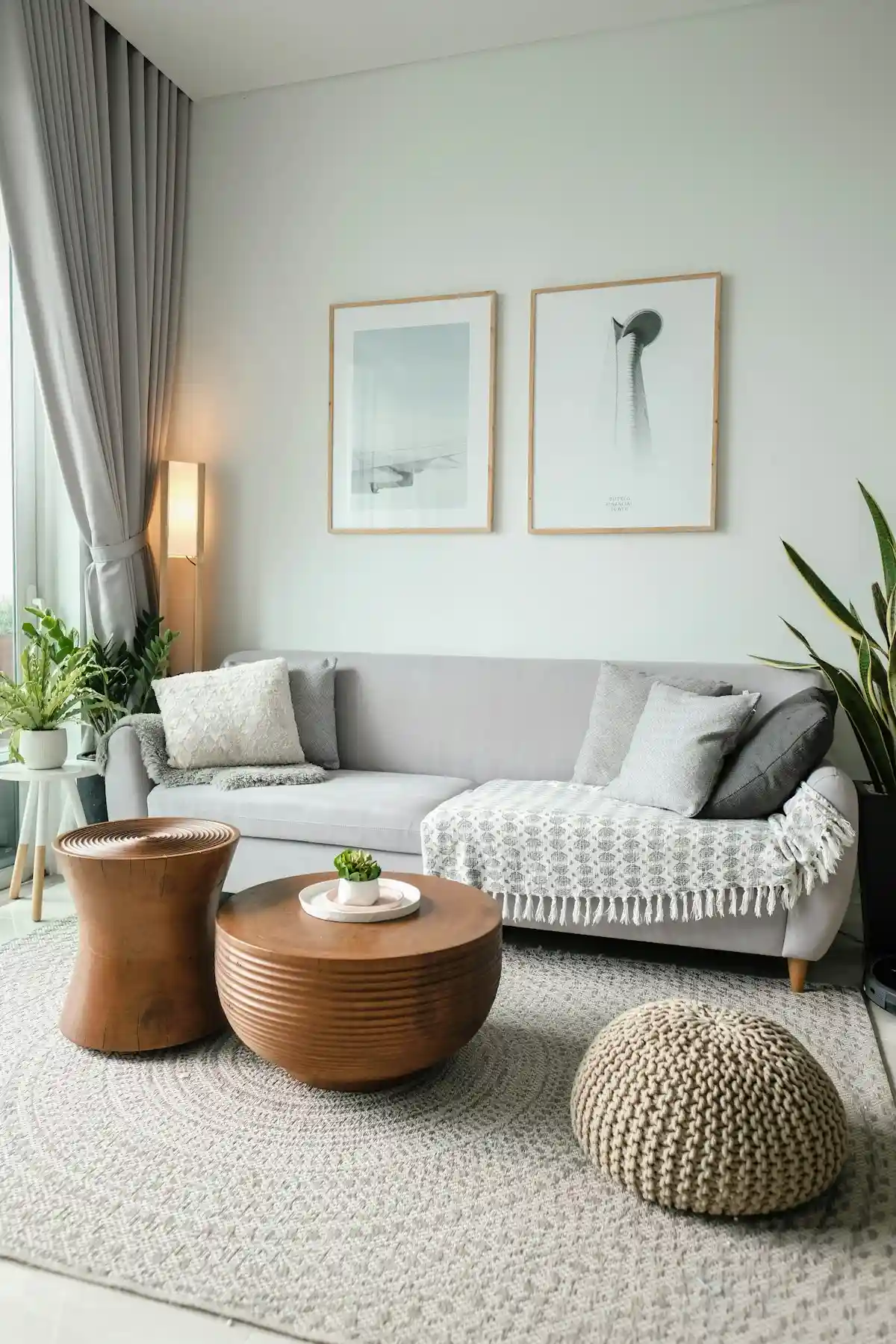
Never place an end table that towers above the sofa arm. An overly tall side table creates an uncomfortable visual wall at the end of your seating piece. It interrupts open sightlines across the living room and boxes in anyone sitting near the sofa edge.
High tables also introduce safety hazards during daily life. When you reach sideways to set down a glass, your elbow strikes the table edge. You must lift your forearm awkwardly over the raised lip, increasing the risk of knocking over table lamps or tipping hot coffee onto your couch.
Taller tables only belong next to high-backed reading wing chairs. Deep wing chairs feature upright armrests that support higher side surfaces. For standard family sofas, stick firmly to the level-or-lower rule to protect comfort and visual harmony.
Measuring Track Arms vs Sloped Rolled Arms
Flat modern track arms offer the easiest baseline for table pairing. Use a rigid metal tape measure to find the exact vertical distance from the floor to the top flat surface of the track arm. Choose an end table that matches this height within one inch.
Traditional rolled arms slope downward from back to front. Measure rolled arms at their highest point near the middle backrest, and also at the lower front scroll. Select a side table that matches the midpoint height of the rolled slope.
For curved English roll arms, decorators measure the resting forearm height of an adult sitting on the couch cushion. Set the table surface directly even with your resting wrist. This custom measurement guarantees effortless reach regardless of dramatic arm curve shapes.
Depth and Width Proportions: Balancing Visual Weight
Scale table depth to equal two-thirds of your sofa depth. If your couch measures thirty-six inches deep from front to back, pick an end table between twenty-two and twenty-four inches deep. This proportion balances visual bulk while keeping the front edge flush with seating lines.
Matching Deep Sectionals with Substantial End Tables
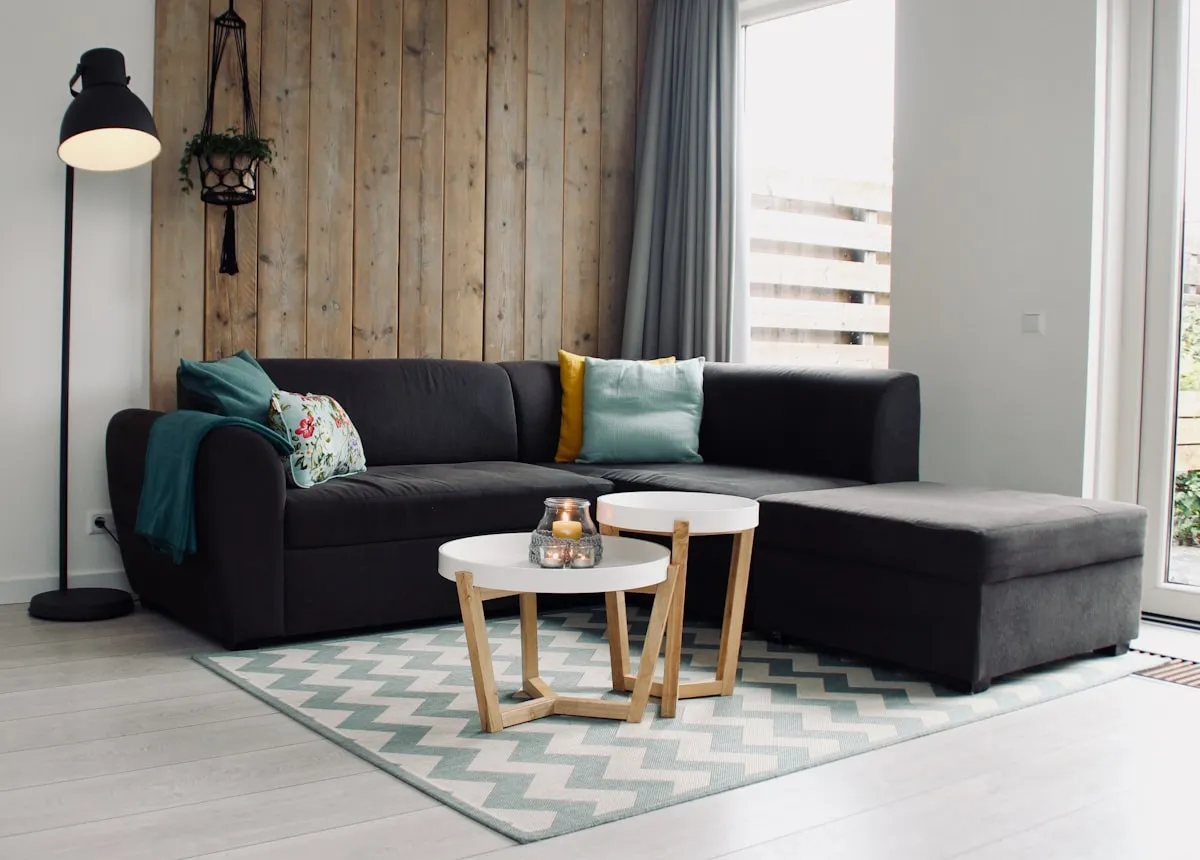
Oversized modern sectionals swallow tiny, lightweight spindly tables. When styling a deep sectional with forty-inch seat frames, pair it with a substantial block table or a wide drum table. Choose a table width of at least twenty inches to anchor the corner visually.
Leave two inches of breathing room between the couch arm and the side table edge. Pushing wood tables tight against upholstery rubs the fabric fibers raw over time. Leaving a small air gap also simplifies vacuuming pet hair from baseboards and corners.
When styling long living room perimeters, coordinate side table profiles with our detailed sofa console table sizing guide to balance horizontal dimensions behind and beside your main seating.
Round vs Square End Tables in Tight Living Rooms
Square end tables maximize surface area for books, drinks, and lighting. They slide flush against adjoining walls, making them ideal for living room corners. However, square table corners catch toddler heads and shin bones in tight walkway passages.
Round drum tables solve narrow corridor traffic problems. Their smooth curved edges steer foot traffic easily between sofas and accent chairs. Round tables also soften the severe angular lines of large rectangular sectionals and modern media cabinets.
For compact spaces under twelve feet wide, select a round pedestal table with a sixteen-inch diameter. Pedestal bases eliminate trip hazards from splayed table legs while keeping your seating zone open and airy.
Ensure the front edge of your side table sits back two to three inches from the front face of your sofa cushion. Aligning the table slightly behind the front cushion edge creates effortless leg clearance when guests swing their knees outward to stand up.
Armless Sofas and Low-Profile Modern Loungers
For armless sofas and low-profile modern couches, size your end table directly to the top of the seat cushion. Low-profile Italian sofas often feature seat cushions just fifteen to seventeen inches above the floor. Pairing these sleek loungers with standard twenty-four-inch tables looks completely mismatched.
Accommodating Low Modern Seating Heights
When styling armless modular sofas, pick a low platform table between sixteen and eighteen inches tall. Match the table height to the compressed crown of the seat cushion. This horizontal alignment maintains the sleek architectural profile of low-profile modern furniture.
Low tables allow sitters to place drinks down without reaching upward. They also preserve clear sightlines across open-concept apartments. Solid oak block tables or low cast concrete plinths pair exceptionally well with low floor-hugging seating frames.
If you have elderly guests who visit frequently, avoid ultra-low tables. Low surfaces require deep forward bending that strains stiff lower backs. Keep one secondary armchair with a standard twenty-four-inch side table nearby for visiting grandparents.
Using C-Tables for Floating Sectional Seating
Cantilever C-tables offer the smartest solution for middle sectional cushions. A C-table features a slender cantilevered metal base that slides completely under the couch frame. The upper cantilevered tray cantilevers directly over the seat cushion or sofa arm.
Select a C-table with a vertical clearance that clears your couch cushion by at least one inch. Most living room C-tables measure twenty-four to twenty-six inches high. This height allows the tray to hover comfortably over your lap for laptops, snacks, or coffee mugs.
C-tables eliminate the need for heavy coffee tables in tight living rooms. You slide the table out when working or eating, then tuck it over the arm when finished. This flexibility frees up central floor space for kids and pets to move freely.
Coordinating Lamps and Tabletop Decor Heights
Coordinate table lamp height so the bottom of the lampshade rests at eye level when you sit on the couch. For most seated adults, eye level sits between thirty-eight and forty-two inches above the finished floor. Following this height rule prevents bare bulb glare from shining into your eyes.
Eye-Level Lighting Alignment Rule
Calculate total lamp height by combining your table height and lamp base height. If your side table stands twenty-four inches high, choose a table lamp measuring twenty-six to twenty-eight inches tall. This combination places the bottom edge of the shade around forty inches high, casting pleasant warm light onto reading books.
Choose lampshades with bottom diameters smaller than your tabletop width. A lampshade should never overhang the wooden table edge. Leave at least three inches of open table surface around the shade circumference to prevent guests from bumping the lamp when reaching for drinks.
Select ceramic, stone, or heavy cast brass lamp bases. Lightweight acrylic or slender wire lamps tip over too easily when people drop keys or books onto the table surface. Heavy lamp bases ensure stability around playful pets and energetic children.
Place cord clips along the back leg of your wooden end table. Securing electrical wires neatly behind table legs prevents loose cords from dangling across your baseboards and catching vacuum cleaner wheels.
Sofa Arm Styles and Matching End Table Matrix
Review this comparison matrix to select the ideal end table height, shape, and depth for your specific sofa arm style. Matching table dimensions to your upholstery proportions ensures balanced visual scale and effortless daily function. Check your sofa specifications before shopping.
| Sofa Arm Style. | Average Arm Height. | Ideal Table Height. | Best Table Shape. | Placement Clearance. |
|---|---|---|---|---|
| Modern Track Arm. | Twenty-four to twenty-six inches. | Twenty-four to twenty-five inches. | Square or rectangular. | Two inches from arm edge. |
| Classic English Rolled Arm. | Twenty-two to twenty-four inches. | Twenty-two to twenty-three inches. | Round pedestal. | Two to three inches from arm. |
| Tuxedo High Back Arm. | Twenty-eight to thirty inches. | Twenty-six to twenty-eight inches. | Substantial block square. | Two inches from upholstery. |
| Low Pillow Top Arm. | Twenty to twenty-two inches. | Twenty to twenty-one inches. | Low round drum. | Three inches from arm cushion. |
| Armless Modern Modular. | Eighteen inches to seat crown. | Sixteen to eighteen inches. | Low platform plinth. | Flush or one inch gap. |
Frequently Asked Questions About End Table Heights
Should an end table be higher or lower than the couch arm?
An end table should sit level with the couch arm or up to two inches lower. Never choose a table taller than the arm. Taller tables feel clumsy, block room sightlines, and cause accidental drink spills.
What is the standard height of a living room end table?
Standard living room end tables measure twenty-two to twenty-six inches high. This standard height matches typical residential sofa arms, allowing seated guests to set down coffee mugs and books comfortably without twisting or straining their shoulders.
Do end tables have to match on both sides of a sofa?
No. Modern interior designers deliberately mix table shapes and materials to create visual depth. You can pair a round brass pedestal table on one side with a square oak drawer table on the opposite end successfully.
How high should a table lamp be on an end table?
Combine table and lamp heights so the bottom of the lampshade sits at seated eye level, roughly thirty-eight to forty-two inches from the floor. This exact height shields your eyes from bulb glare during evening reading.
Can you use a nightstand as an end table in a living room?
Yes, provided the nightstand height matches your sofa arm within two inches. Nightstands provide excellent closed drawer storage for remotes and chargers, making them functional side table alternatives next to deep family room sectionals.
Decorator Rules for Living Room Table Balance
Follow four fundamental decorator guidelines to achieve perfect balance between seating pieces and side surfaces. First, always anchor your dimensions around the sofa arm rather than the coffee table. The side table serves the person seated in the corner seat first and foremost. Prioritizing physical ergonomics over showroom matching sets ensures everyday satisfaction.
Second, distribute visual weight across your room. If your sofa features a heavy skirted base or block wooden feet, select end tables with slender open metal legs or delicate pedestal columns. This contrast prevents living rooms from feeling overcrowded and dark.
Third, mix table materials thoughtfully. Pair fabric upholstery with textured marble, warm walnut, or brushed bronze side tables. Introducing contrasting hard materials adds sensory richness and transforms standard furniture arrangements into curated designer spaces.
Fourth, keep tabletop accessories proportional to the surface area. Reserve half of the tabletop surface for functional drink placement. Group a small ceramic coaster, a petite succulent, and a slim task lamp together, leaving open space for your phone or paperback book. By honoring these height rules and clearance guidelines, you create a balanced living room built for comfortable lounging and memorable entertaining.